Christian Education: Initiation into the Christian Way of Life

By |2021-05-24T13:56:41-05:00May 25th, 2016|Categories: Christianity, Christopher Dawson, Education, Featured, Quotation, Western Civilization|

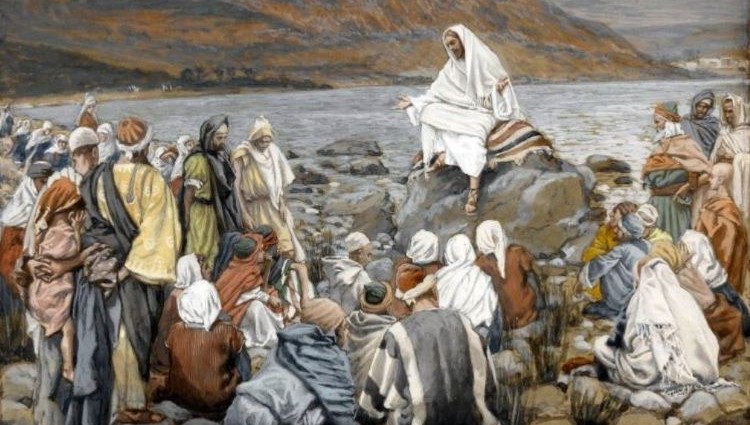
Taken in its widest sense education is simply the process by which the new members of a community are initiated into its way of life and thought from the simplest elements of behavior up to the highest tradition of spiritual wisdom. Christian education is therefore an initiation into the Christian way of life and thought, [...]
T.S. Eliot’s Lost Love

By |2016-05-13T21:43:16-05:00May 13th, 2016|Categories: Dwight Longenecker, Love, Poetry, T.S. Eliot|

T.S.Eliot argued that the biographical details of the poet were irrelevant to the understanding of the poetry, and yet his own poetry is so deeply personal that it often remains obtuse until illuminated by an understanding of his personal life. Eliot’s masterpiece—The Four Quartets—are the perfect example, and Burnt Norton—the first of the four—reveals its [...]

On Remembering Who We Are: A Political Credo

By |2020-05-08T15:30:29-05:00May 7th, 2016|Categories: American Founding, American Republic, Constitution, Equality, Featured, Freedom, M. E. Bradford|

We should learn from the political credo of the Venetians, who never forgot the history that had made them a special nation. To be a patriot is to embody our connection to the national bond through devotion to a "practice." It is good to be enthralled by dogmas of the quiet past, remembering who and [...]

What Shaped Eric Voegelin’s Thought?

By |2022-02-23T11:09:07-06:00April 27th, 2016|Categories: Christianity, Conservatism, Eric Voegelin, Featured, History, Western Civilization|

IV Eric Voegelin’s affection for the Hellenic, Judaic, and Christian heritages can be easily documented. They are the crucial strands in the forming of his thought. Yet the matter goes deeper than that. Subtly, but irrefutably, in the corpus of his writing, Christianity emerges as the preeminent achievement of the Western experience. For example, Voegelin [...]

Oak and Stone and the Permanent Things

By |2019-08-15T15:15:11-05:00April 24th, 2016|Categories: Edmund Burke, Permanent Things, T.S. Eliot, Timeless Essays|

Today’s offering in our Timeless Essay series affords readers the opportunity to join Ian Crowe as he explores the thought of T.S. Eliot, Edmund Burke on the permanent things. —W. Winston Elliott III, Publisher For the present is the point at which time touches eternity. —C.S. Lewis[1] It was in 1939, in The Idea of a [...]

The Conservative Thought of Eric Voegelin

By |2022-02-23T11:13:42-06:00April 21st, 2016|Categories: Aristotle, Christianity, Conservatism, Eric Voegelin, Featured, Plato, St. Augustine|

Eric Voegelin was born in Cologne, Germany in 1901. Receiving his doctorate from the University of Vienna in 1922, he served on the law faculty of that institution. To escape the Nazi regime, he came to the United States in 1938. Subsequently, he taught at Harvard University, Bennington College, the University of Alabama, and Louisiana State [...]

Education and the Individual

By |2020-10-26T11:40:17-05:00April 17th, 2016|Categories: Education, Featured, Liberal Learning, Richard Weaver, Timeless Essays|

Education for individualism is education for goodness. The unfreeman cannot be good because virtue is a state of character concerned with choice. The moment we judge the smallest action in terms of right and wrong, we are stepping up to a plane where the good is felt as an imperative. The greatest school that ever [...]

What Is the Moral Imagination?

By |2022-01-20T19:10:28-06:00April 11th, 2016|Categories: Edmund Burke, Eva Brann, Imagination, Irving Babbitt, Moral Imagination, Russell Kirk|

Like many of you, I am sure, my first encounter with the term “the moral imagination” came through reading Russell Kirk. In an attempt to make better sense of what, for me, was a problematic concept, I followed Kirk back to his admitted predecessors on this matter, Irving Babbitt and Edmund Burke. I must confess [...]

Still Questing for Community

By |2023-03-06T22:57:50-06:00April 11th, 2016|Categories: Books, Community, Essential, Featured, Robert Nisbet, The Conservative Mind, Timeless Essays|

In the retrospect of forty years I can see my book, The Quest for Community (first published by Oxford University Press in 1953), as one of the harbingers of what would become by the end of the 1950s a full-fledged renascence of conservatism. There had been authentic and forthright individual conservatives before the 50s; among [...]

Edmund Burke & the American Revolution: The Whole Story

By |2024-05-04T15:17:02-05:00April 10th, 2016|Categories: American Founding, Bruce Frohnen, Cluny, Edmund Burke, Featured, Republicanism, Revolution|

You would not know it from the discussion on campus or in our high schools, but the best analysis of the American War for Independence was provided while it was still unfolding. The character of the Americans, the designs of the British Parliament, and the policies that brought these two into conflict were brilliantly analyzed [...]

Edmund Burke, Rightly Understood

By |2016-04-14T23:43:05-05:00March 22nd, 2016|Categories: Books, Edmund Burke, Featured, Ian Crowe, Lee Cheek|

Patriotism and Public Spirit: Edmund Burke and the Role of the Critic in Mid-Eighteenth-Century Britain, by Ian Crowe (Stanford University Press, 2012) Ian Crowe’s recent, pioneering study of political philosopher Edmund Burke is a cause for celebration. It advances scholarly knowledge of Burke and the intellectual milieu that was so important to his development as a [...]

Go to Top