Taking Idols into Their Hearts

By |2016-01-02T12:35:17-06:00January 6th, 2016|Categories: Christianity, Faith, Quotation, T.S. Eliot|

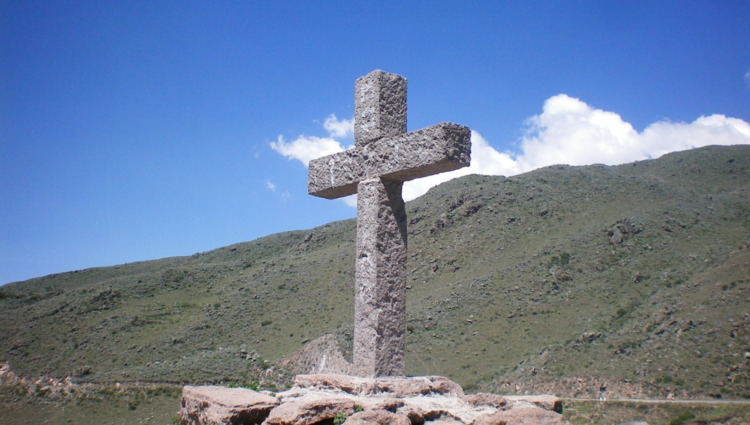
The number of people in possession of any criteria for discriminating between good and evil is very small; the number of the half-alive hungry for any form of spiritual experience, or what offers itself as spiritual experience, high or low, good or bad, is considerable. My own generation has not served them very well. Never [...]
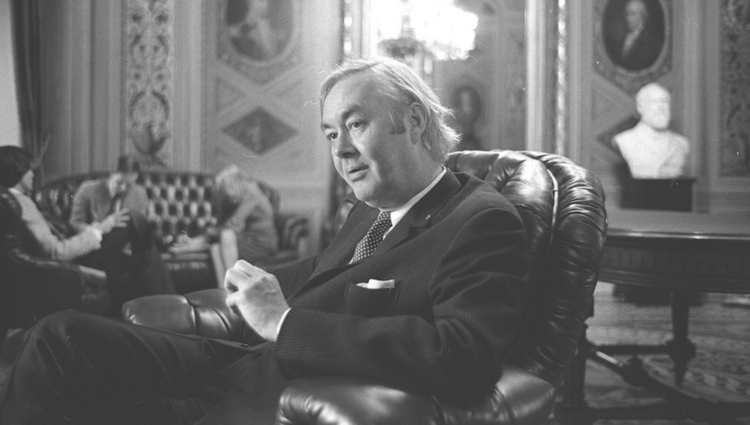
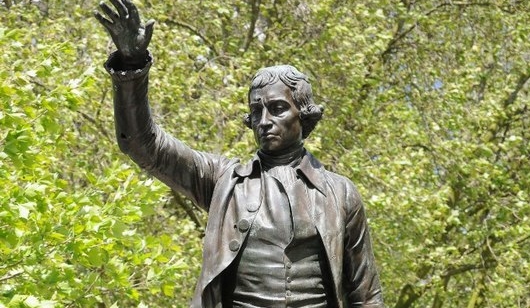
American Burke: The Uncommon Liberalism of Daniel Patrick Moynihan

By |2021-10-06T14:56:17-05:00January 5th, 2016|Categories: Edmund Burke, Featured, History, Politics|

Touched by experience with a sense of the tragic in politics, Daniel Patrick Moynihan nonetheless clung to a stubborn optimism about its possibilities. But those possibilities were bounded by a defining feature of Moynihan’s politics: limitation. There were limits to what government could do and, more important, limits to how it should attempt to do [...]

Eric Voegelin: Meditation as Antidote to Gnosticism

By |2015-12-30T08:27:00-06:00December 30th, 2015|Categories: Christopher Morrissey, Eric Voegelin, Literature|

“The death of the spirit is the price of progress. Nietzsche revealed this mystery of the Western apocalypse when he announced that God was dead and that He had been murdered. This Gnostic murder is constantly committed by the men who sacrifice God to civilization. The more fervently all human energies are thrown into the [...]

T.S. Eliot’s “Christianity and Culture”

By |2016-08-03T10:36:15-05:00December 21st, 2015|Categories: Anglicanism, Bruce Frohnen, Christendom, Christianity, Culture, Featured, T.S. Eliot, Timeless Essays|

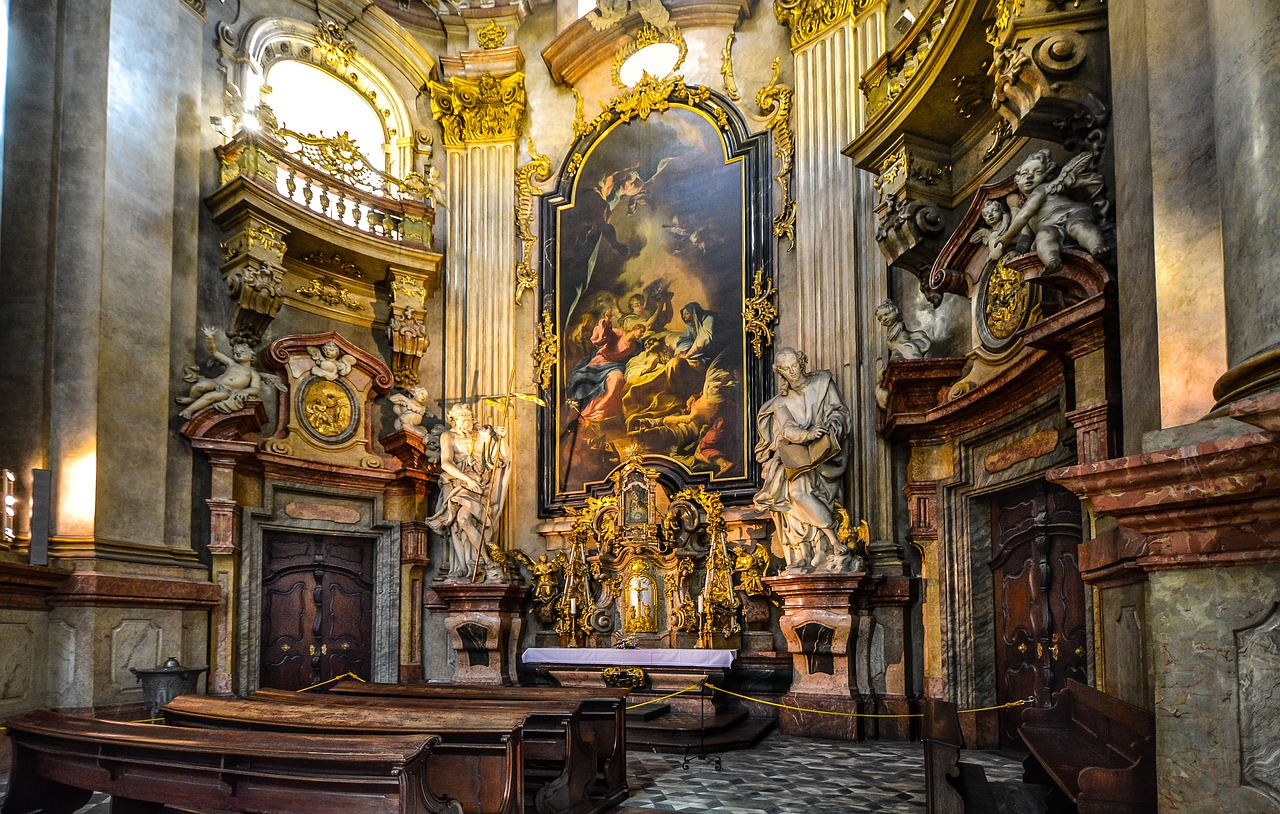
(Today’s offering in our Timeless Essay series affords our readers the opportunity to  journey with Bruce Frohnen as he explores T.S. Eliot’s understanding of the role of literature and Christianity in culture. —W. Winston Elliott III, Publisher) T.S. Eliot indisputably was, and remains, in the first rank of poets of any era and any culture.[1] [...]

The Purposeful Design of Providence: Edmund Burke

By |2019-12-19T13:16:52-06:00December 12th, 2015|Categories: Conservatism, Edmund Burke, Featured, RAK, Russell Kirk|

Conservatism, as a critically held system of ideas, is younger than equalitarianism and rationalism. For philosophical conservatism begins with Edmund Burke, who erected prescription and “prejudice”—by which he meant the supra-rational wisdom of the species—into a conscious and imaginative defense of the traditional ways of society. When the age of Miracles lay faded into the [...]

Christopher Dawson, Education, and the Transcendent

By |2021-05-24T10:47:14-05:00November 28th, 2015|Categories: Christendom, Christopher Dawson, Education, Featured|

Above all other twentieth-century men, the late Christopher Dawson took seriously the two theses developed by Newman over a century ago. Newman’s theses were that only the liberally educated are really educated and that a person without an introduction to theological lore lacks an ingredient necessary for liberal education. Dawson wanted to know what, given our situation, [...]

The Whole Story: Eric Voegelin on the Song of Hesiod

By |2019-10-03T15:11:55-05:00November 25th, 2015|Categories: Christopher Morrissey, Eric Voegelin, History, Poetry, Science|

According to the philosopher Eric Voegelin, there are no more than four fundamental modes of theoretical speculation. Voegelin identifies these four fundamental modes as: cosmogony, anthropogony, theogony, and historiogenesis. These modes speak, respectively, of the genesis of the universe, the genesis of human beings, the genesis of the divine, and the genesis of society. Unsurprisingly, [...]

Christopher Dawson’s Six Ages of the Church

By |2019-10-23T12:44:19-05:00November 1st, 2015|Categories: Christendom, Christianity, Christopher Dawson, Christopher Morrissey, Culture, Featured, History, Religion|

Christopher Dawson’s Six Ages of the Church exhibit a cyclical pattern in historical events. Each Age exhibits an overall pattern of “rise and fall” during each cycle of spiritual renewal. Each new Age peaks and then encounters a new onslaught of adversities. It is possible to imagine the entire sweep of this non-linear history in [...]

A Better Guide than Reason: The Politics of John Dickinson

By |2021-07-03T17:19:10-05:00October 28th, 2015|Categories: American Founding, American Republic, Christendom, Featured, John Dickinson, M. E. Bradford|Tags: |

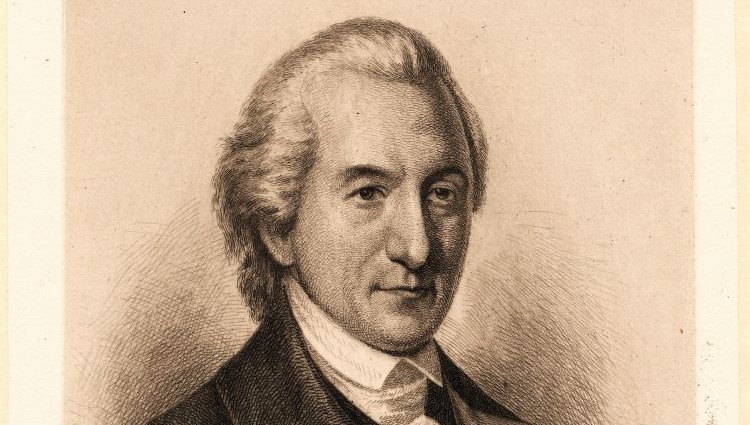
Of all the men significantly involved in the major events leading up to and following from the American Revolution none has been so undeservedly neglected by our political historians as the mysterious John Dickinson. The oversight would seem on its face unlikely. For this planter and prototypical Philadelphia lawyer is as complicated and intellectually interesting [...]

The Essence of Missionary Christianity

By |2015-10-21T01:02:01-05:00October 21st, 2015|Categories: Christianity, Christopher Dawson, Christopher Morrissey, History, Religion, Rome|

Graecia capta ferum victorem cepit et artes intulit agresti Latio “When Greece was captured, she captivated her wild conqueror, and introduced the Arts into savage Rome” — Horace, Epistles, II.1.156 (trans. Laura E. Ludtke) Christopher Dawson has identified Six Ages in the history of the Church. In Dawson’s First Age, we witness a unique encounter of [...]

A Teaching for Americans: Roman History and the Republic’s First Identity

By |2021-04-21T15:59:43-05:00October 19th, 2015|Categories: American Founding, American Republic, Essential, Featured, History, M. E. Bradford, Republicanism, Rome, Timeless Essays|

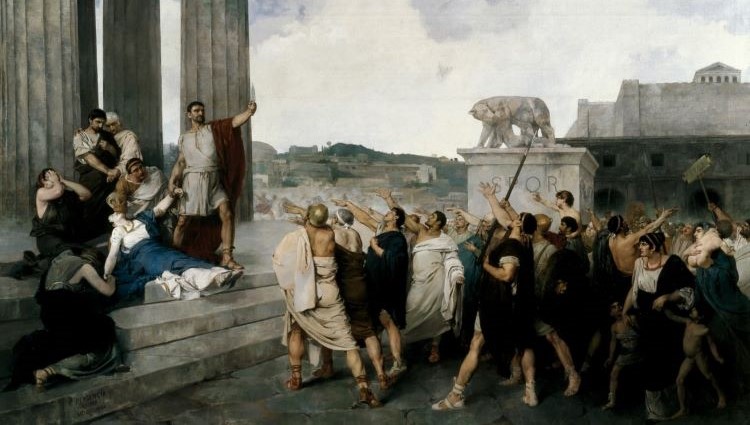
What did Rome mean to the original Americans? What counsel did its early history contain? And what must we conclude about our forefathers from their somewhat selective devotion to the Roman analogue? The Federal District of Columbia, both in its formal character as a capital and also in its self-conscious attempt at a certain visual [...]

Christian Culture and the Essence of Europe

By |2019-02-19T14:58:21-06:00October 14th, 2015|Categories: Christianity, Christopher Dawson, Christopher Morrissey, Culture, Europe, Featured, Islam|

How is it that Arabic translations of Greek writings could flourish for only a few centuries (the ninth to eleventh)? Remi Brague points out how these translations were frequently made by Christians under Arabic rule.[1] Empirical data such as this point to an important principle identified by Brague: namely, that Roman “secondarity” always maintains a [...]

The Essence of Rome: A Tale of Three Cities

By |2019-09-24T11:16:19-05:00September 29th, 2015|Categories: Christopher Dawson, Christopher Morrissey, Culture, Europe, Featured, History, Religion, Rome|

Leo Strauss liked to call to our attention the creative tension between Athens and Jerusalem. With Remi Brague, I would like to refocus our attention onto the apparent mediation of this creative tension that was accomplished by Rome. Now, I say that this accomplishment occurred by the apparent mediation of Rome, only to nod to [...]

Irving Babbitt: Against Romanticism

By |2019-07-23T14:06:01-05:00August 28th, 2015|Categories: Books, Irving Babbitt, Jean-Jacques Rousseau|Tags: |

Rousseau and Romanticism by Irving Babbitt (Piscataway, NJ: Transaction Publishers, 1991) This reprint of the best-known work by Irving Babbitt (1865–1933) is a sturdy addition to Transaction’s Library of Conservative Thought. When it was initially published in 1919, it was recognized by discerning readers as the landmark it has since become. The New York Evening Post [...]

Go to Top