Born in Resistance: Bernard Iddings Bell

By |2016-04-24T08:27:31-05:00March 17th, 2016|Categories: Bernard Iddings Bell, Bradley J. Birzer, Conservatism, Featured, Russell Kirk|

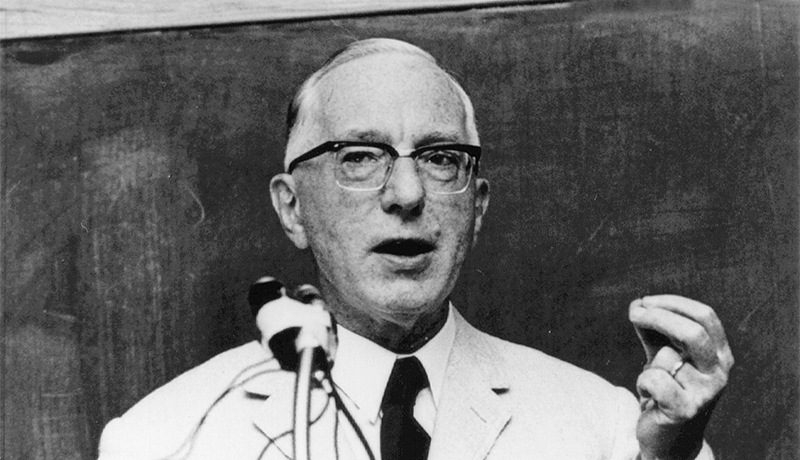
Sadly, very few Americans remember Canon Bernard Iddings Bell (1886-1958)—this, despite the excellent work done by Cicero Bruce and Lee Cheek in his name. And, in his own day and age, Bell served as one of the leading scholars of what would eventually be called conservatism. He relentlessly defended the western canon and the liberal [...]

The State: From God, or the Devil?

By |2018-11-30T15:04:09-06:00March 6th, 2016|Categories: Bruce Frohnen, Edmund Burke, Government|

A casual observer might be excused for believing that conservatives have a rather confused and conflicted view of the state. Albert J. Nock, a giant of early-twentieth-century conservatism, wrote a book titled Our Enemy the State. Yet Edmund Burke, the founder of modern conservatism, observed that “he who gave our nature to be perfected by [...]

How Equality Is Misleading

By |2022-07-06T10:21:14-05:00February 28th, 2016|Categories: Abraham Lincoln, Constitution, Declaration of Independence, Equality, Featured, History, M. E. Bradford, Slavery|

Equality as a moral or political imperative, pursued as an end in itself is the antonym of every legitimate conservative principle. Contrary to most Liberals, new and old, it is nothing less than sophistry to distinguish between equality of opportunity and equality of condition. I Let us have no foolishness, indeed.* Equality as a moral or [...]

East of Early Winters: The Poetic Craft

By |2019-09-12T12:05:31-05:00February 19th, 2016|Categories: Poetry, Robert Frost, T.S. Eliot|

East of Early Winters, by Richard Wakefield (The University of Evansville Press, 2006) No period in the history of the arts more doggedly insisted on its concern with craft—its identification of artist with artisan—than did the Modernist period at the beginning of the twentieth century. And yet, at no time were the familiar features of [...]

Saving the World from Suicide

By |2016-02-12T21:51:21-06:00February 17th, 2016|Categories: Christianity, Quotation, T.S. Eliot|

The Universal Church is today, it seems to me, more definitely set against the World than at any time since Pagan Rome. I do not mean that our times are particularly corrupt; all times are corrupt. I mean that Christianity, in spite of certain local appearances, is not, and cannot be within measurable time, ‘official.’ [...]

Eric Voegelin’s Gnosticism

By |2016-03-28T10:39:17-05:00February 16th, 2016|Categories: Bradley J. Birzer, Christianity, Culture, Eric Voegelin, Featured, Friedrich Nietzsche|

In my previous essay, “Eric Voegelin: A Primer,” I had the privilege to offer a brief sketch of this German intellectual’s life and thought. In this essay, I would like to explore one of Voegelin’s three most important ideas: his critique of Gnosticism. As in the previous essay, I am drawing heavily upon the fine [...]

Seeking a Humane Political Order: The Limits of Rationalism

By |2016-03-04T16:24:39-06:00February 2nd, 2016|Categories: Culture, Edmund Burke, Featured, Morality, Philosophy, Reason|

Of the perennial debates in political theory, perhaps none is more enduring or contentious than that regarding the extent of power that human beings possess over their political and social order. This question is as old as political philosophy itself, with Plato taking up the question of the best society in his Republic. Since then, [...]

Eric Voegelin: A Primer

By |2021-08-12T02:19:16-05:00February 1st, 2016|Categories: Bradley J. Birzer, Eric Voegelin, Friedrich Nietzsche, Hans Urs von Balthasar, Hope|

On my religious position, I have been classified as a Protestant, a Catholic, an anti-semitic, and as a typical Jew; politically, as a Liberal, a Fascist, a National Socialist, and a Conservative; and on my theoretical position, as a Platonist, a Neo-Augustinian, a Thomist, a disciple of Hegel, an existentialist, a historical relativist, and an [...]

T.S. Eliot on Literary Decadence & Cultural Ruin

By |2023-10-19T09:00:40-05:00January 26th, 2016|Categories: Imagination, Literature, Morality, RAK, Russell Kirk, T.S. Eliot|

T.S. Eliot’s slim book about moral and immoral fiction may surprise anyone who first comes upon a copy. After Strange Gods: A Primer of Modern Heresy consists of three lectures delivered at the University of Virginia in 1933. These present an uncompromising denunciation of liberalism—both the liberalism of the nineteenth century and that of the twentieth [...]

Four Ways to Help The Imaginative Conservative

By |2023-03-30T19:24:22-05:00January 20th, 2016|Categories: Support The Imaginative Conservative, The Imaginative Conservative, W. Winston Elliott III|

Do you enjoy reading our reasoned and reflective essays at The Imaginative Conservative, as we pursue the Good, the True, and the Beautiful? Do you enjoy engaging in discussions of culture, history, politics, and economics, in the tradition of Russell Kirk, Edmund Burke, Richard Weaver, Eric Voegelin, Christopher Dawson, and other leaders of Imaginative Conservatism? Do [...]

The Burkean Tradition of Strauss and Voegelin

By |2016-02-22T08:37:44-06:00January 12th, 2016|Categories: Conservatism, Edmund Burke, Eric Voegelin, Featured, History, Leo Strauss, Philosophy|

Leo Strauss and Eric Voegelin were scholars in the field of political philosophy, yet they did not have an explicit political teaching. They studied the great political philosophers of the past in order to learn lessons that might become living truths for us today. But Strauss and Voegelin did not write political treatises defending a [...]

The Imaginative Politics of Daniel Patrick Moynihan

By |2021-10-06T15:03:11-05:00January 11th, 2016|Categories: Edmund Burke, Featured, Government, History, Politics|

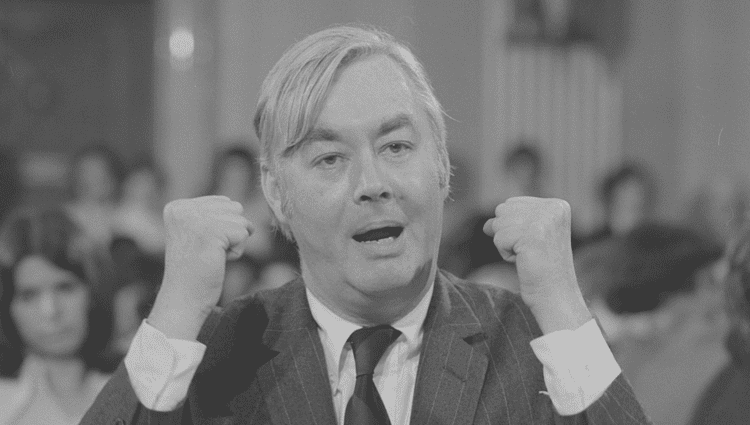
Contemporary politics leaves little room for so broad and imaginative an account of politics as Daniel Patrick Moynihan’s. He defies labels, which is to say why our contemporary labels—as narrow as our imagination—defy him. That contemporary politics leaves little room for so broad and imaginative an account of politics as Daniel Patrick Moynihan’s is evidence [...]

Eric Voegelin’s Redemption of Modernity

By |2016-01-09T23:42:03-06:00January 10th, 2016|Categories: Eric Voegelin, History, Modernity, Philosophy|

Political theorists, like literary and social theorists, occupy a kind of twilight zone in relation to philosophy. Their disciplines are at once empirical and philosophical, an indeterminate status compared to the strictly autonomous unfolding of philosophy. Yet it is by virtue of this difference of perspective that they may have something to contribute to philosophy. [...]

Go to Top