About Bradley J. Birzer

Bradley J. Birzer is the co-founder of, and Senior Contributor at, The Imaginative Conservative. He is the Russell Amos Kirk Chair in History at Hillsdale College and Fellow of the Ronald Reagan Presidential Library. Dr. Birzer is author of In Defense of Andrew Jackson, Russell Kirk: American Conservative, American Cicero: The Life of Charles Carroll, Sanctifying the World: The Augustinian Life and Mind of Christopher Dawson, J.R.R. Tolkien’s Sanctifying Myth: Understanding Middle-Earth, co-editor of The American Democrat and Other Political Writings by James Fenimore Cooper, and co-author of The American West.

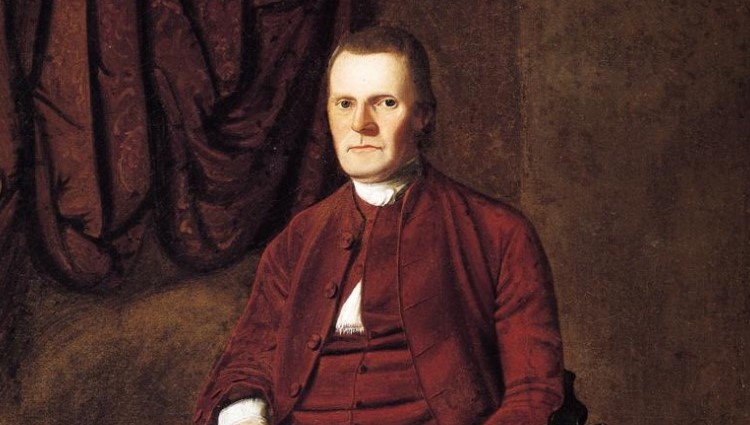
Roger Sherman and the Puritan Founding of America

By |2021-04-26T16:25:16-05:00May 1st, 2018|Categories: American Founding, American Republic, Books, Bradley J. Birzer, Constitution, History|

If James Madison offered the American republic a five-course meal of epicurean excellence, Roger Sherman was the short-order fry cook in the nearest greasy spoon, a block or two away from Independence Square. The Collected Works of Roger Sherman ed. Mark David Hall (840 pages, Liberty Fund, 2016) “Sherman’s air is the reverse of grace; there [...]
The Devil’s Abyss: America’s Descent Into Progressivism

By |2019-11-21T13:22:34-06:00April 15th, 2018|Categories: Bradley J. Birzer, Christianity, History, Ideology, Science|

As if to create the cruelest irony possible, as the terrorist ideologies arose, Americans surrendered their own republican inheritance, their own Augustinian and Puritan caution, and their traditionally humane morality to the new god: “Progress.” It was nothing less than a new faith… When did it all go wrong? As Christopher Dawson used to note [...]

Progressive American Imperialism: A Malicious Addiction

By |2021-03-09T16:23:46-06:00April 11th, 2018|Categories: American Republic, Bradley J. Birzer, History, Progressivism, War|

Our heritage of foreign intervention is a new one, an innovation introduced by the progressives. To imagine a clean and humane progressivism is, simply, a fool’s errand. Just how much imperialism is in the DNA—so to write—of the American character? When Frederick Jackson Turner delivered his famous address, “The Significance of the Frontier in American [...]

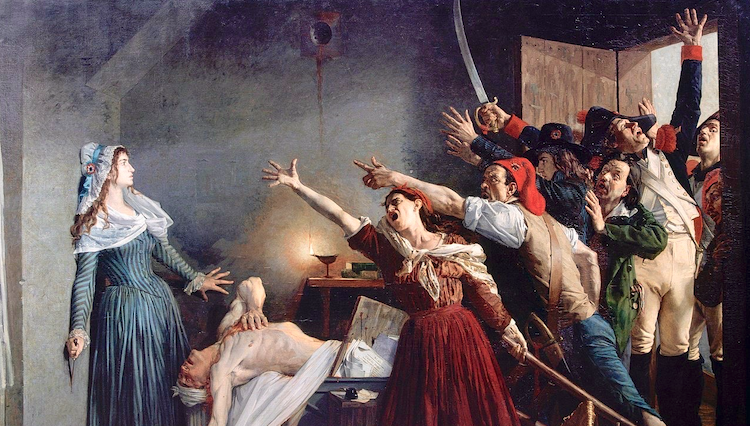
Edmund Burke on the Rage & Frenzy of the French Revolution

By |2020-08-09T17:29:38-05:00April 5th, 2018|Categories: Bradley J. Birzer, Conservatism, Edmund Burke, Europe, History, Leadership, Revolution|

As revolutionary as they claimed to be, the French Revolutionaries were as old as sin, Edmund Burke assured his readers. “Trace them through all their artifices, frauds, and violences,” he argued, and “you can find nothing at all that is new.” Roughly four-fifths into his spectacular Reflections on the Revolution in France, Edmund Burke paused. [...]

Etched in Glass and Stone: The Childhood of Christopher Dawson

By |2021-05-24T14:43:21-05:00March 20th, 2018|Categories: Bradley J. Birzer, Catholicism, Christian Humanism, Christianity, Christopher Dawson|

Stories of glass and stone—which told of the holy and sainted—convinced young Christopher Dawson that a saint was a saint not because of his or her individual talents, but as a continuation of the deepest longings and desires of the Church. In 1889, when Henry Christopher Dawson entered the world, he did so with style. [...]

Reflecting on Edmund Burke’s “Reflections”

By |2021-04-07T11:22:36-05:00March 13th, 2018|Categories: Bradley J. Birzer, Civil Society, Conservatism, Edmund Burke, Edmund Burke series by Bradley Birzer, Europe, Featured, History, Revolution, The Imaginative Conservative, Wisdom|

It would be difficult to find a more beautiful republican thought in all of Edmund Burke’s writings than this: “A man full of warm speculative benevolence may wish his society otherwise constituted than he finds it; but a good patriot, and a true politician, always considers how he shall make the most of the existing [...]

Edmund Burke & the French Revolutionaries

By |2019-07-09T13:30:01-05:00March 7th, 2018|Categories: Bradley J. Birzer, Conservatism, Edmund Burke, Edmund Burke series by Bradley Birzer, Featured, Revolution|

The French Revolutionaries, Edmund Burke rightly understood, sought not just the overturning of the old, but, critically, they also desired the destruction of the true, the good, and the beautiful. Only by lying about the nature of the human person could they accomplish their goals… One of the most important duties of any good person, [...]

Intelligent Piety: The Christian Humanism of Flannery O’Connor

By |2022-08-02T12:17:20-05:00February 21st, 2018|Categories: Books, Bradley J. Birzer, Catholicism, Christian Humanism, Christianity, Eric Voegelin, Featured, Flannery O'Connor, Romano Guardini, Russell Kirk|

Not only was Flannery O’Connor one of the most important Christian Humanists of the twentieth century, but she also well understood what made Christian Humanism what it was. While it might very well be conservative, it was always imaginative, allowing one to imagine what must be conserved. The Presence of Grace by Flannery O’Connor (192 pages, [...]

Russell Kirk’s Unfinished Justice

By |2021-04-27T12:37:36-05:00February 11th, 2018|Categories: Aristotle, Bradley J. Birzer, History, Justice, Plato, Russell Kirk|

Russell Kirk thought that because justice is rooted in nature and because in its perfection transcends all time and space, one can innately observe virtue in the actions of wise women and men. Such observation of our heroes and those we admire might be the best teacher in our current day, serving as reminders of [...]

The Quest for Modern Conservatism

By |2021-05-27T12:43:22-05:00January 28th, 2018|Categories: Alexis de Tocqueville, Bradley J. Birzer, Community, Conservatism, Edmund Burke, History, Robert Nisbet, Russell Kirk|

The job of every conservative is twofold: First, he must fight tirelessly against the centralized, unitary state; second, he must do everything possible to promote that which makes the free society not just an ordered one, but a good one. Prior to the publication of Russell Kirk’s masterful The Conservative Mind in 1953, no real [...]

How Power Destroys Community

By |2019-10-10T13:42:05-05:00January 22nd, 2018|Categories: Bradley J. Birzer, Civil Society, Community, Conservatism, Edmund Burke, History, Robert Nisbet|

Power, in and of itself, has become an “ideology,” according to Robert Nisbet. It is, by its very nature, incapable of understanding nuance… As I had the opportunity to write in my previous essay for The Imaginative Conservative, Oxford University Press gave the grand sociologist and historian of ideas, Robert A. Nisbet, a chance to [...]

Aliens in America!

By |2019-10-10T13:08:21-05:00January 15th, 2018|Categories: American Republic, Bradley J. Birzer, Community, Conservatism, Culture, Featured, History, Robert Nisbet|

In no society in the world, Robert Nisbet believed, has any people become so remote from nature as have Americans. As technology allowed him to dominate or ignore nature, the American became detached from place, having neither loyalty nor respect for the land that once nourished him… After the rather massive and—at least to the [...]

The Conservatism of Robert Nisbet

By |2021-04-27T21:06:48-05:00January 7th, 2018|Categories: Bradley J. Birzer, Christopher Dawson, Conservatism, Culture, Edmund Burke, History, Imagination, Irving Babbitt, Religion, Robert Nisbet, Romano Guardini, Russell Kirk, T.S. Eliot, Tradition|

Robert Nisbet, in direct contrast to Russell Kirk, argued that conservatism was purely a modern ideology. For Nisbet, the entire history of conservatism began as a reaction to the French Revolution… When it came to the history of conservatism, the grand sociologist and man of letters, Robert Nisbet, disagreed with the mighty founder of modern [...]

Temperance & Abundance: Romano Guardini’s “Letters from Lake Como”

By |2023-03-07T08:43:58-06:00January 1st, 2018|Categories: Bradley J. Birzer, Christianity, Gospel Reflection, History, Romano Guardini, Virtue|

When we begin to refashion things in our image rather than in God’s, we ourselves become displaced and disjointed. Strangely enough, by asserting only our humanity, we lose what makes us essentially and beautifully human… In truth, nature begins to relate to us only when we begin to indwell it, when culture begins in it. [...]

Go to Top