Thomas Jefferson & the Declaration of Independence: The Power of a Free People

By |2023-07-03T16:27:40-05:00July 3rd, 2021|Categories: American Founding, American Republic, Declaration of Independence, Featured, Independence Day, Political Science Reviewer, Thomas Jefferson, Timeless Essays|

One of America’s most cherished symbols, of course, is the American Declaration of Independence, and its Promethean author, Thomas Jefferson—a document and a man whom subsequent generations have blurred together in a myth of no mean proportion. It is the immediate task of this essay to unravel that myth so we will know what we [...]
Is Equality An Absolute Good?

By |2023-05-21T11:29:04-05:00March 8th, 2021|Categories: Alexis de Tocqueville, American Republic, Declaration of Independence, E.B., Equality, Eva Brann, Philosophy, Senior Contributors, St. John's College|

Fairness is an acknowledgement of just desserts, and therefore implies equality in dealings with similarly entitled partners. So it is indeed equality adjusted to circumstances that I desire. Thus there is an intimation that equality will come into play when justice is administered communally. Regarding the title: 1. The question mark expresses a genuine perplexity [...]

America Must Return to the Noble Traditions of Her Founders

By |2023-07-04T22:48:28-05:00September 27th, 2020|Categories: American Founding, American Republic, Books, Constitution, Declaration of Independence, History, Politics, Slavery|

That it is the founding principles themselves to which we can turn to recover from the great evils of slavery, of the loss of virtue and moral standard, and of grotesque dehumanization should be a measure of the gratitude we owe to our Founding Fathers for their magnificent achievement. Robert R. Reilly is the author [...]

The Foundering of the American Republic

By |2023-07-04T22:46:21-05:00August 6th, 2020|Categories: American Founding, American Republic, Books, Christianity, Declaration of Independence, Modernity, Politics|

So, if Robert R. Reilly is correct in his analysis and assessment of the American Founding in his book “America on Trial,” where did the American experiment in ordered liberty go wrong? I would suggest that the problem is neither progressivism nor its philosophical antecedent historicism, baleful as they both might be. Rather, it is [...]

Harry S. Truman and the Legacy of Thomas Jefferson

By |2020-08-03T15:33:10-05:00August 5th, 2020|Categories: American Republic, Bradley J. Birzer, Declaration of Independence, Foreign Affairs, History, Politics, Senior Contributors, Thomas Jefferson|

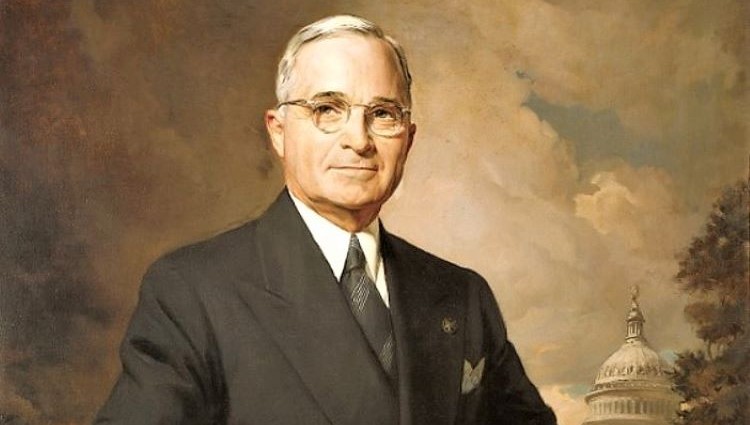
Harry S. Truman explicitly tried to tie Thomas Jefferson and the Declaration of Independence to the events and crusades of his own day. He saw the Declaration of Independence as an international document, belonging to all peoples yearning for freedom. When the first copy of the first volume of The Papers of Thomas Jefferson, edited [...]

Just How Catholic Is the Declaration of Independence?

By |2021-04-22T10:52:59-05:00August 1st, 2020|Categories: American Founding, American Republic, Bradley J. Birzer, Catholicism, Christianity, Declaration of Independence, History, Senior Contributors, Thomas Jefferson|

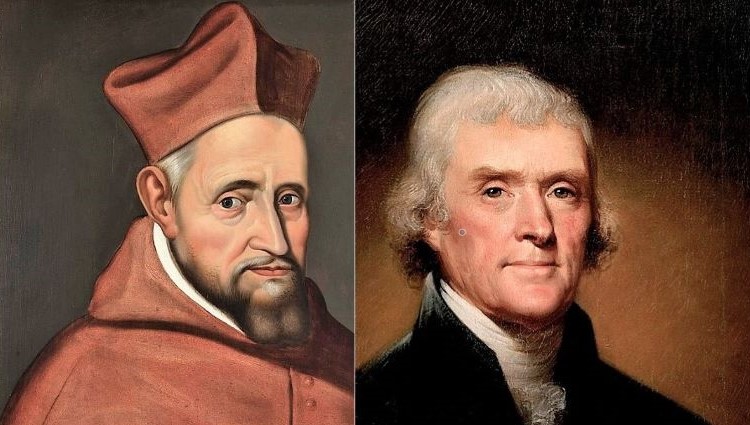
An oft-reprinted editorial, “Did Bellarmine Whisper to Thomas Jefferson?,” suggests that the American statesman might have been influenced by Robert Bellarmine. While recent scholarship has confirmed that Jefferson came to Bellarmine through the works of the radical Protestant intermediary, Algernon Sydney, is the Declaration of Independence really influenced by Catholic teaching? In the wake of [...]

A Declaration of Interdependence: Rereading the American Declaration of 1776

By |2020-07-08T10:46:09-05:00July 8th, 2020|Categories: American Founding, American Republic, Christianity, Declaration of Independence, Equality, Freedom, Government, History, John Locke, Rights|

While the Declaration of Independence may be linked in the popular imagination with notions of unfettered freedom and autonomy, in reality, the Declaration is greatly concerned with relationships, interrelationships, mutuality, and obligations. These relationships are governed by preexisting, inalienable natural rights and justice. In the beginning, the title was not the Declaration of Independence. Though [...]

Happy Birthday, America!

By |2023-07-03T16:20:26-05:00July 3rd, 2020|Categories: American Founding, American Republic, Bradley J. Birzer, Declaration of Independence, Independence Day, Senior Contributors|

Happy birthday, America! The world wouldn’t be the same without you. It would be poorer, less ethical, less stable, and less humane had you never come into existence. Whatever America’s faults, her successes outweigh them all. As protestors around the United States tear down statues, brutally beat rosary warriors, attack neighborhoods, threaten the destruction of [...]

In God We Trust: How to Remedy the American Crisis

By |2021-02-20T21:35:34-06:00July 3rd, 2020|Categories: American Founding, American Republic, Christianity, Declaration of Independence, Independence Day|

Ours is a nation founded and shaped primarily by European immigrants of Protestant Christian persuasion. The first pilgrims came over to spread the faith of Christ and live their Bible-based beliefs. When the settlements grew and spread and formed into 13 colonies, the charters of each were specifically Christian, e. g., "to the glory of [...]

Revolutions: Today vs. 1776

By |2022-07-01T19:38:33-05:00June 24th, 2020|Categories: American Founding, American Republic, Bradley J. Birzer, Declaration of Independence, History, Modernity, Revolution, Senior Contributors|

The revolutionaries of 1776 could be just as violent as those of today, but they were truly a lot more intelligent and interesting. Eighteenth-century Americans fought with several generations worth of finely-honed arguments—from law, from experience, and from scripture, whereas the protestors of today, while armed with anger, seem armed with little else. In every [...]

Edmund Burke on Rights: Inherited, Not Inherent

By |2020-06-16T16:16:40-05:00June 16th, 2020|Categories: American Republic, Declaration of Independence, Edmund Burke, Freedom|

On what basis are political constitutions actually formed and remain valid? Where do rights come from? Edmund Burke offers us an account different from that of many of our contemporaries. We hold these truths to be self-evident, that all men are created equal, that they are endowed by their Creator with certain unalienable Rights, that [...]

The Contributions of Eva Brann to American Political Thought

By |2020-07-16T17:21:49-05:00March 19th, 2020|Categories: American Republic, Constitution, Constitutional Convention, Declaration of Independence, Eva Brann|

Eva Brann’s contributions to American Political Thought are a starting point that allows the student to grasp the heart of her pursuits—that is, education. For Dr. Brann, the effort to understand the principles of the Declaration of Independence or discern how best to educate the citizens of a democratic republic can take place between students [...]

“They Live Forever in the American Constellation”: John Adams and Thomas Jefferson

By |2023-07-03T16:40:56-05:00February 10th, 2020|Categories: American Founding, American Republic, Declaration of Independence, History, Independence Day, John Adams, Primary Documents, Thomas Jefferson|

Adams and Jefferson are no more. They are dead. But how little is there of the great and good which can die! To their country they yet live, and live for ever. Their stars have now joined the American Constellation. Beneath this illumination let us walk the course of life, and at its close devoutly [...]

Was Thomas Jefferson a Philosopher?

By |2023-05-21T11:29:18-05:00October 22nd, 2019|Categories: American Founding, Declaration of Independence, E.B., Essential, Eva Brann, Great Books, In Honor of Eva Brann at 90 Series, Philosophy, Senior Contributors, St. John's College, Thomas Jefferson|

Thomas Jefferson is a kind of incarnate compendium of the Enlightenment. His remarkable openness to its spirit is the philosophical counterpart to his political sensitivity in making himself “a passive auditor of the opinions of others,” so as to catch the “harmonizing sentiments of the day” and to incorporate them into a document that would [...]

Go to Top