Ronald Reagan & the Return of Blue-Collar Conservatism

By |2026-02-05T16:08:01-06:00February 5th, 2026|Categories: Books, Conservatism, Donald Trump, Economics, Featured, Politics, Ronald Reagan, Timeless Essays|

Ronald Reagan’s version of conservatism was far more pro-government than was Barry Goldwater’s. Compassion, not liberty, was Reagan’s guide. This raises the question: To what extent is the success of modern political conservatism dependent upon the conservation of liberal, even progressive, reforms? The Working Class Republican: Ronald Reagan and the Return of Blue Collar Conservatism [...]

America’s Fin de Siècle: End of a Civilization?

By |2026-01-30T13:28:42-06:00January 30th, 2026|Categories: Books, Classics, Culture, Economics, Education, Gleaves Whitney, Political Economy, Virgil|Tags: , |

American culture is surely decadent. Its decay is palpable to any sensitive observer who reads the feuilleton section of the local newspaper or attends a university. But is our decadence terminal? Is our civilization on a collision course with extinction? The Culture We Deserve by Jacques Barzun (200 pages, Wesleyan University Press, 1989) Politically America [...]

No Character

By |2026-01-12T15:51:31-06:00January 12th, 2026|Categories: Catholicism, Labor/Work, Nature of Man, New Polity, Technology|

By doing a certain thing, by perfecting a certain skill, by learning a certain trade, a man becomes specific, becomes particular. Today, however, labor no longer helps us become who we are, and so trivial things, like taste in music, rush in to fill the gap. The most tiresome part of living in a faux [...]

The Pessimism of James Madison

By |2025-12-12T19:46:11-06:00December 12th, 2025|Categories: American Founding, American Republic, Economic History, Economics, Free Trade, James Madison|

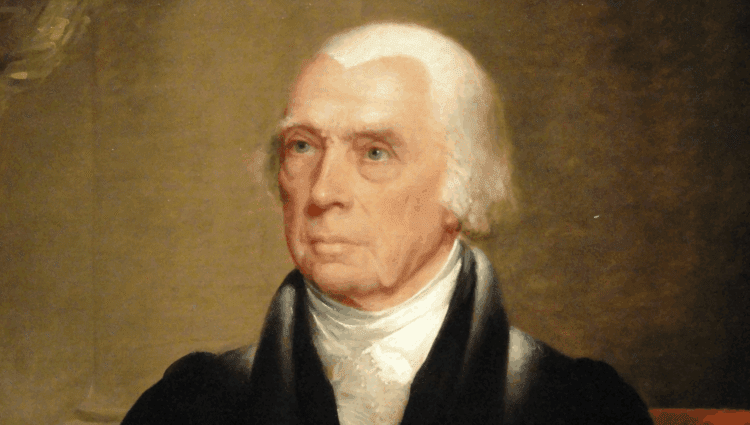
When he retired from public life in 1817, James Madison turned his full attention to averting a demographic catastrophe. He foresaw a time when a majority of the population would be “without land or other equivalent property and without the means or hope of acquiring it.”             I. During his presidency, Thomas Jefferson struggled to [...]

Willmoore Kendall: Public Truth & the Problem of Free Speech

By |2025-10-14T15:45:04-05:00October 14th, 2025|Categories: American Republic, Community, Constitution, Free Speech, Freedom, John Stuart Mill, Libertarianism, Truth, Wilhelm Roepke, Willmoore Kendall|

Willmoore Kendall’s support of (relative) free speech is an integral part of his view of the “deliberate sense of the community,” which in turn is informed by the “public truth,” which itself is the political expression of the particular American historical experience of transcendent revelation. “[B]ut a completely open society in which everyone does his [...]

Sacrificial Love and Heroic Prudence

By |2025-09-10T20:11:48-05:00September 10th, 2025|Categories: American Republic, Character, David Deavel, Economics, Morality, Senior Contributors, Timeless Essays, Virtue|

Prudence takes into account a deeper wisdom about the human condition than can be gleaned from a simple cost-benefit analysis. It understands that human communities are not merely about justice and the Gross Domestic Product, but about love. And sacrificial love doesn’t hesitate to rush in even against the worst odds. Recently I sat at [...]

Craft, Vocation, and the Decline of the West

By |2025-08-31T18:28:39-05:00August 31st, 2025|Categories: Civilization, Conservatism, Culture, Labor/Work, Modernity, Timeless Essays, Western Civilization|

To counteract the disorder of a city engulfed by internal strife and upheaval, we in the West would do well to rediscover the true meaning of vocation. We may cultivate an abundant yield simply by applying the virtues we associate with the master craftsman—diligence, recognition of quality, and striving for mastery—to whatever we do, whether [...]

Booker T. Washington and His Virtues

By |2025-08-20T20:45:05-05:00August 20th, 2025|Categories: Christianity, Equality, History, Labor/Work, Religion|

Booker T. Washington did not call for a revolution. Instead, he called for the simplest of building blocks in American society: helping your neighbor. I reread an undergraduate paper comparing the educational methods of Booker T. Washington and W.E.B. Du Bois and realized the comparison was horribly incomplete. I cited only Of the Training of Black [...]

The Dignity of Work

By |2025-07-05T20:43:48-05:00June 25th, 2025|Categories: Books, Catholicism, Cluny, Labor/Work|

The divine plan in nature calls for human completion, as divine grace in man calls for human co-operation. Work then is the redemption of nature as Christ is the redemption of man, and civilization is the product of both redemptive acts, the completion of the circle by which nature serves man and man serves God. [...]

Considerations on Mercantilism

By |2025-06-17T11:19:05-05:00June 17th, 2025|Categories: Economics, History, Mark Malvasi, Nationalism, Senior Contributors|

Mercantilism was an attempt to fashion a national economy at the same time that the so-called New Monarchs throughout parts of Western Europe were attempting to construct the institutions of the modern national state. I. The Historical Background Designed to effect a favorable balance of trade, Donald Trump’s economic policies constitute the revival of mercantilism.[i] [...]

“Shop Class as Soulcraft”: Let Us Recognize the Yeoman Aristocracy

By |2025-06-09T21:55:35-05:00June 9th, 2025|Categories: Audio/Video, Books, C. R. Wiley, Culture, Labor/Work, Timeless Essays|

In “Shop Class as Soulcraft,” Matthew B. Crawford tells a story of diminishment, outlining how we went from a nation of independent tradesmen, farmers, and shop keepers to cubicle dwellers. I am not a fan of Ask This Old House, the spin-off of the PBS home improvement program, This Old House. Formerly the companion series to [...]

Why Everybody Watched Bishop Sheen

By |2025-06-01T20:05:18-05:00June 1st, 2025|Categories: Catholicism, Economics, John Willson, Political Economy, Timeless Essays|

The irony of the prosperous decade of the 1950s is that the most popular person on the most visible proof of that prosperity—television—was a Catholic Bishop: "America’s Bishop," Fulton J. Sheen, who rejected feel-good, dishwater Christianity and instead boldly proclaimed the truth to his audience, 70% of whom were non-Catholic. Happiness, says the wicked Ambrose [...]

Go to Top