The Battle of Jumonville Glen: The French & Indian War Begins

By |2020-07-24T17:15:26-05:00May 27th, 2020|Categories: George Washington, History, War|

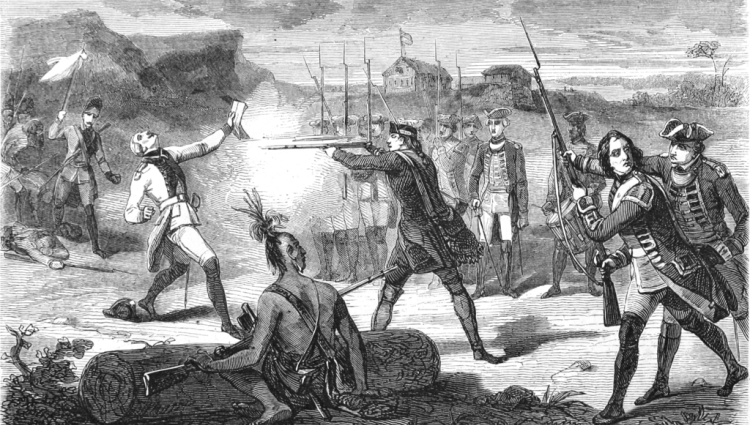
While the Battle of Jumonville Glen may not be considered the start of the war from the British perspective, it resulted in an expanded colonial conflict engulfing the world in violence, which then began the rift between Britain and their colonists that set the stage for the American Revolution. In a wooded clearing overlooking an [...]

Geography’s Revenge: Space & Human Action in German History

By |2020-05-27T18:54:05-05:00May 27th, 2020|Categories: Civilization, Europe, History, Nature|

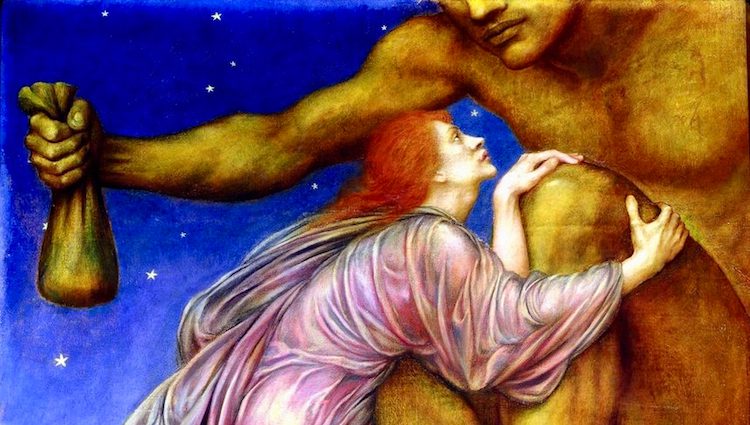
We cannot interpret our past or approach the future based upon the assumption that individuals and groups are mere passive chess pieces. We must more appreciate the constraints of the earth, without capitulating to them with aggression or inertia. In 1440, at the heart of the Rhine Valley, Johannes Gutenberg perfected the first European printing [...]

Christopher Dawson and the Religious Impulse

By |2020-05-23T17:30:06-05:00May 23rd, 2020|Categories: Books, Christianity, Christopher Dawson, Civilization, Culture, Government, History, Religion|

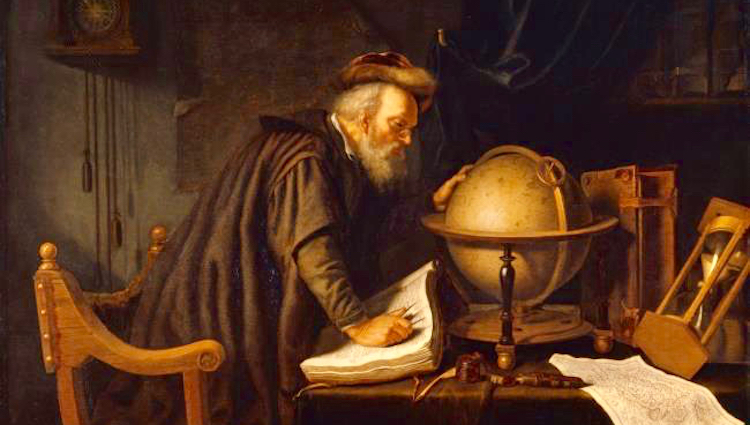
How does religion act as a driving force of politics and culture? Christoper Dawson argued that “we cannot understand the inner form of a society unless we understand its religion,” and we cannot make sense of any culture or its achievements without knowing the religious inspiration from which its creativity flowed. Imagine a diagram consisting [...]

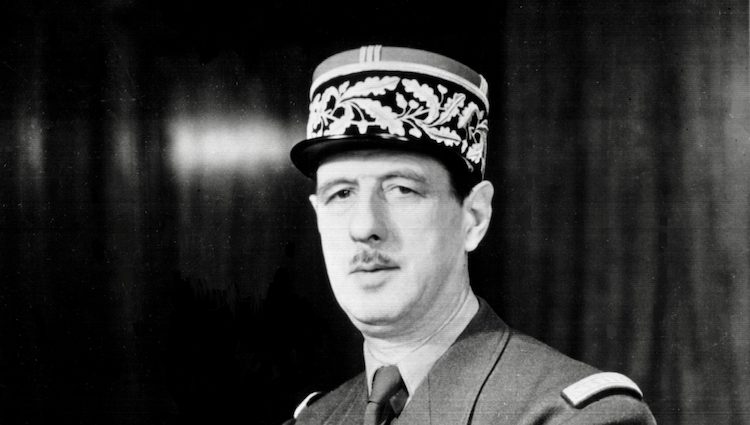
Charles De Gaulle as Catholic Military Exemplar

By |2020-05-23T17:35:57-05:00May 23rd, 2020|Categories: Catholicism, Character, Christianity, Culture, Europe, History, Religion|

The memory of General Charles de Gaulle has largely faded away, like a fleeting dream, from the soul of the French nation. Nonetheless, his example serves as a testament to those men and women in uniform of the endless grace that flows from the Catholic faith, and which is required to continue the eternal struggle [...]

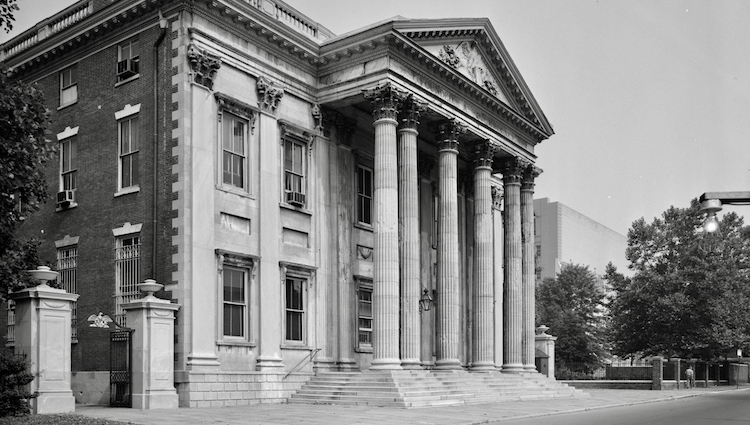
The First and Second Banks of the United States

By |2020-05-19T14:21:25-05:00May 19th, 2020|Categories: Alexander Hamilton, American Founding, American Republic, Bradley J. Birzer, Economic History, Economics, History, Senior Contributors|

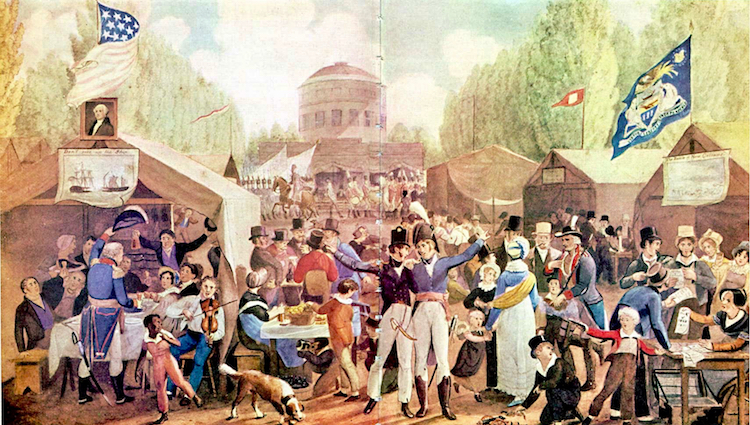
The First Bank of the United States influenced much more than mere economics. Many scholars indeed believe that divisions caused by the Bank led to the creation of the first real political divisions in the country. By the standards set by the Second Bank of the United States, the First Bank was tame. The precious [...]

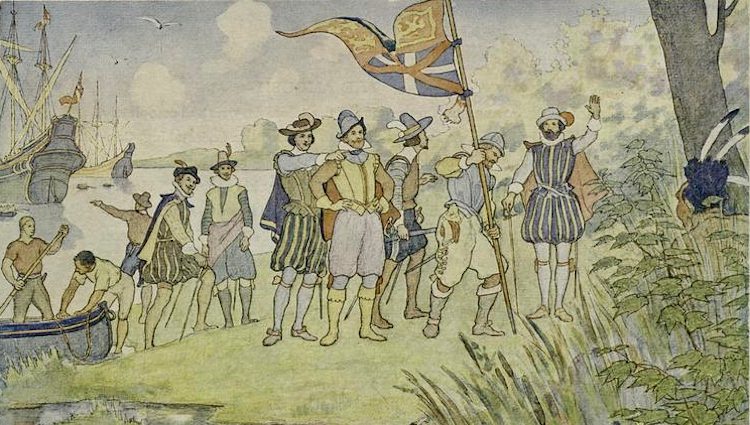
The Enterprising Colony: The Settling of Jamestown

By |2021-04-22T17:37:47-05:00May 13th, 2020|Categories: American Founding, American Republic, Economics, Freedom, History, Jamestown|

In the early seventeenth century, gentlemen adventurers and common tradesmen voyaged to Jamestown and established the first permanent English settlement in North America. They were free and independent Englishmen who risked their lives and fortunes to brave the dangers of the New World for personal profit and the glory of England. […]

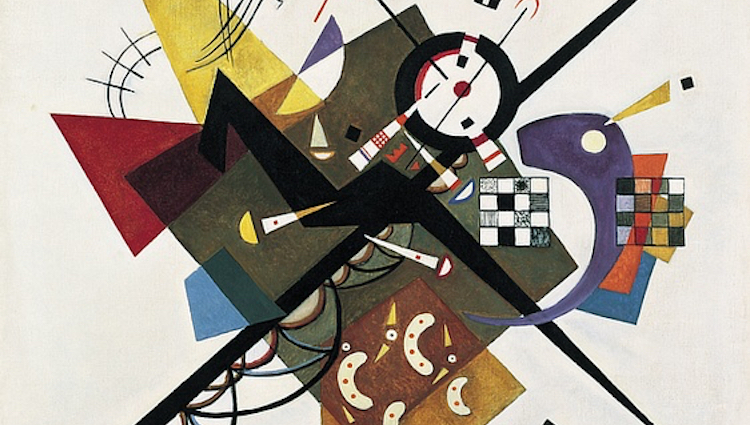
Modernism, Formed or Fleeting?

By |2020-05-12T15:49:02-05:00May 12th, 2020|Categories: Culture, History, Literature, Modernity, Poetry, T.S. Eliot, Tradition, Western Civilization|

The dual definition of “modern”—something that is current and something that is done in a certain manner—touches on a problem that is at the heart of the literary and artistic movement of the early twentieth century known as “Modernism”: Is Modernism something that was meant to represent the “just now” or is it something that [...]

“The Dreaded Blueness:” The Influenza Pandemic of 1918-1919

By |2020-05-10T14:47:33-05:00May 10th, 2020|Categories: Coronavirus, Culture, History, Mark Malvasi, Senior Contributors, War, World War I, World War II|

The Spanish Flu had arisen without warning and was especially virulent. It challenged established knowledge about the nature of such diseases, killing not the young and the old, but instead men and women who were in the prime of life. Not only did doctors struggle to treat it, but they were also at a loss [...]

A Christian Critique of Secular Progressivism

By |2020-05-08T18:26:03-05:00May 8th, 2020|Categories: Civilization, Culture, History, Philosophy, Progressivism, Religion, Time|

The end of history concept—the belief that there will be an endpoint to social, intellectual, and political progress—is a powerful idea that pervades modern-day secular thought. The spread of gay rights, the rise of universal government-run health insurance, and environmental awareness has hubristically led “progressive” secularists to describe a coming “Age of Enlightenment” when Americans [...]

Reminiscences of the Dutch Liberation: May 1945

By |2023-05-08T12:10:06-05:00May 4th, 2020|Categories: Christianity, Culture, Europe, History, Michael De Sapio, Senior Contributors, War, World War II|

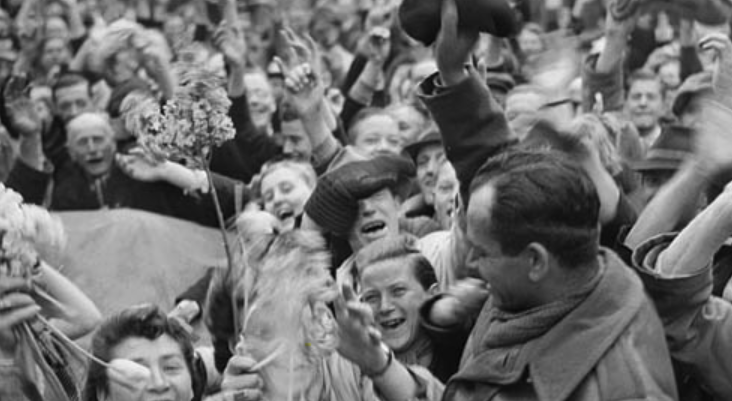
It is now 78 years since the Allies freed the Netherlands from the clutches of the Nazis, yet my neighbor Christina (“Stien”) van Egmond remembers the events with amazing clarity. Ms. Stien was 16 at the time and, having graduated from high school several months previously, was working in her father’s greengrocery in Diemen, a [...]

Frederick Douglass, Progressive Visionary?

By |2020-05-01T09:41:05-05:00April 30th, 2020|Categories: American Founding, American Republic, History|

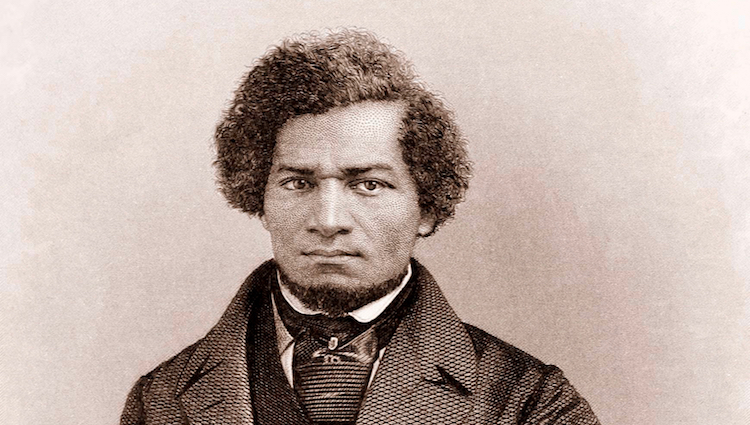
In “Frederick Douglass’s Vision for a Reborn America,” David W. Blight, one of the nation’s preeminent Frederick Douglass scholars, provides a faulty account of Douglass’ view of America and his understanding of the American Founding.[1] Throughout his account, Dr. Blight emphasizes the need to examine Douglass in light of modern racial strife. He begins by [...]

Let Us Shun Imperialism, Always and Everywhere

By |2020-04-14T15:44:45-05:00April 14th, 2020|Categories: Bradley J. Birzer, Conservatism, History, Political Philosophy, Politics, Senior Contributors|

Let me begin this essay by simply throwing down the gauntlet. American imperialists—of whatever political persuasion or ideology—are not only traitors to the American cause and in violation of the deepest meanings and profundities of the American ideal, they are also embracing demonic goals of remaking the world in their own image, thus trampling on [...]

How Can We Form a More Perfect Union in Our Fractious Age?

By |2021-04-22T17:38:38-05:00April 12th, 2020|Categories: American Founding, American Republic, Gleaves Whitney, Government, History, Liberal, Politics, Republicans|

From the founding generation to the greatest generation, Americans sought meaning in one or more of the three operating systems that informed Western civilization: Judeo-Christianity, the Enlightenment, and Romanticism. The productive tension among those three operating systems defined the modern age. Three radically different world views—yet we moderns kept them suspended in a three-way polarity. [...]

Go to Top