Socrates & the Un-Willed Life

By |2023-05-21T11:31:49-05:00October 14th, 2014|Categories: Books, Classics, E.B., Eva Brann, Featured, Plato, Senior Contributors, Socrates, St. John's College, Wisdom|

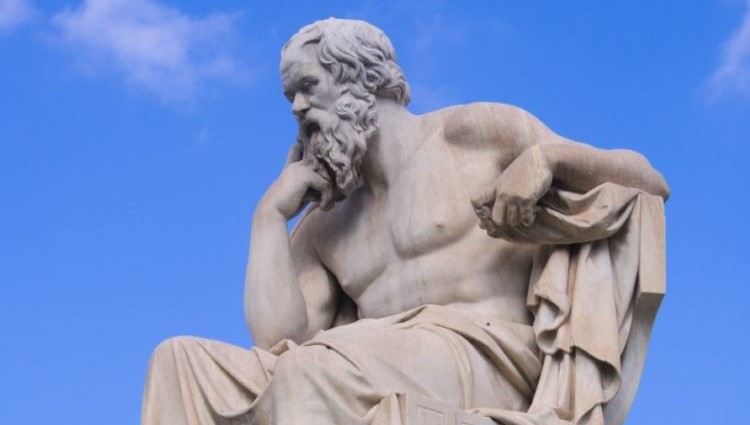
It is notoriously difficult to prove a negative, to catch, as it were, non-being by the tail, but perhaps even harder just to get it in your sights: “Is there any point to which you would wish to draw my attention?” “To the curious incident of the dog in the night-time.” “The dog did nothing [...]

Virgil: Forgotten American Founder

By |2021-10-14T15:51:32-05:00October 7th, 2014|Categories: American Republic, Bradley J. Birzer, Classics, Featured, John Quincy Adams, Virgil|

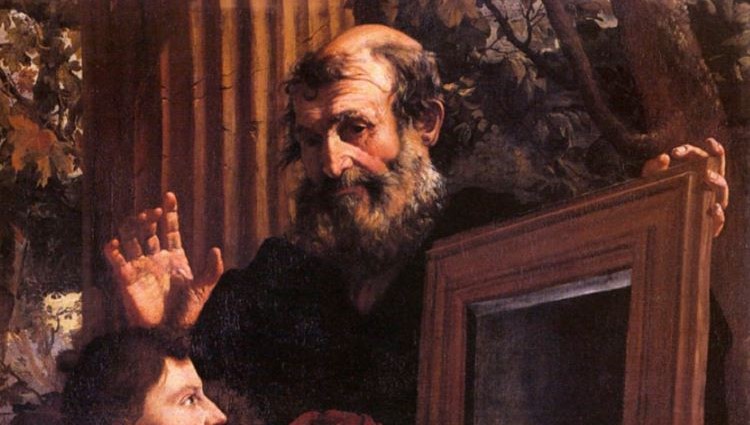
Virgil should be considered as vital as any classical figure to the American Founders, who were truly Men of the West. The American Founders were Men of the West. For all intents and purposes, they might as well have been the remnants of Numenor, each capable of wielding Anduril. As such, they would not readily [...]

What’s Happening in Afghanistan is Absurd

By |2015-05-19T23:13:34-05:00September 26th, 2014|Categories: Aristotle, Classics, Culture, War|Tags: |

Five American troops moved briskly through the streets of Kandahar, their weapons at the ready. It was not yet mid-morning, and things had already broken down. Separated from their convoy, they were following an Afghan prosecutor to the city’s judicial headquarters. Afghanistan is generally not kind to foot patrols or improvisation, and that July morning [...]

Aristotle on the Fullness of Social Living

By |2019-12-03T11:43:34-06:00September 23rd, 2014|Categories: Aristotle, Books, Classics, Featured|

The life dedicated to intellectual pursuits is commonly understood as rarefied and prohibitively esoteric—a life suited to the few rather than the many. Often referred to as the contemplative life, it is associated with images of monastic isolation and is often deemed a life dedicated to (or even perhaps wasted on) puzzlings and musings that [...]

The Imitation of Socrates

By |2021-05-21T12:07:42-05:00August 4th, 2014|Categories: Christopher B. Nelson, Classical Education, Classics, Education, Featured, Meno, Plato, Socrates, St. John's College|

At an earlier session I spoke about Socrates as a model for imitating heroes, because he shows us how to use the lives of extraordinary people to help us make and remake a life worth living for ourselves. Now I’d like to speak about Socrates as a model for teachers to emulate. Teachers have chosen [...]

What is a Book?

By |2023-05-21T11:31:51-05:00July 29th, 2014|Categories: Classics, E.B., Eva Brann, Homer, Senior Contributors, Socrates, St. John's College|Tags: |

It is our tradition that the first lecture of the year should be dedicated to our freshmen.* They have newly joined a community whose program of learning centers on the scheduled reading of a preset list of books and on the twice-weekly discussion that takes place in the seminar. They have come to us chiefly [...]

The Imitation of Heroes

By |2020-09-10T14:41:07-05:00July 28th, 2014|Categories: Christopher B. Nelson, Classical Education, Classics, Liberal Learning, Phaedo, Socrates, St. John's College|

Higher education should expend all its efforts to place self-development at the center of its activities, relegating other activities to the ancillary roles for which they are suited. In doing so, it can find no better model than Socrates, the master of intelligent imitation, and the most imitation-worthy practitioner of the Imitation of Heroes. Imitation, [...]

To Orchestrate A Renaissance

By |2023-05-08T12:53:43-05:00July 20th, 2014|Categories: Classics, Culture, Featured, Music, Roger Scruton, Rome, Virgil|

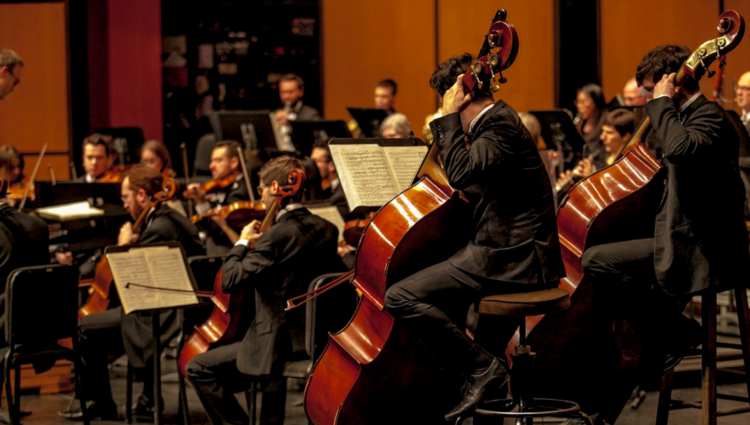
The purpose of cultural traditionalists ought to be to orchestrate a new renaissance for live classical music, to ensure that the dawn breaks on symphony halls that rise like polished temples in our midst rather than like ruins on abandoned hilltops. Sed me Parnasi deserta per ardua dulcis raptat amor. 1 —Virgil Perhaps our modern [...]

Aspects of Tragedy: Ancient and Modern

By |2019-06-27T12:48:27-05:00July 12th, 2014|Categories: Classics, Featured, George A. Panichas, Great Books, Greek Epic Poetry, Tragedy|Tags: |

In the ancient world the perimeters of tragic vision and experience were clearly established and recognized. One could be quite clear as to the meaning of tragedy and the manifestations of tragic experience and tragic heroism. One could readily comprehend the noble stature and the transcendent realm of tragedy. One could, in short, measure oneself [...]

What is Happiness? Aristotle vs. Pop Music

By |2026-03-11T11:07:09-05:00June 18th, 2014|Categories: Aristotle, Audio/Video, Barbara J. Elliott, Classics, Culture, Happiness, Music, Senior Contributors|

Is happiness rooted in pleasure, as many pop songs assert? Or does happiness stem from wealth, honor, wisdom, or political power? Aristotle contends that true happiness depends on a certain kind of understanding of the mind and soul to correctly apprehend what is true. The song “Happy” by Pharrell Williams has gone viral, topping the [...]

What is Honor?

By |2018-10-16T15:25:58-05:00June 7th, 2014|Categories: Aleksandr Solzhenitsyn, Aristotle, Classics, Culture|Tags: |

I. Introduction There was a time in days gone by when honor was the driving force behind the life of every great, good, and decent man. Every action of his hand, every thought that found its way from the mind to the mouth and past the lips, every motivation for every endeavor worthy of his [...]

Plato in Love

By |2019-04-17T08:17:24-05:00May 1st, 2014|Categories: Classics, Liberal Learning, Plato|

What is Love? This ancient question concerns all living souls. In this age of moral chaos love seems to be in the belly of the beholder. Most people reduce love to the phenomenological level. Although some do still hold the abstract notion of love in the mind, fewer still see love as universal law of [...]

Go to Top