Ernst Jünger’s “The Forest Passage” and the Conservative Mind

By |2020-07-20T13:42:50-05:00July 21st, 2020|Categories: Books, Conservatism, Freedom, Imagination, Literature, Myth, Nature|

Written in the shadow of the Second World War, Ernst Jünger’s “The Forest Passage” reimagines the forest as a symbol of freedom in an age where the “Leviathan,” or all-encompassing totalitarian state, threatens to encroach on liberty and free space. Yet as long as the “forest rebel” has access to the domains of art, philosophy, [...]

Myth: The Door to the Transcendent

By |2020-06-19T14:09:02-05:00June 19th, 2020|Categories: Art, Culture, Fiction, Modernity, Myth|

Throughout history, cultures have always developed fantastical tales of heroes and gods and monsters and demons. Whether they are tales of the Greek Pantheon, Norse gods, or modern-day superheroes, these tales grasp the imagination and transport the hearer to a different realm full of possibility. The question then arises in my mind: Are these myths [...]

Odin on Classical Education

By |2020-06-02T02:35:09-05:00June 3rd, 2020|Categories: Classical Education, Classical Learning, Culture, Education, Humanities, Liberal Learning, Myth, Virtue|

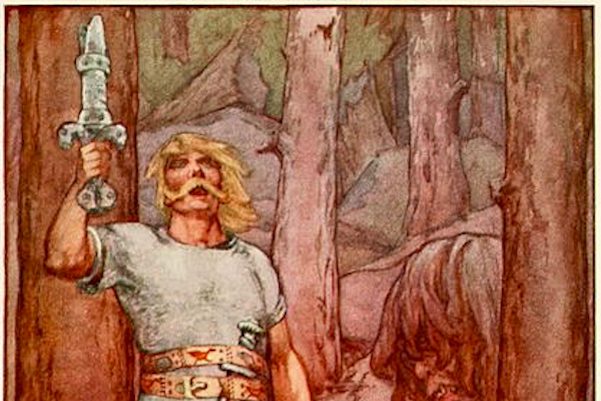
Schools now attempt to produce students who will contribute to the workforce and, really, nothing more. Students are now frequently viewed as tools for the end of GDP; this demeaning use of a person shows that a pragmatic notion of education entirely misses the mark. Birth to school. School to college. College to job. Job [...]

Castalia and St. John’s College

By |2023-05-21T11:29:07-05:00June 2nd, 2020|Categories: Books, E.B., Eva Brann, Great Books, Imagination, Liberal Learning, Literature, Myth, Senior Contributors, St. John's College|

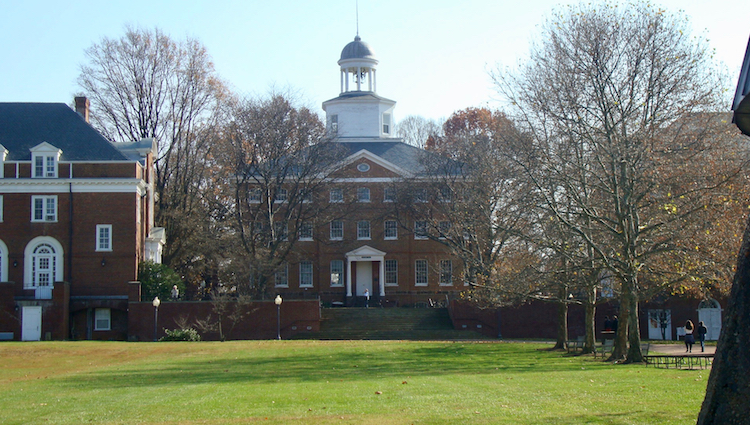
“Waldzell” is the name Hermann Hesse gives to the school in a “Pedagogical Province” brought to life in the book called “The Glass Bead Game.” St. John’s College is an American school with two campuses. The features in which Waldzell is like St. John’s as well as those in which it differs are responsive; they [...]

Tolkien: Entering Faerie

By |2020-04-24T15:23:57-05:00April 20th, 2020|Categories: Bradley J. Birzer, Fiction, Imagination, J.R.R. Tolkien, Literature, Myth, Senior Contributors|

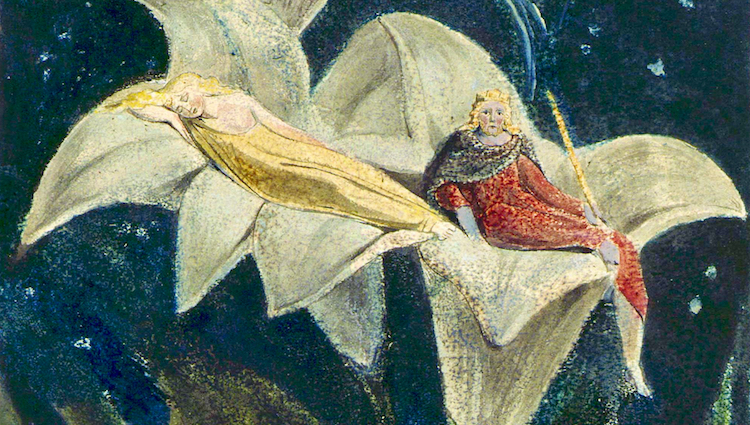
What, exactly, is Faerie? While not quite the realm of the supernatural, it is the realm of grace (and its enemies), and it can be, even in its greatest beauty, dangerous in the extreme. It is also, by its very nature, sacramental, tangible, and incarnational. On March 8, 1939, just five months shy of the [...]

The Theology of Socratic Piety

By |2020-03-18T18:44:00-05:00March 18th, 2020|Categories: Apology, Crito, Greek Epic Poetry, Homer, Myth, Phaedo, Socrates, Timeless Essays|

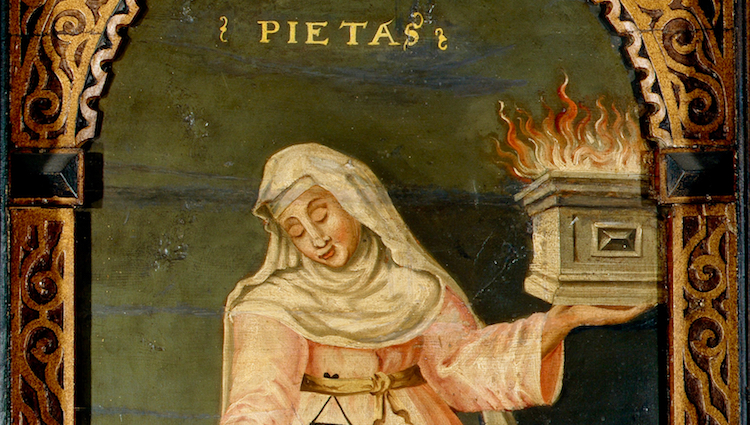
We know that Socrates was accused of introducing new gods and of corrupting the youth. But what was Socrates’ true position concerning the gods? Today’s offering in our Timeless Essay series affords our readers the opportunity to join the late Nalin Ranasinghe, as he analyzes the essence of piety as expressed in Plato’s Euthyphro. —W. Winston [...]

Sir Gawain on Maturity

By |2020-11-21T16:38:02-06:00November 18th, 2019|Categories: Character, Christianity, Imagination, Literature, Louis Markos, Myth, Poetry, Senior Contributors|

The mature man is the one who not only honors vows and oaths, but who, when he breaks them, confesses his crime, feels shame for his failure, and seeks to make right what he has violated. Shrugging off one’s moral failings, acting as if they don’t matter, is not a sign of maturity but an [...]

Tolkien & Anglo-Saxon England: Protectors of Christendom

By |2020-02-01T12:32:53-06:00November 10th, 2019|Categories: Bradley J. Birzer, Christendom, Christian Humanism, England, History, J.R.R. Tolkien, Myth, Senior Contributors, StAR, Timeless Essays|

J.R.R. Tolkien believed that the Anglo-Saxon world might offer us strength to redeem Christendom. The hero of “The Lord of the Rings,” after all, is an Anglo-Saxon farmer turned citizen-warrior. Today’s offering in our Timeless Essay series affords our readers the opportunity to join Bradley J. Birzer, as he discusses J.R.R. Tolkien’s christological interpretation of [...]

The Noble Pagan

By |2019-10-24T09:33:42-05:00October 23rd, 2019|Categories: Beowulf, Beowulf Series, Bradley J. Birzer, Christianity, Imagination, Myth, Senior Contributors|

Beowulf came from the pagan world and would, for the most part, remain in that pagan world. Yet, his gifts—of strength, spirit, and fortitude—were the gifts of the Christian God, whether the poem allowed this or not. Much like Greek philosophy preparing the way of Christ for the Jews, it could be that Beowulf prepares the [...]

“Beowulf” and the Men of the Twilight

By |2019-11-23T15:40:06-06:00October 20th, 2019|Categories: Beowulf, Beowulf Series, Bradley J. Birzer, Christianity, Imagination, J.R.R. Tolkien, Literature, Myth, Senior Contributors|

The “Beowulf” poem, J.R.R. Tolkien stressed, is fundamentally about the very nature of heroism. Beowulf is, of course, a “noble pagan.” Given such a consideration, questions arise: Does he advance only his own will, or does he take into account God’s grace? Can true heroism even exist in a Christian world of grace, or must [...]

Paganism, Poetry, and Pointers: Why the Old Stories Matter

By |2019-10-05T22:29:50-05:00October 5th, 2019|Categories: Christianity, Dwight Longenecker, Imagination, Myth, Senior Contributors|

Myths are not simply fanciful stories that are untrue; they are simple, fanciful stories that are very true, woven into the very fabric of the universe we perceive. There is, in the human heart, some kind of poetry that sees meaning in everything and everyone, and this meaning is expressed in fantastic stories and myths [...]

From Pagan Heroism to Christian Alliance: Tolkien’s “Beowulf”

By |2019-10-05T09:54:55-05:00September 24th, 2019|Categories: Beowulf, Books, Bradley J. Birzer, Great Books, J.R.R. Tolkien, Myth, Poetry, Senior Contributors|

J.R.R. Tolkien argued that while Christianity gave the heroes a new point upon which to focus, the enemies of the heathen gods remained, too, the enemies of the Christian God. Beowulf, by challenging all that is spawned in Hell, has, by default, become the ally of all that destined to Heaven. Inducted into the prestigious [...]

Go to Top