Defining America

By |2020-08-03T16:10:07-05:00February 10th, 2019|Categories: Civilization, Culture, Defining America Series, History, Mark Malvasi, Senior Contributors|

What older societies expressed in myth, custom, and tradition, Americans established through scholarship, in a heroic effort to sustain a national character and national consciousness that were often more ephemeral and certainly more elusive than they may at first have appeared or than Americans have been wont to believe. There is nothing new in an [...]
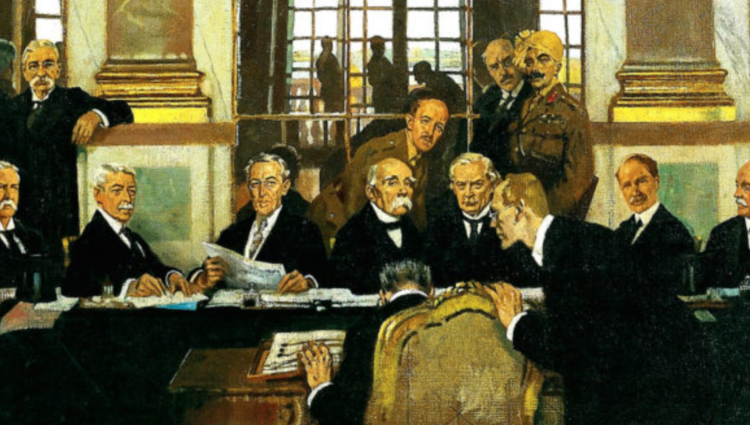
Versailles, a Century Later

By |2021-12-04T10:07:28-06:00January 1st, 2019|Categories: Civilization, Democracy, Europe, History, Mark Malvasi, Nationalism, Senior Contributors, War, Western Civilization, Woodrow Wilson, World War I, World War II|

The Great War, in Woodrow Wilson’s view, had to become precisely what the delegates to the Congress of Vienna feared: a moral crusade, an instrument of social and political revolution. For American president Woodrow Wilson, the First World War was the “war to end all wars” by making “the world safe for democracy,” not least [...]

The Death of Europe: Two Classic Films and the Great War

By |2019-10-15T21:57:31-05:00November 10th, 2018|Categories: Ethics, Europe, Film, Friendship, Mark Malvasi, Nationalism, Senior Contributors, War, Western Civilization, World War II|

So incisive and troubling did the Nazis find Jean Renoir’s indictment of war and his embrace of the shared culture of Europe, that when the Wehrmacht invaded France and occupied Paris in the spring of 1940, Renoir’s film La Grande Illusion was among the first cultural artifacts Nazi officials confiscated… The Great War was a catastrophe for Europe. The [...]

Nature, Science, and Civilization

By |2022-05-20T14:18:00-05:00September 26th, 2018|Categories: Civilization, Jean-Jacques Rousseau, Leviathan, Mark Malvasi, Nature, Science, Senior Contributors, Technology, Western Civilization|

At its finest, the new conception of nature enabled people to appreciate, and wish to safeguard, the natural environment on which life depends. At its worst, this reverence for the natural world gave rise to a mindless sentimentality that regarded all human activity as harmful and exploitive. I. The English mathematician and philosopher Alfred North [...]

Immigration: A Troubled History

By |2020-05-18T18:43:08-05:00August 5th, 2018|Categories: American Republic, Culture, History, Immigration, Mark Malvasi|

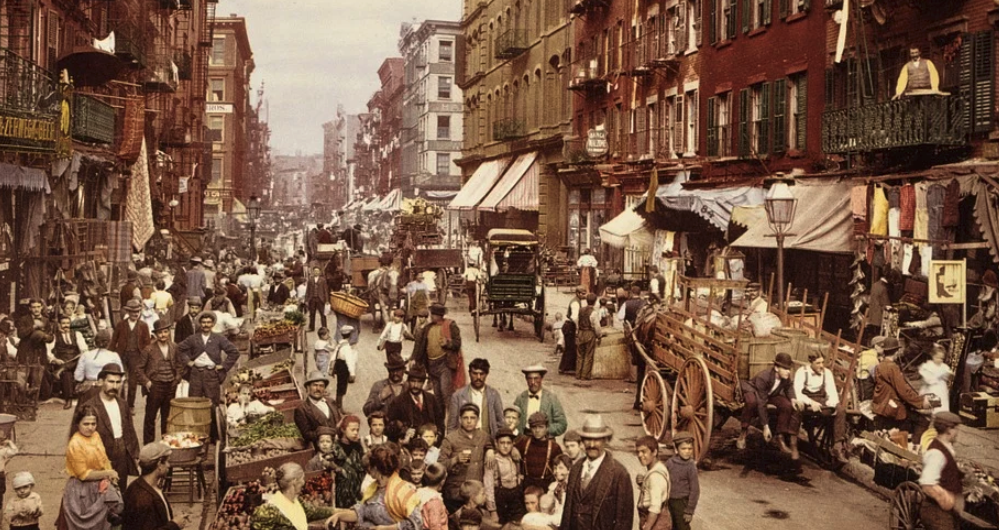
Immigrants became American, or at least what they thought of as American, because they had no alternative. Educated in the rituals and standards of citizenship, they conformed to the vague but robust doctrine of “Americanism,” and sought, above all, to avoid being “un-American.” I. On August 6, 1676, Nicholas Spencer, secretary of the Virginia Colony, [...]

The Lasting South? A Reconsideration

By |2020-07-19T15:05:18-05:00April 25th, 2018|Categories: Books, Mark Malvasi, Richard Weaver, Social Institutions, South|Tags: |

Ambiguities and contradictions aside, the Southern conservative tradition, by a heroic act of mind, may yet be summoned against the distortions of modernity, and, in particular, against the alluring gnostic supposition, now so prevalent, that men can alter the nature of existence and transmute the substance of being. From the perspective of the twenty-first century, [...]

Thomas Jefferson and the Paradox of Slavery

By |2021-04-27T11:22:58-05:00April 17th, 2018|Categories: Aristotle, Freedom, History, Mark Malvasi, Philosophy, Slavery, South, Thomas Jefferson|

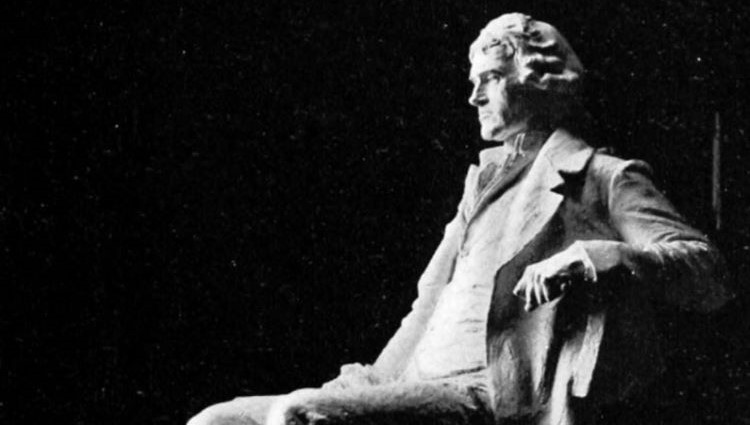
The masters of slaves, it turned out, were themselves neither independent nor self-sufficient, but were bound to, and reliant upon, their slaves both for their welfare and their identity. This vague recognition in part accounts for the grim tone that Thomas Jefferson adopted in his analysis of slavery: He had to confront the prospect that [...]

Race and the Western Mind

By |2019-02-19T16:49:59-06:00March 18th, 2018|Categories: Europe, History, Ideology, Mark Malvasi, Western Civilization|

Racial ideology helped Europeans to make sense of their world. Like all ideologies, it did not provide them with a true picture of the world, only one that satisfied them for a time because it provided a workable interpretation of reality… The question of race has long constituted a troublesome aspect of modern Western thought. [...]

Nationalism and Totalitarianism

By |2019-08-13T17:53:47-05:00November 20th, 2017|Categories: Europe, History, Mark Malvasi, Nationalism, Patriotism, Western Civilization|

The militant nationalism of the twentieth century made it futile to assert clear ideas, to ask honest questions, to make reasoned judgments, or to engage in truthful debate… Permit me to begin at the end. Joseph Pearce is concerned with the power of an international bureaucracy and the advent of a world government that will [...]

Definitions and Their Discontents

By |2020-10-03T20:26:55-05:00October 24th, 2017|Categories: Christianity, George Orwell, History, Language, Mark Malvasi, Truth|

Words are not static. They are dynamic. Like the birth of a child, there remains always something mysterious, even miraculous, about the birth of a thought and about the words we use to bring that thought into being. Perhaps Johnny Mercer has already and long ago settled the gentlemanly epistemological debate that has emerged between [...]

Toward Patriotism: An Alternative to Nationalism

By |2020-05-19T15:19:18-05:00September 24th, 2017|Categories: Culture, Europe, George Orwell, History, Joseph Pearce, Mark Malvasi, Nationalism, Patriotism|

Nationalism has not brought and will not bring unity, if for no other reason than nationalism insists on uniformity and must always exclude those who do not conform. Yet, if there is a chance to achieve some measure of unity, patriotism might enable it. In his thoughtful response to my essay, “History as Tragedy and [...]

History as Tragedy and Farce: The Rise of Nationalism

By |2021-04-22T09:20:51-05:00September 3rd, 2017|Categories: History, Mark Malvasi, Nationalism, Philosophy, Tragedy|

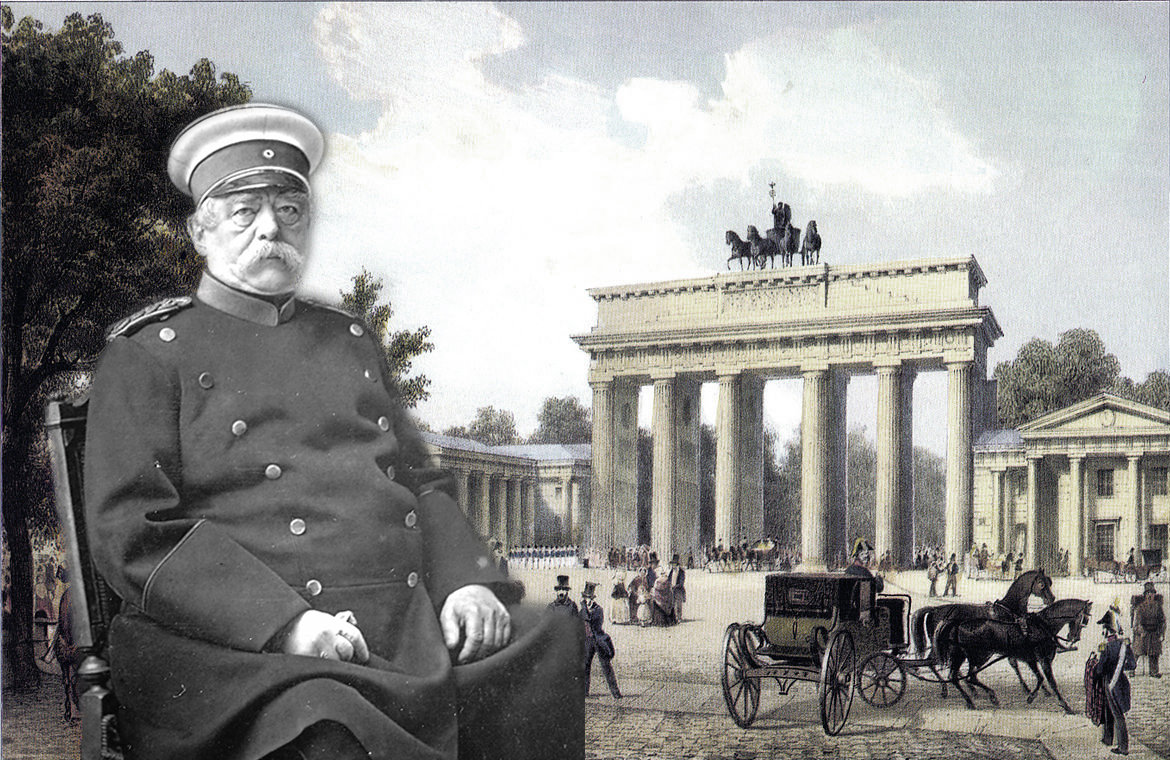
In their political offensive against socialism and democracy, many European statesmen of the late-nineteenth and early-twentieth centuries found in nationalism a convenient doctrine to electrify and exploit the masses… Karl Marx famously began The Eighteenth Brumaire of Louis Bonaparte by observing that Hegel “remarks somewhere that all facts and personages of great importance in world [...]

William Dean Howells’ Cautionary Tale for Decadent Americans

By |2019-08-22T13:51:05-05:00August 24th, 2017|Categories: Books, Christianity, Civil Society, Culture, Featured, Literature, Mark Malvasi, Social Order|

In A Traveler From Altruria, William Dean Howells reminded Americans that if they continued to justify their egoism and selfishness at the expense of the common good, all that had profited them in this world would have been purchased at the cost of their souls Dismissed as an apologist for the manners and morals of [...]

Ideas and American Politics

By |2019-04-30T15:07:09-05:00August 6th, 2017|Categories: Alexis de Tocqueville, American Republic, Democracy, Featured, Federalism, Mark Malvasi, Politics, Populism, Progressivism, Senior Contributors|

The fear and suspicion of ideas and intellect rest on historical foundations buried deep in the American consciousness. Many Americans, in fact, have long disparaged the life of the mind, and populist democracy has increasingly required an appeal to vulgarity and ignorance… The mistrust of ideas and intellect that has long prevailed among a substantial [...]

Go to Top