Did the Founders Make the Presidency Too Powerful?

By |2026-02-15T19:24:59-06:00February 15th, 2026|Categories: American Founding, American Republic, Bradley J. Birzer, Featured, Timeless Essays|

The American people have, unfortunately, come to see the president as the embodiment of their hopes, their dreams, and their nightmares. It is time to begin a conversation about the nature, goals, and limits of the U.S. Presidency. When it comes to the American Founding, broadly defined, it’s hard for this born-and-bred Kansan not to [...]

Ten Great Requiem Masses

By |2026-02-24T07:51:06-06:00February 14th, 2026|Categories: Audio/Video, Camille Saint-Saëns, Hector Berlioz, Michael Haydn, Music, Stephen M. Klugewicz, Timeless Essays, Wolfgang Amadeus Mozart|

“Should not church music be mostly for the heart?” —Joseph Martin Kraus The Roman Catholic Mass for the Dead—the Requiem, sometimes called Missa pro Defunctis (or Defuncto) or Messe des Morts—is surely the most dramatic of liturgical forms and has inspired countless composers, from medieval times to the present. What the Czech composer Antonin Dvořák, a devout [...]

Benedict XVI on Science, Philosophy, & Faith

By |2026-02-12T14:26:48-06:00February 12th, 2026|Categories: Catholicism, David Deavel, Faith, Philosophy, Pope Benedict XVI, Science, Senior Contributors, Timeless Essays|

While Benedict XVI may not himself have made great contributions to the natural sciences, he made what is much more important: a contribution to understanding a world in which the truth is one, is God’s, and, from atoms to archangels, is capable of being seen as connected. A great deal has been written about the [...]

The Journey Home: Wilhelm Röpke & the Humane Economy

By |2026-02-11T13:42:06-06:00February 11th, 2026|Categories: American Republic, Economics, Political Economy, Roger Scruton, Timeless Essays, Uncategorized, Wilhelm Roepke|

Wilhelm Röpke asked how to address the problems of social fragmentation and the loss of community feeling, in a world where the market is left to itself. Röpke’s own idea was that society is nurtured and perpetuated at the local level, through motives that are quite distinct from the pursuit of rational self interest. Two [...]

The Importance of Marcus Tullius Cicero

By |2026-02-10T15:55:01-06:00February 10th, 2026|Categories: Bradley J. Birzer, Cicero, Classical Education, Classical Learning, Classics, Featured, Liberal Learning, Natural Law, Timeless Essays|

It can be said of Cicero and his role within the West that, in hindsight, he becomes a figure much larger than he himself actually was; he is a touchstone, a fountainhead, a rock upon which we can place our fondest and dearest dreams. How do I define the Natural Law? Taking my cue from [...]

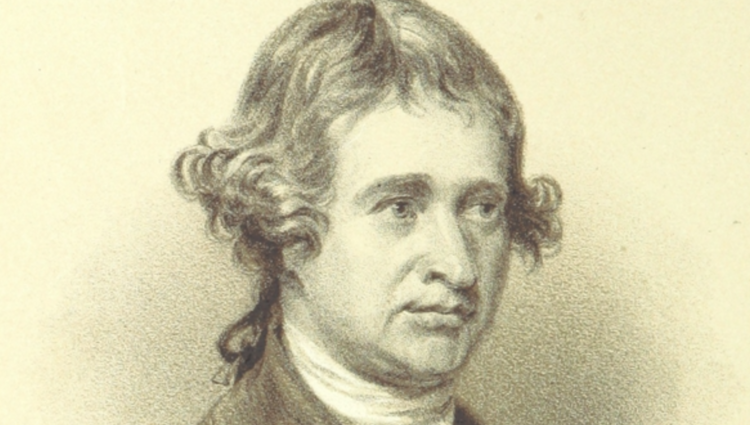
Edmund Burke, Thomas Paine, & the Birth of Right and Left

By |2026-02-08T17:26:22-06:00February 8th, 2026|Categories: Books, Bruce Frohnen, Edmund Burke, Featured, Timeless Essays|

Do you wish to understand the birth of right and left? Examine the debate between Edmund Burke and Thomas Paine occasioned by the French Revolution. The Great Debate: Edmund Burke, Thomas Paine, and the Birth of Right and Left by Yuval Levin, (304 pages, Basic Books, 2014) Those seeking a deeper understanding of the roots of contemporary [...]

Desperately Needing Thomas More

By |2026-02-06T18:41:11-06:00February 6th, 2026|Categories: Books, Bradley J. Birzer, Christianity, Senior Contributors, St. Thomas More, Timeless Essays|

We live in a world that desperately needs Thomas More’s wisdom. We need his understanding of God, his understanding of virtue, and his understanding of the complexities of the human person. The Essential Works of Thomas More, edited by Gerard B. Wegemer and Stephen W. Smith (1520 pages, Yale University Press, 2020) Though he’s only [...]

Ronald Reagan & the Return of Blue-Collar Conservatism

By |2026-02-05T16:08:01-06:00February 5th, 2026|Categories: Books, Conservatism, Donald Trump, Economics, Featured, Politics, Ronald Reagan, Timeless Essays|

Ronald Reagan’s version of conservatism was far more pro-government than was Barry Goldwater’s. Compassion, not liberty, was Reagan’s guide. This raises the question: To what extent is the success of modern political conservatism dependent upon the conservation of liberal, even progressive, reforms? The Working Class Republican: Ronald Reagan and the Return of Blue Collar Conservatism [...]

The Deavel’s Dictionary

By |2026-02-04T13:37:51-06:00February 4th, 2026|Categories: David Deavel, Language, Modernity, Politics, Senior Contributors, Timeless Essays, Truth|

For all those out there wondering, including my first-grade art teacher who never learned how to pronounce it, my surname is actually pronounced with a long rather than short “e.” It’s “DEE-vuhl” and not “Devil.” But the moniker of a demon has been applied to me so often that I have decided to make demon-ade. [...]

Magnanimity: The Balm for Our Brutalized Public Discourse

By |2026-02-03T16:19:22-06:00February 3rd, 2026|Categories: Civil Society, Love, Stephen M. Klugewicz, Timeless Essays|

Every man is his own pope and philosopher-king on the Internet, where our semi-formed and semi-informed opinions are cast as absolutes. Convinced of our perfect knowledge and infallible righteousness, we denounce and demean in harsh, uncharitable terms the arguments of others, and even their very persons. “Minds are conquered not by arms, but by love [...]

The 1928 Book of Common Prayer: An Appreciation

By |2026-02-01T14:01:16-06:00February 1st, 2026|Categories: Anglicanism, Bible, Books, Christian Living, Christianity, Prayer, Religion, Timeless Essays|

The 1928 Book of Common Prayer is an important cultural artifact, whose influence on English language and literature rivals that of the Authorized Version of the Bible and the works of William Shakespeare. You will recall Parson Thwackum in Henry Fielding’s classic novel History of Tom Jones, a Foundling (1749). Mr. (never, in proper ecclesiastical usage, Reverend) Thwackum [...]

Newman & Dawson Against Liberalism

By |2026-01-31T16:36:05-06:00January 29th, 2026|Categories: Bradley J. Birzer, Christianity, Christopher Dawson, Edmund Burke, Liberalism, St. John Henry Newman, Timeless Essays|

Christopher Dawson greatly admired John Henry Newman, for he understood more clearly than any of his contemporaries the coming war of the Church against the ideologues bred by the French Revolution, utilitarianism, and secularization. As Christopher Dawson attempted to discover the sources of the ideological disruptions of the twentieth-century as well as solutions to the [...]

Go to Top