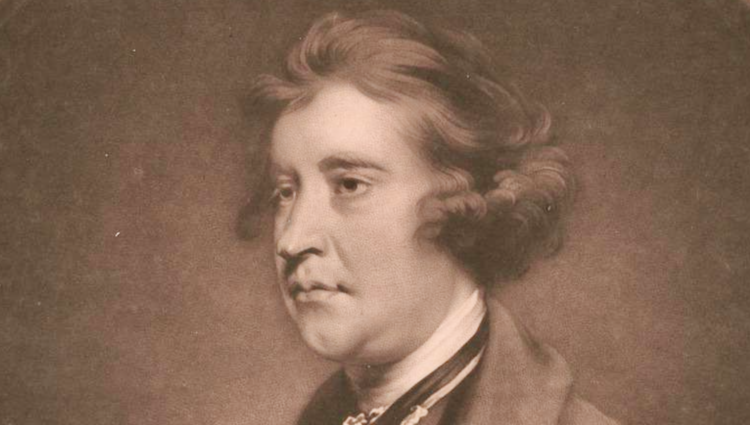
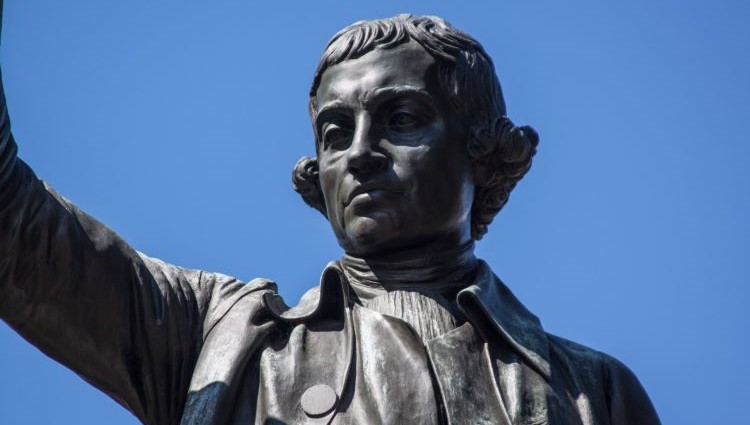
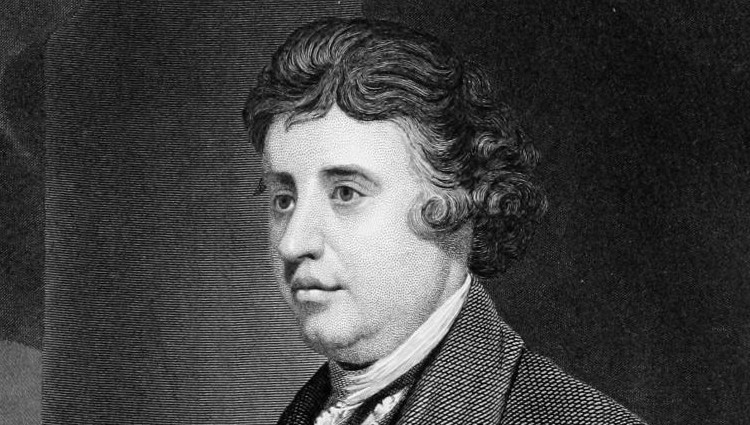
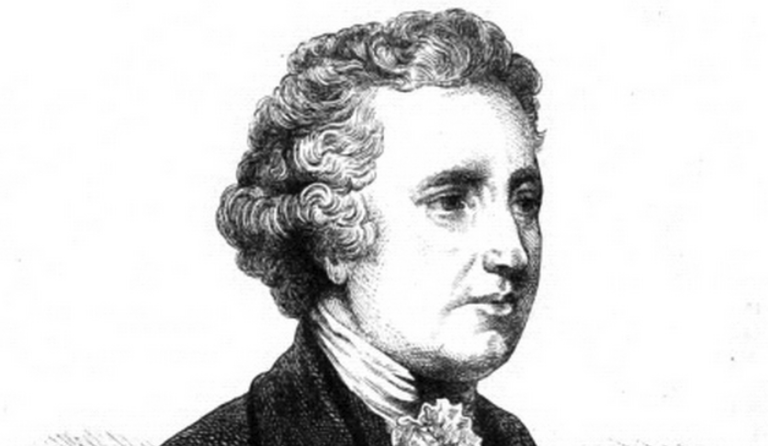
Edmund Burke (January 12, 1729 – July 9, 1797) is known as the “modern founder of political conservatism”. He was a philosopher, an author, an orator, a statesman and served in the House of Commons of Great Britain as a member of the Whig Party for many years. Later, his opposition to the French Revolution led to him becoming the leading figure of the conservative Whigs also known as the “Old Whigs”.
A Requiem for Manners

By |2023-08-30T17:46:50-05:00August 30th, 2023|Categories: Christianity, Conservatism, Culture, Edmund Burke, History, Robert E. Lee, Stephen M. Klugewicz, Timeless Essays, Virtue|

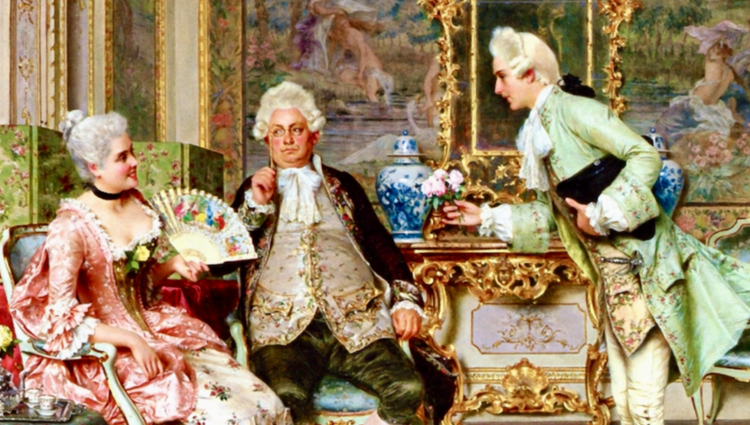
Today the idea that the cultivation of manners should be an essential part of one’s education has been lost almost entirely. Proof of the demise of manners is all around us, and thus one of the main pillars of civilization is crumbling before us. On April 9, 1865, General Robert E. Lee met General Ulysses [...]
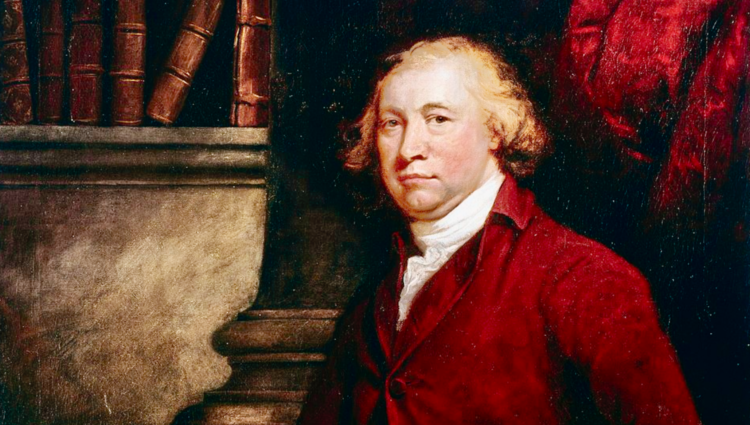
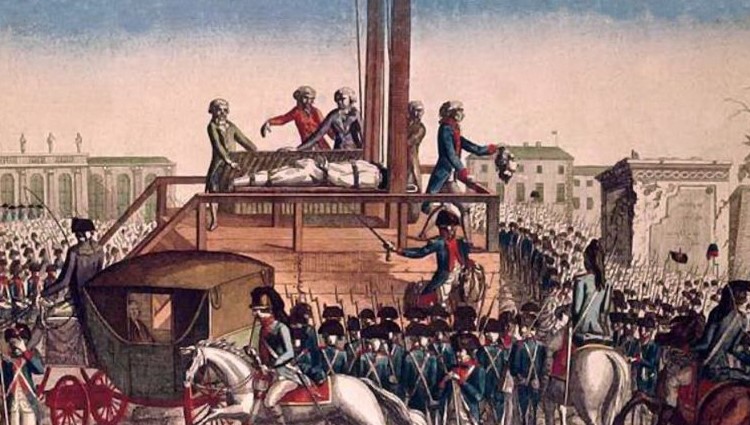
Edmund Burke & the English Revolution

By |2023-08-15T18:01:08-05:00August 15th, 2023|Categories: Community, Conservatism, Edmund Burke, Revolution, Timeless Essays|Tags: , |

In his “Reflections,” Edmund Burke constructs a powerful myth of English history, defending the consolidated results of the English Revolution of the seventeenth century. In his poem “Blood and the Moon,” Yeats writes of “haughtier-headed Burke that proved the state a tree.” Edmund Burke would have relished the line, having proved nothing of the sort. [...]

Burke on the Inhumanity of the French Revolution

By |2023-07-13T21:23:13-05:00July 13th, 2023|Categories: Bradley J. Birzer, Edmund Burke, History, Politics, Revolution, Senior Contributors, Timeless Essays|

Whatever its own stated purposes and desired ends, the French Revolution never sought to better the condition of humanity or even of France. The Revolutionaries, as Edmund Burke stressed, were radicals, seeking civil war not only in France, but also in all of Christendom. The grand Anglo-Irish statesman, Edmund Burke (1729-1797) spent much of his [...]

The Democracy of the Unborn

By |2023-01-30T14:21:36-06:00January 30th, 2023|Categories: Abortion, Conservatism, Edmund Burke, Liberalism, Timeless Essays, Tradition|

Society has been reduced to those living in the present; but in being reduced, it has excluded the democracy of the dead and unborn. We, in the present, must fight for this most obscure of all classes. In the abortion debate, one of the pro-choice arguments is based on the idea of “personhood.” Personhood is [...]

Edmund Burke and the Dignity of the Human Person

By |2023-07-09T01:02:22-05:00January 11th, 2023|Categories: Bradley J. Birzer, Edmund Burke, Imagination, Moral Imagination, Senior Contributors, Timeless Essays|

Edmund Burke believed that one must see the human being not for what he is, or the worst that is within him, but rather as clothed in the “wardrobe of moral imagination,” a glimpse of what the person could be and is, by God, meant to be. Though we correctly remember Edmund Burke as the [...]

Burke’s “Scattered Hints Concerning Philosophy and Learning”

By |2022-12-05T19:55:35-06:00December 5th, 2022|Categories: Edmund Burke, Education, Philosophy|

Born in 1729, Edmund Burke was in his twenties during the 1750s. Some of his notes from that period were collected in a slim volume called A Note-Book of Edmund Burke, edited by H.V.F. Somerset, published in 1957. An essay in the volume is “Several Scattered Hints Concerning Philosophy and Learning Collected Here from My [...]

On Being Conservative

By |2022-08-23T14:48:35-05:00August 23rd, 2022|Categories: Conservatism, Edmund Burke, Family, Jane Austen, Marriage, Philosophy, Robert Nisbet, T.S. Eliot, Timeless Essays|

To be a conservative is first and foremost to defend or to conserve something good: to protect family, neighborhood, local community, and region. Louis de Bonald Of the many attempts to define conservatism in recent decades, one of the most compelling is Robert Nisbet’s: “The essence of this body of ideas is the protection [...]

Prudence as Excellence: Edmund Burke, Abraham Lincoln, & the Problem of Greatness

By |2022-03-30T09:12:00-05:00March 29th, 2022|Categories: Abraham Lincoln, Edmund Burke, Virtue|Tags: |

In a democratic age, how can greatness come to be? Edmund Burke offers a way forward: prudence as a form of excellence. Our conference is subtitled “equality and the survival of heroism.” My concern is the survival of prudence amid the longing for heroism—in particular, the misalignment between ambition and circumstance, the persistent pursuit of [...]

The Essence of Conservatism

By |2021-10-19T08:21:07-05:00October 18th, 2021|Categories: Conservatism, Edmund Burke, Essential, History, RAK, Russell Kirk, The Imaginative Conservative, Timeless Essays, Tradition|

Everything worth conserving is menaced in our generation. Mere unthinking negative opposition to the current of events, clutching in despair at what we still retain, will not suffice in this age. A conservatism of instinct must be reinforced by a conservatism of thought and imagination. A friend of mine, whom we shall call Miss Worth, fell [...]

Edmund Burke and the Progressive Mind

By |2021-03-19T15:14:54-05:00March 19th, 2021|Categories: Edmund Burke, Glenn Arbery, Great Books, Senior Contributors, Wyoming Catholic College|

Not swayed by popular enthusiasm, Edmund Burke was the first substantial thinker to address the full-blown entrance of radical ideas into the political sphere and the first to express a truly conservative umbrage at the imposition of abstractions onto a world of particular, distinctive circumstances. Juniors at Wyoming Catholic College have just read in Humanities [...]

Burke on the French Revolution and Britain’s Role

By |2020-11-15T14:09:43-06:00November 15th, 2020|Categories: Bradley J. Birzer, Edmund Burke, England, Government, History, Politics, Revolution, Senior Contributors|

Once the British had returned to first principles and right reason, Edmund Burke argued, they would also be reminded of the practical things, such as good government, the cultivation of the middle class, and the protection of property. In other words, through the fight against the French Revolution, the British would return to being properly [...]

Burke’s First Letter on a Regicide Peace

By |2020-10-15T09:55:34-05:00October 8th, 2020|Categories: Bradley J. Birzer, Civilization, Edmund Burke, Government, History, Politics, Revolution, Senior Contributors|

As Edmund Burke observed, real community begins with the free and natural choice to associate at the most personal, familial, and local level, with each community growing from the ground up. By misunderstanding this, the French Revolutionaries seceded not just from Christendom, but from the laws of nature. In the final years of his life, [...]

Conserving Today or in 499 B.C.

By |2022-06-22T10:00:16-05:00July 21st, 2020|Categories: Aristotle, Bradley J. Birzer, Cicero, Conservatism, Culture, Edmund Burke, Politics, Russell Kirk, Senior Contributors, Socrates, St. Thomas More|

In times of chaos, it’s profoundly necessary to remember those who have come before us and the innumerable sacrifices they made. Each of these great men, whatever his individual faults, sought to live according to the Good, the True, and the Beautiful. They preserved, and they conserved. As a way of perceiving and a habit [...]

Edmund Burke on Rights: Inherited, Not Inherent

By |2020-06-16T16:16:40-05:00June 16th, 2020|Categories: American Republic, Declaration of Independence, Edmund Burke, Freedom|

On what basis are political constitutions actually formed and remain valid? Where do rights come from? Edmund Burke offers us an account different from that of many of our contemporaries. We hold these truths to be self-evident, that all men are created equal, that they are endowed by their Creator with certain unalienable Rights, that [...]

Go to Top