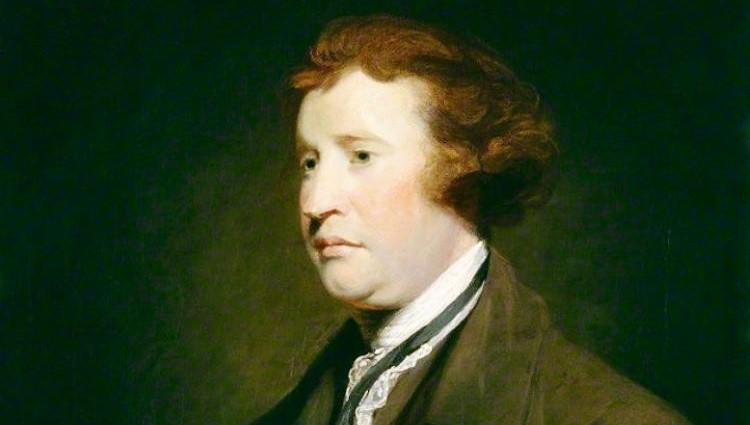
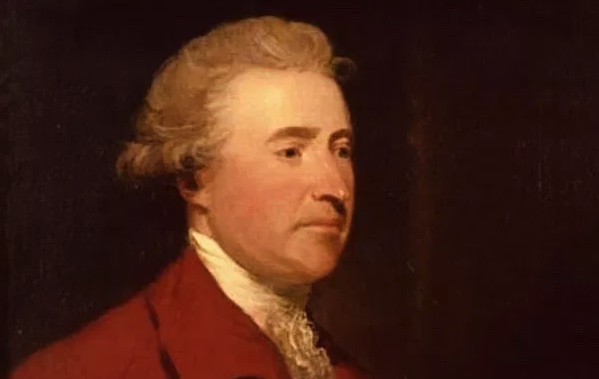
Edmund Burke (January 12, 1729 – July 9, 1797) is known as the “modern founder of political conservatism”. He was a philosopher, an author, an orator, a statesman and served in the House of Commons of Great Britain as a member of the Whig Party for many years. Later, his opposition to the French Revolution led to him becoming the leading figure of the conservative Whigs also known as the “Old Whigs”.
The Three Conservative Burkes: Hayek, Strauss, and Kirk

By |2020-03-05T10:18:27-06:00March 5th, 2020|Categories: Bradley J. Birzer, Conservatism, Edmund Burke, Leo Strauss, Politics, Russell Kirk, Senior Contributors, Western Civilization, Western Tradition|

Edmund Burke was the nexus among the classical, medieval, and modern worlds, and the best answer to contemporary ideology. It is worth considering the Burke of Friedrich Hayek, Leo Strauss, and Russell Kirk in order to fully understand his importance to the rise of conservatism in academia after World War II. The somewhat radical (relatively [...]
The Moral Imagination & Imaginative Conservatism

By |2023-07-09T09:44:07-05:00July 17th, 2019|Categories: Books, E.B., Edmund Burke, Eva Brann, Imagination, In Honor of Eva Brann at 90 Series, Jane Austen, Moral Imagination, Senior Contributors, St. John's College|

Moral imagination runs not incidentally but necessarily in tandem with a certain aspect of conservatism, what I think of as imaginative conservatism. The Moral Imagination: From Edmund Burke to Lionel Trilling, by Gertrude Himmelfarb (259 pages, Ivan R. Dee, 2006) The Moral Imagination is a very engaging collection of a dozen essays on a dozen authors [...]

The Un-Burkean Economic Policy of Edmund Burke

By |2019-06-17T10:55:49-05:00June 16th, 2019|Categories: Adam Smith, Economics, Edmund Burke, Ralph Ancil, Wilhelm Roepke|

Edmund Burke allowed his fear of the French Revolution to cloud his judgment of a fitting response to the needs of agricultural workers. He was blind to the dangers of monopoly and concentration of economic power, to the possible ways of intervening that conform to the character of a market economy. “The mistakes which have [...]

Edmund Burke on Revolutionary Armies and Taxes

By |2020-09-01T15:25:15-05:00December 13th, 2018|Categories: Bradley J. Birzer, Civil Society, Conservation, Edmund Burke, Edmund Burke series by Bradley Birzer, Revolution, Taxes|

No government has ever made itself permanently wealthy through the plunder of its people—which destroys not just the productive capacity of a country but also its moral foundations. Though a classic in its own right, and arguably the first book on conservatism in the modern world, Edmund Burke’s Reflections on the Revolution in France of 1790 is [...]

Edmund Burke and the Calculation of Man

By |2020-07-08T16:45:48-05:00December 7th, 2018|Categories: American Republic, Bradley J. Birzer, Civil Society, Community, Conservatism, Edmund Burke, Edmund Burke series by Bradley Birzer, Politics|

As Edmund Burke began to wind down his very long letter—that which would become 1790’s Reflections on the Revolution in France—he returned to the question of first principles and right reason, especially in regard to the nature of the human person. At his best and most natural, Burke argued, men understood themselves as spirited and [...]

Leo Strauss vs. Edmund Burke

By |2019-07-30T15:56:42-05:00December 3rd, 2018|Categories: Books, Edmund Burke, History, Leo Strauss, Nature, Philosophy, Political Philosophy, Reason, Truth|

What ought to take primacy when carrying out research and interpreting seminal books: the text itself, or the context? A known critic of historicism and contextualism, Leo Strauss published his seminal essay, ‘What is Political Philosophy?’ in 1957 in the Journal of Politics and introduced a problem with the field: Modern academic obsessions over positivism [...]

When Feelings Became Facts: Rousseau, Burke, & Outrage Culture

By |2022-06-27T18:04:23-05:00July 17th, 2018|Categories: Edmund Burke, Jean-Jacques Rousseau, Morality, Reason|

Edmund Burke understood that the individual’s own natural reasoning would never be as deep or profound as the wisdom of our ancestors, bequeathed to us through tradition and custom. He believed that looking inwards, as Jean-Jacques Rousseau advocated, would precipitate our demise. On our college campuses, the clashes between liberals and conservatives have grown hostile. [...]

The Moral Imagination & Imaginative Conservatism

By |2023-05-21T11:30:24-05:00July 16th, 2018|Categories: Books, Conservatism, E.B., Edmund Burke, Eva Brann, Imagination, Jane Austen, Jean-Jacques Rousseau, Moral Imagination, Senior Contributors|

Moral imagination runs not incidentally but necessarily in tandem with a certain aspect of conservatism, what I think of as imaginative conservatism. The Moral Imagination: From Edmund Burke to Lionel Trilling, by Gertrude Himmelfarb (259 pages, Ivan R. Dee, 2006) The Moral Imagination is a very engaging collection of a dozen essays on a dozen authors [...]

The Treason of the Clerks

By |2021-04-29T12:59:44-05:00April 15th, 2018|Categories: Books, Edmund Burke, History, Ideology, Jean-Jacques Rousseau, Politics, RAK, Russell Kirk|Tags: |

The sorriest aspect of the twentieth century has been the rallying of the intellectuals to the arrogant banner of nationalism, which rejects universal and eternal truth for the sake of national and passing advantage… Thirty years ago, a book was published about which a great many people talk, but which few have really read: La [...]

Edmund Burke on the Rage & Frenzy of the French Revolution

By |2020-08-09T17:29:38-05:00April 5th, 2018|Categories: Bradley J. Birzer, Conservatism, Edmund Burke, Europe, History, Leadership, Revolution|

As revolutionary as they claimed to be, the French Revolutionaries were as old as sin, Edmund Burke assured his readers. “Trace them through all their artifices, frauds, and violences,” he argued, and “you can find nothing at all that is new.” Roughly four-fifths into his spectacular Reflections on the Revolution in France, Edmund Burke paused. [...]

Unbought Grace

By |2018-12-21T07:07:49-06:00March 30th, 2018|Categories: Catholicism, Edmund Burke, Featured, Glenn Arbery, Liberal Arts, Liberal Learning, Virtue|

The qualities that I would love most of all to see in all our students could not be better described than by Edmund Burke’s account of the chivalric demeanor: “that proud submission, that dignified obedience, that subordination of the heart, which kept alive, even in servitude itself, the spirit of an exalted freedom”… As a [...]

Reflecting on Edmund Burke’s “Reflections”

By |2021-04-07T11:22:36-05:00March 13th, 2018|Categories: Bradley J. Birzer, Civil Society, Conservatism, Edmund Burke, Edmund Burke series by Bradley Birzer, Europe, Featured, History, Revolution, The Imaginative Conservative, Wisdom|

It would be difficult to find a more beautiful republican thought in all of Edmund Burke’s writings than this: “A man full of warm speculative benevolence may wish his society otherwise constituted than he finds it; but a good patriot, and a true politician, always considers how he shall make the most of the existing [...]

Edmund Burke & the French Revolutionaries

By |2019-07-09T13:30:01-05:00March 7th, 2018|Categories: Bradley J. Birzer, Conservatism, Edmund Burke, Edmund Burke series by Bradley Birzer, Featured, Revolution|

The French Revolutionaries, Edmund Burke rightly understood, sought not just the overturning of the old, but, critically, they also desired the destruction of the true, the good, and the beautiful. Only by lying about the nature of the human person could they accomplish their goals… One of the most important duties of any good person, [...]

Go to Top