In Defense of Patriarchy

By |2020-08-10T10:03:43-05:00August 9th, 2020|Categories: Christendom, Christian Humanism, Christianity, Christopher Dawson, Family, Marriage|Tags: |

“Patriarchy” is a word that has almost ceased to communicate a definable meaning in contemporary discourse. Feminist theory deploys the term so loosely that it may be applied to any institution or instance in which men dominate women or are perceived to do so. “Most feminist criticism,” Heather Jones avers, “tends to represent the family [...]
W.H. Auden’s Discovery of Original Sin

By |2020-08-03T17:01:58-05:00August 4th, 2020|Categories: Literature, Poetry, T.S. Eliot|Tags: , |

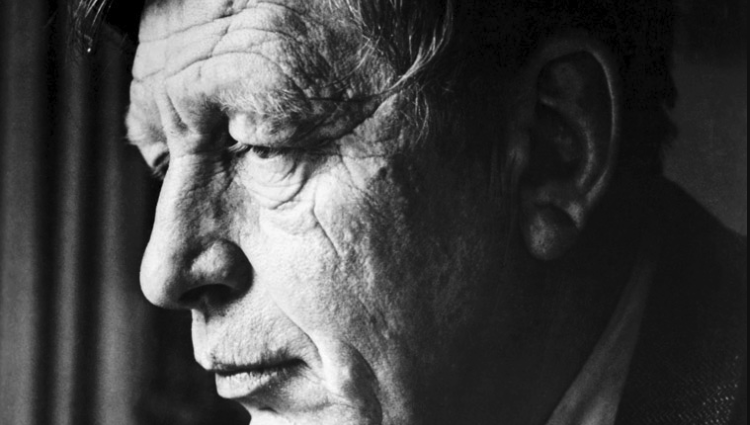
For several months after his 1939 immigration to the United States, W.H. Auden (1907-1973) remained enchanted with all the old dogmas—psychology, Marxism, and liberal humanism—that had shaped so much of his early work. As a poet, he continued to assert his faith in man’s ability to save civilization from ruin. Composed like all mankind “Of [...]

Conserving Today or in 499 B.C.

By |2022-06-22T10:00:16-05:00July 21st, 2020|Categories: Aristotle, Bradley J. Birzer, Cicero, Conservatism, Culture, Edmund Burke, Politics, Russell Kirk, Senior Contributors, Socrates, St. Thomas More|

In times of chaos, it’s profoundly necessary to remember those who have come before us and the innumerable sacrifices they made. Each of these great men, whatever his individual faults, sought to live according to the Good, the True, and the Beautiful. They preserved, and they conserved. As a way of perceiving and a habit [...]

A Philosophy for Our Age: Historicist Humanism

By |2020-06-30T17:01:00-05:00June 29th, 2020|Categories: American Republic, Books, Irving Babbitt, Philosophy, Politics|

Historicist humanism has been largely ignored in the American intellectual consciousness. But for those individuals who realize the depth of our national crisis, who sense the emptiness of mainstream culture, and who lament that society is fracturing for lack of common identity and purpose, historicist humanism has much to offer. The Historical Mind: Humanistic Renewal [...]

Edmund Burke on Rights: Inherited, Not Inherent

By |2020-06-16T16:16:40-05:00June 16th, 2020|Categories: American Republic, Declaration of Independence, Edmund Burke, Freedom|

On what basis are political constitutions actually formed and remain valid? Where do rights come from? Edmund Burke offers us an account different from that of many of our contemporaries. We hold these truths to be self-evident, that all men are created equal, that they are endowed by their Creator with certain unalienable Rights, that [...]

The Richard Weaver-Abraham Lincoln Debate

By |2020-06-01T19:06:06-05:00June 1st, 2020|Categories: Abraham Lincoln, Civil War, Conservatism, Literature, Reason, Richard Weaver, South|

For some time I had puzzled over a discrepancy or inconsistency between two of Richard Weaver’s essays which treat of Lincoln to one degree or another. In his “Abraham Lincoln and the Argument from Definition” (1953), Weaver praises Lincoln as a “conservative” by virtue of his employment of the argument from definition on such issues [...]

Christopher Dawson and the Religious Impulse

By |2020-05-23T17:30:06-05:00May 23rd, 2020|Categories: Books, Christianity, Christopher Dawson, Civilization, Culture, Government, History, Religion|

How does religion act as a driving force of politics and culture? Christoper Dawson argued that “we cannot understand the inner form of a society unless we understand its religion,” and we cannot make sense of any culture or its achievements without knowing the religious inspiration from which its creativity flowed. Imagine a diagram consisting [...]

Modernism, Formed or Fleeting?

By |2020-05-12T15:49:02-05:00May 12th, 2020|Categories: Culture, History, Literature, Modernity, Poetry, T.S. Eliot, Tradition, Western Civilization|

The dual definition of “modern”—something that is current and something that is done in a certain manner—touches on a problem that is at the heart of the literary and artistic movement of the early twentieth century known as “Modernism”: Is Modernism something that was meant to represent the “just now” or is it something that [...]

Arguing with T.S. Eliot

By |2020-05-11T09:54:15-05:00May 11th, 2020|Categories: Joseph Pearce, Literature, Poetry, Senior Contributors, T.S. Eliot|

T.S. Eliot once claimed, “Immature poets imitate; mature poets steal; bad poets deface what they take, and good poets make it into something better, or at least something different.” But as a friend and admirer of Eliot, I must disagree. One of my favourite quotes by G.K. Chesterton is his quip that he and his brother [...]

Is Conservatism an Ideology?

By |2020-04-25T03:15:59-05:00April 24th, 2020|Categories: Bradley J. Birzer, Conservatism, Ideology, Robert Nisbet, Senior Contributors|

In his excellent, short book, Conservatism: Dream and Reality, Robert Nisbet had no problem in identifying conservatism as an ideology. Whereas his friend, Russell Kirk, had repeatedly resisted defining the faith as anything other than a “way of being” quite contrary to all ideologies (in essence, an anti-ideology). Nisbet proclaimed it one of three ideologies [...]

Moving Toward Dread Conformity

By |2020-04-10T11:06:40-05:00April 8th, 2020|Categories: Books, Bradley J. Birzer, Civil Society, Civilization, Conservatism, Robert Nisbet, Senior Contributors|

In 1953, Robert Nisbet published “The Quest for Community,” a book that reveals to us that our own quest has become something both natural and unnatural. That is, it is natural to desire to belong, but it is horrifically unnatural in the ways we choose to commune. 1953 was a banner year for the conservative [...]

Eric Voegelin, Conservative?

By |2020-03-20T12:25:49-05:00March 20th, 2020|Categories: Bradley J. Birzer, Conservatism, Eric Voegelin, Political Philosophy, Senior Contributors|

Whatever his criticisms of liberalism, progressivism, and socialism, Eric Voegelin shunned the word and the concept of “conservatism,” claiming that his ideas could never be harnessed by any political movement. When the definitive history of non-leftist movements of the twentieth century is finally written, Austro-American philosopher, Eric Voegelin (1901-1985) will loom large. Arrested by the [...]

The Three Conservative Burkes: Hayek, Strauss, and Kirk

By |2020-03-05T10:18:27-06:00March 5th, 2020|Categories: Bradley J. Birzer, Conservatism, Edmund Burke, Leo Strauss, Politics, Russell Kirk, Senior Contributors, Western Civilization, Western Tradition|

Edmund Burke was the nexus among the classical, medieval, and modern worlds, and the best answer to contemporary ideology. It is worth considering the Burke of Friedrich Hayek, Leo Strauss, and Russell Kirk in order to fully understand his importance to the rise of conservatism in academia after World War II. The somewhat radical (relatively [...]

Who Was T.S. Eliot’s True Love?

By |2020-01-25T20:12:57-06:00January 25th, 2020|Categories: Character, History, Imagination, Joseph Pearce, Literature, Love, Senior Contributors, T.S. Eliot|

T.S. Eliot’s correspondence with Emily Hale was recently opened, having been kept in Princeton archives until fifty years after Miss Hale’s death. Also opened was Eliot’s response to the archives. It seemed that the poet’s ghost had returned for one last lover’s quarrel with the ghost of his first love, over a century after they [...]

Go to Top