The Violent Assault Upon Imagination

By |2021-08-12T10:24:54-05:00August 22nd, 2016|Categories: Flannery O'Connor, Imagination, Marion Montgomery, Rule of Law, Virtue|

How fallen we are, from Dante and Beatrice to John Hinckley and Jodie Foster. “We did the best job with what we had to work with,” the twenty-two-year-old jury foreman said after the unanimous decision that Hinckley was innocent by reason of insanity. And surely that is a conclusion we must come to, examining the [...]


What Is the Cause of Angry Politics?

By |2019-09-24T10:16:52-05:00June 11th, 2016|Categories: Civil Society, Featured, John Horvat, Order, Politics, Virtue|

  Everyone agrees that there is something different about today’s angry politics. The ordinary issues that have shaped the political debate for years have largely remained the same. The economy is still in bad shape, terrorism remains a top concern and the deficit is still growing as fast as ever. The mood of the nation, [...]

The Vindication of the Fair: “Love & Friendship,” American Style

By |2023-11-25T14:25:36-06:00June 8th, 2016|Categories: Christopher Morrissey, Film, Jane Austen, Love, Marriage, Virtue, Whit Stillman|

Whit Stillman’s Love & Friendship is a magnificent Jane Austen adaptation, not least because it conceives of the perfect ending for the unpolished project of Austen’s juvenescence, Lady Susan. This is Jane Austen, and it is a comedy, so of course there must be a wedding at the end. But how does one best pull [...]

Love & Friendship: Whit Stillman & Jane Austen Contemplate Virtue

By |2023-11-25T12:56:17-06:00May 25th, 2016|Categories: Aristotle, Christopher Morrissey, Featured, Film, Jane Austen, Virtue, Whit Stillman|

Whit Stillman’s new movie, Love & Friendship, is an adaptation of Jane Austen’s Lady Susan. Mr. Stillman takes this piece of Austen juvenilia, an epistolary novella, and fleshes it out into a screenplay faithful to the spirit of Austen. Not only that, but also he has reworked Austen’s story into a novel of his own, [...]

Fight or Feast? Socrates and the Purpose of Rhetoric

By |2020-02-24T12:20:31-06:00May 12th, 2016|Categories: Beauty, Community, Culture, Featured, Justice, Socrates, Virtue, Wyoming Catholic College|

Is rhetoric simply a fight, or is it part of a feast that is for the good of both the individual and the polis—as a feast is for the sustenance of ourselves, but more importantly, for the communion of a Body, of a community? Callicles says, “‘Too late for a share in the fight,’ so [...]

Was Tolkien a Heretic? Rebutting the Cloak-and-Dagger Priest

By |2016-04-29T22:47:00-05:00April 29th, 2016|Categories: Catholicism, Christianity, J.R.R. Tolkien, Joseph Pearce, Theology, Virtue|

Readers of my earlier essay, “Defending Tolkien from the Cloak-and-Dagger Priest,” will know something of the controversy surrounding the attacks on Tolkien by an anonymous priest, whom I will henceforth refer to as Father X. Since, in that essay, I only addressed Father X’s inadequate understanding of allegory and myth, I would like to look [...]

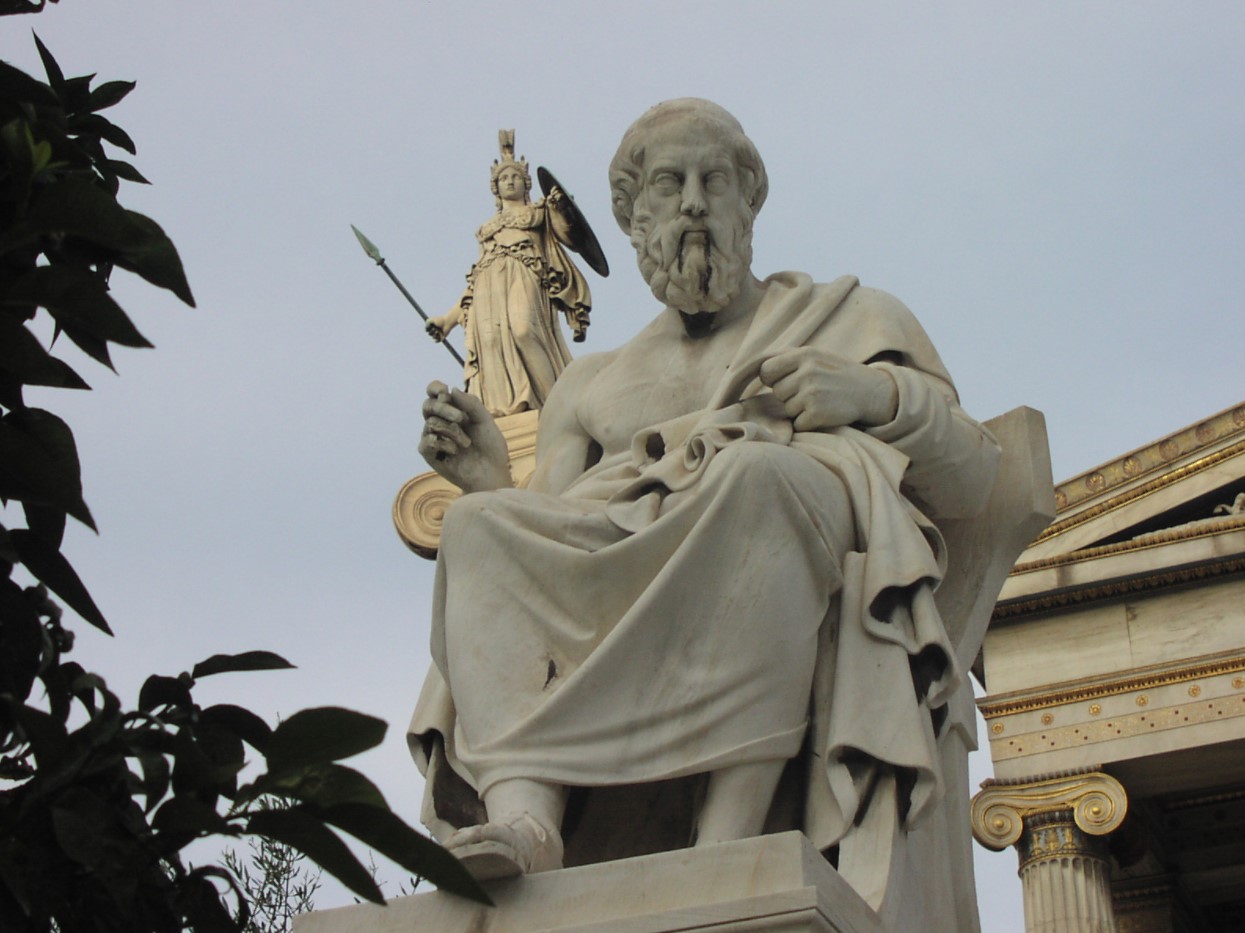
Virtue, Courage, & Moderation in Plato’s “Statesman”

By |2022-08-26T13:53:00-05:00April 15th, 2016|Categories: Classics, Featured, Justice, Peter Kalkavage, Plato, St. John's College, Virtue|

I want to begin by saying how my theme is related to justice. Plato and Aristotle often connect justice with wholeness. And it is wholeness—the whole of virtue and the whole of a political community—that is very much at issue, and at risk, in Plato’s Statesman. Perhaps at risk as well is the wholeness of [...]

Plato’s Ring of Gyges: Power & the Divided Self

By |2018-12-08T12:42:24-06:00April 14th, 2016|Categories: Christopher Morrissey, Justice, Myth, Socrates, Virtue|

In Plato’s Republic, we hear of the tale of Gyges’ ring. This famous tale has been adapted in equally famous ways: one need only think of The Lord of the Rings, or Wagner’s Ring Cycle, to realize its perennial influence. But what is the meaning of this tale in the original form in which the Republic [...]

Is Social Justice a Right?

By |2019-03-11T15:33:37-05:00March 25th, 2016|Categories: Culture, Family, Featured, Fr. James Schall, Justice, Virtue|

For much of my academic life, I considered the terms, “values,” “rights,” and “social justice,” to have equivocal meanings. When these terms were used without clarification, they disrupted any fair social order. Each of the phrases had two or more meanings that usually meant the direct opposite of each other. Conversations and legislation in which [...]

Terrorism: It’s All Your Fault!

By |2016-03-21T00:30:32-05:00March 21st, 2016|Categories: Bruce Frohnen, Foreign Affairs, Ideology, Politics, Terrorism, Virtue|

Did you know that terrorism was your fault? Mine too, of course. In fact, if one pays attention to the writings of academic philosophers (always dangerous, I know) one would get the impression that terrorism is everyone’s fault—except for the academic philosophers (and the terrorists, of course). Two examples taken from academic works on the [...]

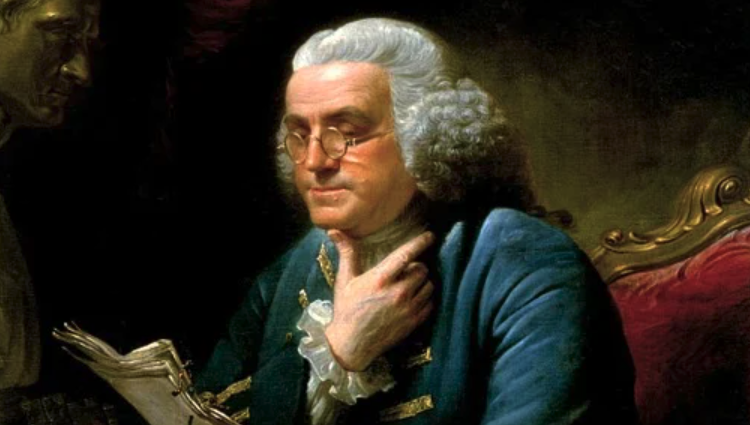
The Project of Moral Perfection

By |2020-06-11T12:49:40-05:00January 17th, 2016|Categories: Benjamin Franklin, Morality, Virtue|

The American Founders considered the cultivation of virtue essential to the survival of the republic. The following is excerpted from Franklin’s Autobiography, on which he worked between 1771 and 1790, but which was not published in English in its complete form until 1868. Below, we have maintained faithfulness to the original text. It was about [...]

“Mansfield Park:” In Defense of Good Principles

By |2024-08-08T11:07:26-05:00January 16th, 2016|Categories: Books, Christian Humanism, Christianity, Featured, Jane Austen, Morality, St. Dominic, Virtue|

Teach us to understand the sinfulness of our own Hearts, and bring to our knowledge every fault of Temper and every evil Habit in which we have indulged to the discomfort of our fellow-creatures, and the danger of our own Souls. — from Jane Austen’s Prayers “Henry Crawford had too much sense not to feel the [...]

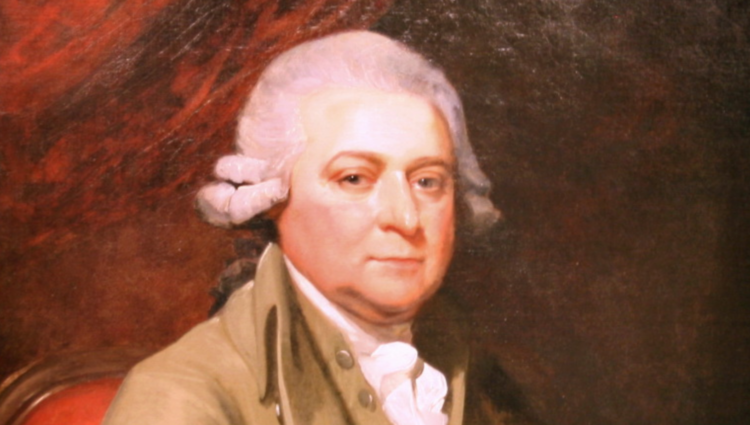
Thoughts on Government

By |2021-10-29T12:39:16-05:00January 14th, 2016|Categories: Government, John Adams, Politics, Virtue|

The happiness of society is the end of government. From this principle it will follow, that the form of government, which communicates ease, comfort, security, or in one word happiness to the greatest number of persons, and in the greatest degree, is the best. Editor’s Note: On the fourteenth day of January, 1784, the Revolutionary War ended as [...]

Go to Top