Wendell Berry: Modern Agrarian

By |2016-07-28T19:30:49-05:00November 6th, 2013|Categories: Glenn Arbery, South, Southern Agrarians, Wendell Berry, Wyoming Catholic College|Tags: |

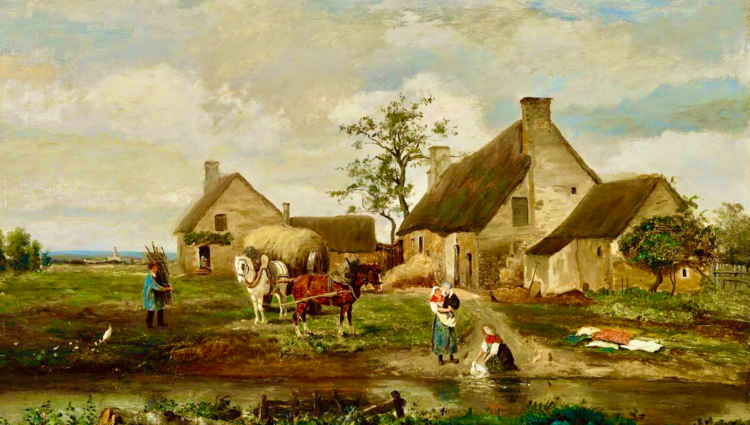
     The Humane Vision of Wendell Berry, Mark T. Mitchell and Nathan Schlueter, eds., ISI Books. A year ago, when my wife and I were waiting for a flight out of Logan Airport, a roughhewn man of about 60 was sitting a few seats away from us reading a book I would have been surprised [...]

A Definitive Edmund Burke

By |2014-04-24T10:34:09-05:00November 5th, 2013|Categories: Books, Edmund Burke, Ian Crowe|Tags: |

Edmund Burke. Volume II: 1784-1797 by F.P. Lock The two volumes of F.P. Lock’s biography of Edmund Burke span more than one thousand pages and, by the author’s own calculation, over twenty years of research. In structure, method, and argument, they constitute a work of extraordinary consistency and erudition, and one that, in its use of [...]

Chronos & the Pickpocket: Is Time Being Stolen?

By |2016-04-25T22:42:17-05:00November 5th, 2013|Categories: Culture, History, Stephen Masty, Time, Tradition|

Photo from the Daily MailQueen Victoria with Heirs Britain’s recent royal christening brings us two fascinating family photographs: one of Queen Victoria and another of her great-great-granddaughter, Her Majesty Queen Elizabeth II, each accompanied by three future British kings. They may tell us something surprising about Time, Technology and Western Culture. The elder [...]

Nature and Grace: A Meditation On Universal Health Care

By |2013-11-04T18:05:06-06:00November 4th, 2013|Categories: Government|Tags: |

I have tried to get my head around the unravelling drama around President Obama’s healthcare bill, and have not completely succeeded. But one thing is clear to me: that it is a tragedy that something which should have been about helping the poorest and most vulnerable members of society, should have become something that simultaneously [...]

Resistance is Futile? Battling the Cultural Borg

By |2014-09-22T14:35:52-05:00November 4th, 2013|Categories: Robert M. Woods, Russell Kirk, The Conservative Mind|

I have never concealed the truth that I am a Trekkie. Additionally, I have never hidden my conviction that I am a traditionalist and a conservative in the way defined by Russell Kirk. While there are thematic and ideological elements worthy of criticism in the Star Trek worldview, there is much that can be redeemed. [...]

Prospects for Conservatives: A Compass for Rediscovering the Permanent Things

By |2017-11-29T12:20:53-06:00November 2nd, 2013|Categories: Books, Bradley J. Birzer, Conservatism, Imaginative Conservative Books, Prospects for Conservatives, Russell Kirk|

Prospects for Conservatives: A Compass for Rediscovering the Permanent Things by Russell Kirk, Imaginative Conservative Books, 2013, 278 pages In 1954, in a span of less than two months, Russell Kirk hammered away at what would become, arguably, his best book, A Program for Conservatives. Two years later, he revised and re-titled it, Prospects for [...]

On the Logos of Heraclitus

By |2023-05-21T11:31:55-05:00November 2nd, 2013|Categories: Audio/Video, Classics, E.B., Eva Brann, Heraclitus, Liberal Learning, Philosophy, Senior Contributors, St. John's College|

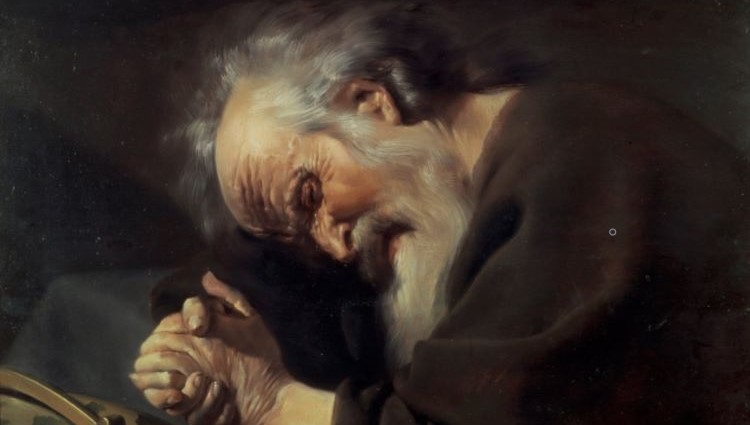
What is the world like, and how can we understand it? Heraclitus thinks that the answer to both questions is found in “the logos,” which is a Greek word with multiple meanings: it can be an explanation, a word or linguistic meaning, science, rationality (the Latin word is “ratio”), the principle of exchange between things…So [...]

“Chickamauga”

By |2020-11-22T04:51:59-06:00November 1st, 2013|Categories: Civil War, Fiction|Tags: |

It was a crisp fall evening when I met the storyteller for the first and only time. He was old, but probably not as old as he looked. Preoccupied with the few hairs he had left growing out from above his ears, he pushed the thin weeds back over his dome each time the wind [...]

Barry Cooper: Political Philosophy and Empiricism

By |2014-02-10T17:09:16-06:00November 1st, 2013|Categories: Political Philosophy, Politics|Tags: , |

Barry Cooper Thomas Heilke’s and John von Heyking’s edited volume, Hunting and Weaving: Empiricism and Political Philosophy, is a festschrift to Barry Cooper, a political scientist at the University of Calgary. The themes of hunting and weaving are ones illuminated in Cooper’s own career as he brings together political philosophy and empiricism in [...]

Tradition and the Individual Talent

By |2022-08-17T16:38:50-05:00October 31st, 2013|Categories: Books, Poetry, T.S. Eliot, Tradition|

In English writing we seldom speak of tradition, though we occasionally apply its name in deploring its absence. We cannot refer to "the tradition" or to "a tradition"; at most, we employ the adjective in saying that the poetry of So-and-so is "traditional" or even "too traditional." Seldom, perhaps, does the word appear except in [...]

Want Affordable Health Care? Try These Tantalizing Options

By |2026-03-10T11:54:48-05:00October 29th, 2013|Categories: Barbara J. Elliott, Politics|

After changing health insurance providers and having difficulty getting prescriptions filled, I was getting testy. Very testy. Then I read that the new national insurance program would be released on 35 floppy discs, and that did it. I knew there was no help coming from Washington any time soon. In a slow burn that waxed [...]

How to Think About the Birth Dearth

By |2014-01-16T16:49:47-06:00October 29th, 2013|Categories: Family, Peter A. Lawler|Tags: |

In various lectures and publications, I’ve had occasion to call attention to the problem of the “birth dearth,” the fact that the birth rate has dropped below–often well below–the rate of replacement in just about every prosperous and high-tech country. The relevant facts are laid out for our country (if hardly for the first time) [...]

The Enlightenment Repealed? A Scientific Revolution Begins

By |2015-07-30T11:41:05-05:00October 28th, 2013|Categories: Culture, Science, Stephen Masty|

No less than a counter-revolution has begun in social science, threatening to turn much of the Enlightenment topsy-turvy. Not only is it fast gaining support within its own disciplines of anthropology, psychology and economics, but it has begun to influence other, “harder,” sciences too. The repercussions may be astounding, altering our view of how cultures [...]

Go to Top