Liberalism and Liberal Education

By |2023-05-21T11:30:18-05:00August 27th, 2018|Categories: E.B., Eva Brann, Jean-Jacques Rousseau, Liberal Arts, Liberal Learning, Philosophy, Senior Contributors, St. John's College|

It is for the soul’s health that we engage in inquiry; right action is the indirect, one might almost say, the unintended, consequence of thinking things through. Indeed, the old understanding of liberal education is that its very liberality consists in its being pursued for its own sake, free from practical purposes—and that this way [...]

The Student’s Problem

By |2023-05-21T11:30:19-05:00August 20th, 2018|Categories: E.B., Education, Eva Brann, Great Books, Immanuel Kant, Liberal Arts, Liberal Learning, Philosophy, Plato, Senior Contributors, St. John's College|

There is a sickness, traditionally called melancholy, which is particularly at home in communities of learning such as ours. Its visible form can be seen in the engraving by Duerer called Melencolia Prima. Amidst the signs and symbols of the liberal arts, especially geometry, sits heavily a winged woman. Her eyes are fixed intently on visions [...]

Welcome to Colonus: The Theban Plays of Sophocles

By |2023-05-21T11:30:20-05:00August 13th, 2018|Categories: Antigone, Books, Classics, E.B., Eva Brann, Great Books, Liberal Learning, Senior Contributors, St. John's College, Tradition|

I’m uncertain of the joy of reading the Theban plays of Sophocles—the story is just too monstrous—but in accord with the awe. This translation conveys it. Sophocles: The Theban Plays, translated by David R. Slavitt (256 pages, Yale University Press, 2009) This is the most stripped-down version of the three Theban plays of Sophocles that [...]

Other People’s Truths

By |2023-05-21T11:30:21-05:00August 6th, 2018|Categories: E.B., Eva Brann, Great Books, Humanities, Liberal Arts, Liberal Learning, Literature, Senior Contributors, St. John's College, Truth|

One of our most remarkable capabilities is our power of at once being and not being in a certain condition. It gives us a way to do justice both to self-avowed fictions and to other people’s truths. Our country’s three major religions, in order of their entry into time, Judaism, Christianity, and Islam, are scriptural. To adhere to [...]

Plato’s “Republic”: Impossible Polity

By |2023-05-21T11:30:22-05:00July 23rd, 2018|Categories: Books, Civil Society, E.B., Eva Brann, Great Books, Philosophy, Plato, Senior Contributors, St. John's College|

Plato’s Republic: A Study by Stanley Rosen (432 pages, Yale University Press, 2008) Plato’s Republic, Stanley Rosen says at the beginning of his book, is “both excessively familiar and inexhaustibly mysterious.” Thus it invites ever more interpretations, not, I think, by reason of any willful indeterminacy or woolly grandeur on Plato’s part, but because a false [...]

The Moral Imagination & Imaginative Conservatism

By |2023-05-21T11:30:24-05:00July 16th, 2018|Categories: Books, Conservatism, E.B., Edmund Burke, Eva Brann, Imagination, Jane Austen, Jean-Jacques Rousseau, Moral Imagination, Senior Contributors|

Moral imagination runs not incidentally but necessarily in tandem with a certain aspect of conservatism, what I think of as imaginative conservatism. The Moral Imagination: From Edmund Burke to Lionel Trilling, by Gertrude Himmelfarb (259 pages, Ivan R. Dee, 2006) The Moral Imagination is a very engaging collection of a dozen essays on a dozen authors [...]

Was Thomas Jefferson a Philosopher?

By |2023-05-21T11:30:25-05:00July 9th, 2018|Categories: American Founding, Declaration of Independence, E.B., Eva Brann, Great Books, Philosophy, Senior Contributors, St. John's College, Thomas Jefferson|

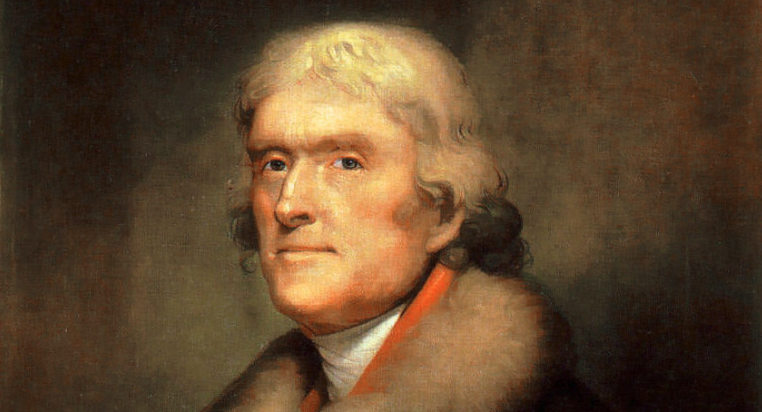
Thomas Jefferson is a kind of incarnate compendium of the Enlightenment. His remarkable openness to its spirit is the philosophical counterpart to his political sensitivity in making himself “a passive auditor of the opinions of others,” so as to catch the “harmonizing sentiments of the day” and to incorporate them into a document that would [...]

Do You Know What an Odyssey Is?

By |2023-05-21T11:30:26-05:00June 4th, 2018|Categories: Classics, E.B., Essential, Eva Brann, Featured, Great Books, Homer, Liberal Arts, Liberal Learning, Odyssey, Senior Contributors, St. John's College, Timeless Essays|

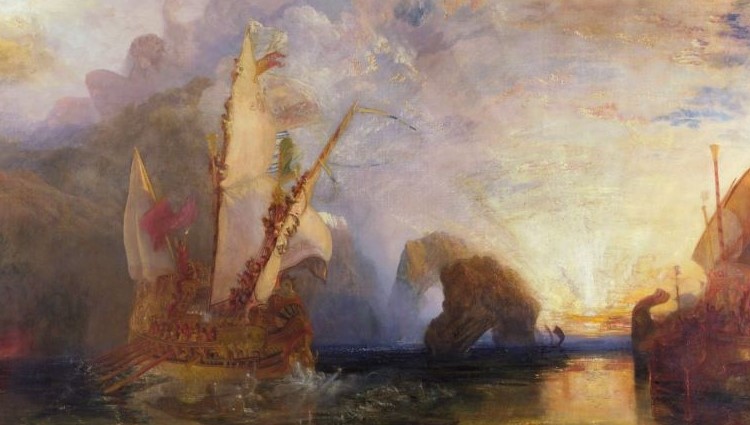
An odyssey is an adventurous and searching journey, or an intellectual or spiritual quest. It is the proper name for the life of learning. One can shape one’s own odyssey into a journey that lacks neither enchantment nor definition. My title is a question: “Do you know what an odyssey is?” I am asking each [...]

On Compromise

By |2023-05-21T11:30:27-05:00April 23rd, 2018|Categories: Character, Constitution, E.B., Eva Brann, Federalist, History, Philosophy, Senior Contributors, St. John's College|

What is interesting is the ultimate human predicament, when serious principles, serious commitments are at odds, and there is no apparent way to compose them in sight, except for giving something up, or giving in—that will be a surrender of self. Why are we in these predicaments to begin with? I am not a great [...]

Great Books and Small Colleges

By |2023-05-21T11:30:28-05:00March 6th, 2018|Categories: E.B., Eva Brann, Featured, Great Books, Liberal Arts, Liberal Learning, Senior Contributors, St. John's College|

The characteristic frame of mind befitting liberal education is reverent radicality—deep respect and penetrating questions. It is a serious mistake to present liberal education as preoccupied with “questioning,” a surreptitiously skewering aggression on the way things are… Editor’s Note: St. John’s College and Zaytuna College both describe themselves as traditional liberal arts colleges. They share a [...]

How to Constitute a World

By |2023-05-21T11:30:29-05:00February 27th, 2018|Categories: Books, E.B., Eva Brann, Featured, Great Books, Immanuel Kant, Philosophy, Senior Contributors|

Immanuel Kant is the most radical modern, the founder of our ultimate subjectivity. His three Critiques are world-constituting and world-inverting. Before him, the world qualified the mind; now consciousness constitutes the world. This essay was originally published as the preface to How to Constitute a World by Eva Brann, Paul Dry Books, 2017. —Editor Immanuel Kant’s [...]

On Studying Imagination

By |2023-05-21T11:30:30-05:00January 30th, 2018|Categories: Aristotle, E.B., Eva Brann, Featured, Great Books, Imagination, John Milton, Plato, Senior Contributors, St. John's College|

Is memory deceptively transformative? Is the original imagination an organ for lying fictions, for deception, or a conduit for revelatory illumination? And so, more generally, how do we explain those images that are apparently not imitations, don’t have an origin in verifiable originals, be they stored in human memory or laid up with the Muses [...]

Competition vs. Illumination in Learning

By |2023-05-21T11:30:31-05:00January 17th, 2018|Categories: E.B., Education, Eva Brann, Featured, Liberal Learning, Quotation, Senior Contributors, St. John's College|

"That brings me to the protection of the exchanges that are the life of learning from dangers both within and without the classroom. Of these there are many, of which I’ll mention only one: the corruption of conversation into debate, into argument, and even into discussion, into all the modes of human communication in which [...]

Jacob Klein: A Great Scholar, An Even Greater Man

By |2023-05-21T11:30:32-05:00July 15th, 2017|Categories: E.B., Eva Brann, Jacob Klein, Meno, Senior Contributors, St. John's College|

Jacob Klein was, first and last, every inch a teacher, a teacher who stymied discipleship in the very effort to induce learning. He did, indeed, have some teachings to convey—a few, though those were powerful and of large consequence. Editor’s Note: This essay was read as a tribute to philosopher and long-time tutor of St. [...]

Go to Top