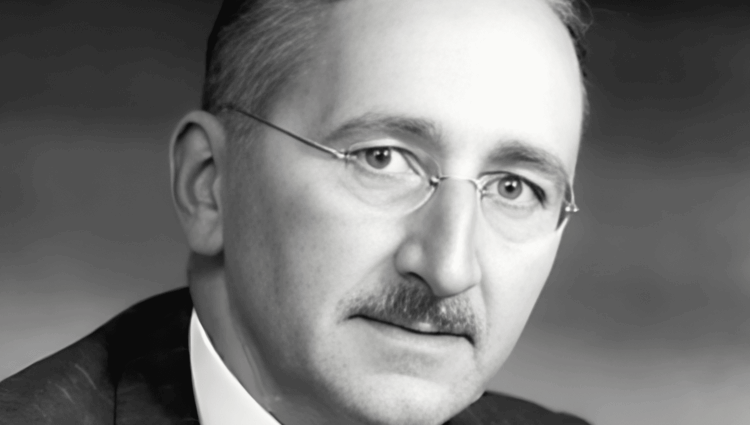
The Journey Home: Wilhelm Röpke & the Humane Economy

By |2026-02-11T13:42:06-06:00February 11th, 2026|Categories: American Republic, Economics, Political Economy, Roger Scruton, Timeless Essays, Uncategorized, Wilhelm Roepke|

Wilhelm Röpke asked how to address the problems of social fragmentation and the loss of community feeling, in a world where the market is left to itself. Röpke’s own idea was that society is nurtured and perpetuated at the local level, through motives that are quite distinct from the pursuit of rational self interest. Two [...]

The Spirit of Philadelphia

By |2026-01-28T20:13:16-06:00January 28th, 2026|Categories: American Founding, American Republic, Books, Christianity, Common Good, Constitution, Nature of Man|

Chris Gibson's "The Spirit of Philadelphia" helps us to rethink the role of Common Sense Realism as a unifying principle of American life. But that idea rests on a greater idea. The spirit of Philadelphia has no sustaining power to preserve order in soul or republic unless wedded to the genius of Christianity. The Spirit [...]

Walter McDougall’s “Gems of American History”

By |2026-01-13T21:19:19-06:00January 12th, 2026|Categories: American Founding, American Republic, Books, History|

Historian Walter McDougall is that rare "twofer": a wonderful writer of history and a wonderful lecturer. In this book, he combines essential tips for the writer with a series of uniformly sparkling essays that range from the era of the American Revolution to the present day. Gems of American History: The Lecturer’s Art, by Walter [...]

The Monroe Doctrine: Lynchpin of American Foreign Policy

By |2026-01-04T20:08:52-06:00January 3rd, 2026|Categories: American Founding, American Republic, Bradley J. Birzer, Europe, Foreign Affairs, History, John Quincy Adams, Senior Contributors, Timeless Essays|

In his ideas regarding American foreign policy, James Monroe echoed both Washington and Jefferson, yet he had to worry about things neither of them did—in particular, European involvement in the affairs of the republics of the Western Hemisphere. His policy needed to follow the diplomatic thought of the previous administrations while also adapting to quickly [...]

Western Civilization: Rooted in Dignity & Love

By |2025-12-17T15:19:47-06:00December 17th, 2025|Categories: American Republic, Ancient World, Bradley J. Birzer, Christianity, Community, Nature of God, Senior Contributors, Western Civilization, Western Tradition|

We can trace the desire to understand the universal quality and dignity of the human person as far back as our very origin as a Western people. As I get older, I’m terribly troubled by the move—going on since rise of the New Left and, especially, the Maoists who introduced us to Political Correctness in [...]

The Pessimism of James Madison

By |2025-12-12T19:46:11-06:00December 12th, 2025|Categories: American Founding, American Republic, Economic History, Economics, Free Trade, James Madison|

When he retired from public life in 1817, James Madison turned his full attention to averting a demographic catastrophe. He foresaw a time when a majority of the population would be “without land or other equivalent property and without the means or hope of acquiring it.”             I. During his presidency, Thomas Jefferson struggled to [...]

How Successful Were the Articles of Confederation?

By |2025-11-14T16:47:29-06:00November 14th, 2025|Categories: American Founding, American Republic, Declaration of Independence, Freedom, History, Timeless Essays|

The Articles of Confederation were doomed by their perceived structural weakness. Yet defenders of the Articles at the time correctly pointed out that this early constitution, drafted under intense pressure at a critical time in the country’s history and intended to deal foremost with the exigencies of war, had been remarkably successful. The Declaration of [...]

Veterans Day

By |2025-11-10T19:46:55-06:00November 10th, 2025|Categories: American Republic, Glenn Arbery, Patriotism, Senior Contributors, Timeless Essays, Veterans Day, Wyoming Catholic College|

For most of our veterans, it should go without saying that military discipline and experience give them a moral authority. It is a recognition—once universal—that is too often forgotten in an age when patriotism itself seems suspect to many. On this day when we honor our veterans, it’s good to recollect both the debt of [...]

Statesmanship & Statesmen According to Willmoore Kendall

By |2025-10-26T14:26:54-05:00October 26th, 2025|Categories: American Republic, Congress, Democracy, History, Political Philosophy, Politics, Willmoore Kendall|

Henry Clay and Sam Rayburn fit well with Willmoore Kendall’s views of the democratic statesman. Both were skilled politicians who sought the good, avoided extremism, and consciously represented the people in Congress. For many centuries, scholars have written weighty tomes on statesmanship. In the twentieth century in particular, many students of the American political philosopher [...]

The Christian Humanism of Andrew Willard Jones

By |2025-10-22T20:20:45-05:00October 22nd, 2025|Categories: American Republic, Books, Bradley J. Birzer, Catholicism, Christian Humanism, New Polity, Senior Contributors|

Challenging a number of schools of thought in economics and political philosophy, Andrew Willard Jones in his book, "The Church Against the State," presents an unapologetically Catholic and specifically Thomist view of the world and, in particular, of America. Jones argues that America, in her own unique fashion, blends that which is venerable and ancient [...]

Willmoore Kendall: Public Truth & the Problem of Free Speech

By |2025-10-14T15:45:04-05:00October 14th, 2025|Categories: American Republic, Community, Constitution, Free Speech, Freedom, John Stuart Mill, Libertarianism, Truth, Wilhelm Roepke, Willmoore Kendall|

Willmoore Kendall’s support of (relative) free speech is an integral part of his view of the “deliberate sense of the community,” which in turn is informed by the “public truth,” which itself is the political expression of the particular American historical experience of transcendent revelation. “[B]ut a completely open society in which everyone does his [...]

Socrates, Cicero, & the Meaning of Citizenship

By |2025-10-08T20:27:20-05:00October 8th, 2025|Categories: Bradley J. Birzer, Citizenship, Conservatism, Edmund Burke, Liberal Arts, Senior Contributors, Socrates, St. Paul|

We modern defenders of the liberal arts have to choose between Socrates’ vision and Cicero’s vision: Are we citizens of a particular soil and a particular place, or are we connected—across time and space—to all good men and God? A few weeks ago, I had the grand privilege of attending a Liberty Fund conference on [...]

Go to Top