Hawthorne’s Darkening American Vision: “The Blithedale Romance”

By |2025-10-07T20:12:24-05:00October 7th, 2025|Categories: American Republic, History, Literature, Nathaniel Hawthorne, Religion|

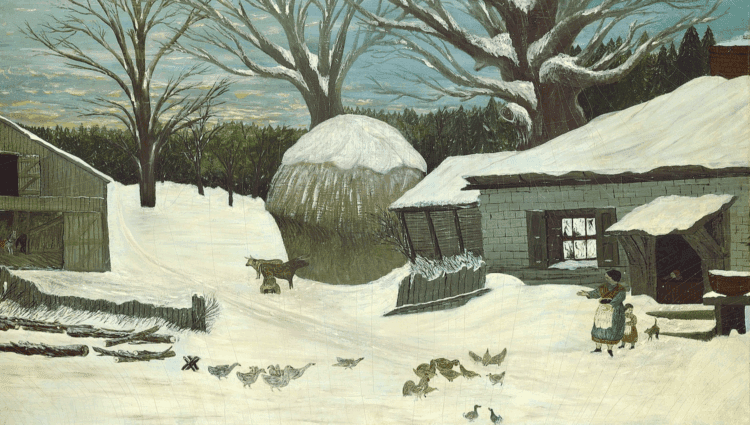
"The Blithedale Romance" conveys Nathaniel Hawthorne’s disillusionment with Brook Farm, Transcendentalism, reform movements, and the quest for individual and social perfection. I. Published in 1852, The Blithedale Romance offers Nathaniel Hawthorne’s most trenchant criticism of America.[i] Unlike his more optimistic contemporaries who imagined the advance toward individual and social perfection in the United States, Hawthorne [...]

The Baleful Comet of Boston: Samuel Adams & the Puritan Republic

By |2025-09-26T13:46:05-05:00September 26th, 2025|Categories: American Founding, American Republic, American Revolution, M. E. Bradford, Samuel Adams, Timeless Essays|Tags: |

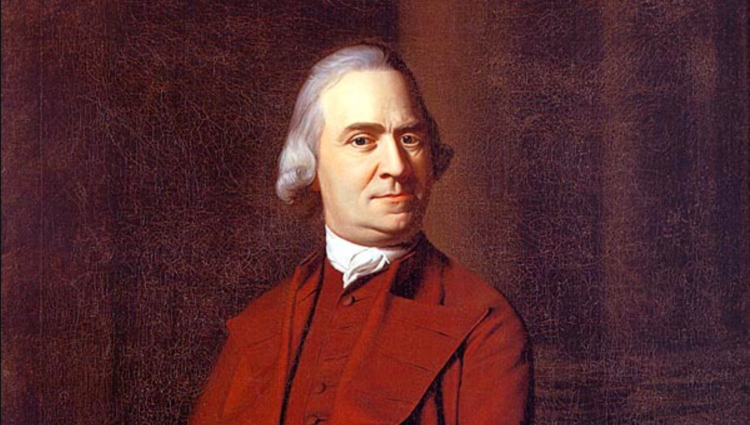
Samuel Adams believed that men are ruled more by fear or other emotions than by reason. And Sam Adams knew how to generate anger and fear. Thus he kept up the flow of propaganda that followed from the town's versions of what had happened in the Boston Massacre. Samuel Adams (September 27, 1722-October 2, 1803), [...]

Surveying America: The Chain-Bearers

By |2025-09-18T16:20:21-05:00September 18th, 2025|Categories: American Republic, George Washington, History, Literature, Thomas Jefferson|

What is history if not a “survey,” and what are historians if not chain-bearers? Have you reckoned a thousand acres much? —Walt Whitman, Song of Myself History records that in 1763 two guys surveyed a demarcation line separating Pennsylvania and Maryland as well as bits of Delaware and West Virginia. The surveyors were Charles Mason [...]

The Jubilee of the Constitution

By |2025-09-17T05:59:44-05:00September 16th, 2025|Categories: Constitution, History, John Quincy Adams, Timeless Essays|

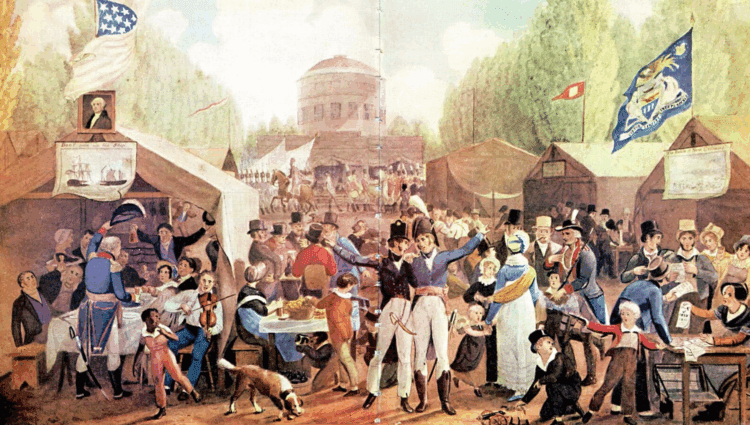
The Constitution consummated the work commenced by the Declaration of Independence—a work in which the people of the North American Union had achieved the most transcendent act of power that social man in his mortal condition can perform. John Quincy Adams, at the time a former President of the United States and member of the [...]

Sources of Authority: The Roots of the Great American Identity Crisis

By |2025-09-14T20:58:01-05:00September 14th, 2025|Categories: American Founding, American Republic, American Revolution, Authority, Catholicism, Christianity, Civil Society, Community, Culture, Nature of God, New Polity, Social Order|

The problem of authority is not merely a political problem or even simply a problem of faith. It instead requires a gathering up of the whole of life, indeed the world in all of its rich multitude of aspects, in relation to its meaning-granting center. Anxious about trends he was witnessing in the ’60s and [...]

Sacrificial Love and Heroic Prudence

By |2025-09-10T20:11:48-05:00September 10th, 2025|Categories: American Republic, Character, David Deavel, Economics, Morality, Senior Contributors, Timeless Essays, Virtue|

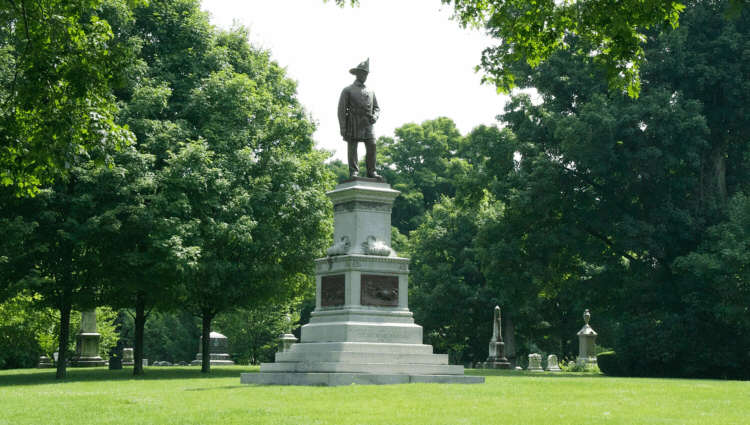
Prudence takes into account a deeper wisdom about the human condition than can be gleaned from a simple cost-benefit analysis. It understands that human communities are not merely about justice and the Gross Domestic Product, but about love. And sacrificial love doesn’t hesitate to rush in even against the worst odds. Recently I sat at [...]

An American Greatness: Willa Cather’s “O, Pioneers!”

By |2025-09-09T19:13:44-05:00September 9th, 2025|Categories: American Republic, Bradley J. Birzer, Imagination, Literature, Senior Contributors|

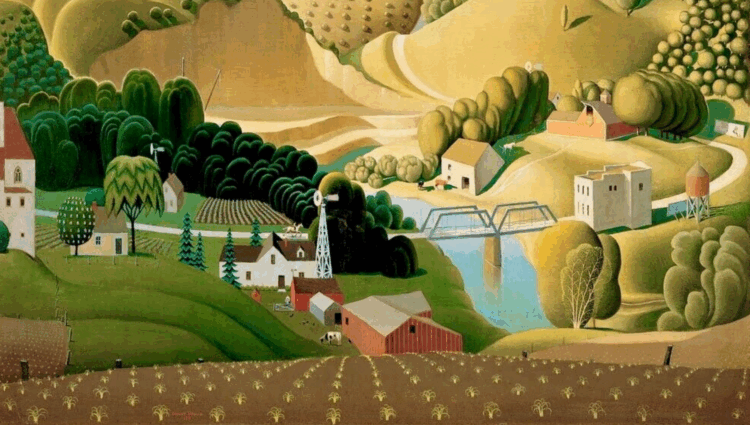
What Willa Cather did in "O, Pioneers!" was create an American Myth, the difficult—slow but steady—story of a pioneer, a Swedish woman, Alexandra, who yearns to love the land and succeeds in doing so. Every once in a while, slow and steady wins the race. One of America’s greatest literary regionalists, Nebraskan Willa Cather (1873-1947), [...]

John Marshall on the Supreme Court & Universal Injunctions

By |2025-08-13T15:28:01-05:00August 13th, 2025|Categories: Constitution, Donald Trump, John Marshall, Rule of Law, Supreme Court|

If we could explain to him what executive orders of a President mean today and what jurisdiction the district courts now have, what would the great John Marshall have said about the Supreme Court’s opinion limiting the power of the district judges to issue universal or nationwide injunctions? Introduction In June, the United States Supreme [...]

Liberty and Liberal Education

By |2025-08-08T20:12:41-05:00August 8th, 2025|Categories: American Republic, Civil Society, Classical Education, Education, Great Books, Liberal Arts, Liberal Learning, Timeless Essays, Western Tradition, Wyoming Catholic College|

Free citizens are necessarily invited to follow the Delphic injunction, “know thyself,” that is addressed to all mankind; and their success or failure in responding to this invitation is crucial for the preservation or loss of their liberty. Liberal education is the distinctive educational tradition of the West; so, too, is liberty our distinctive political [...]

Did Edmund Burke Support the American Revolution?

By |2025-07-18T14:51:44-05:00July 18th, 2025|Categories: American Founding, American Republic, Bradley J. Birzer, Conservatism, Declaration of Independence, Edmund Burke, History, Independence Day, Robert Nisbet, Russell Kirk, Senior Contributors, Timeless Essays|

Many conservatives have assumed that Edmund Burke was opposed to the American Revolution. It is, to my mind, an erroneous assumption. “Burke broke his agentship and went publicly silent on the American cause once war broke out,” Robert Nisbet claimed in his most definitive analysis of Edmund Burke, written and published in 1985. His fellow [...]

July 4, 1776: Congress Adopts the Declaration of Independence

By |2025-07-03T23:18:58-05:00July 3rd, 2025|Categories: American Founding, American Republic, American Revolution, Declaration of Independence, History, Independence Day, Thomas Jefferson, Timeless Essays|

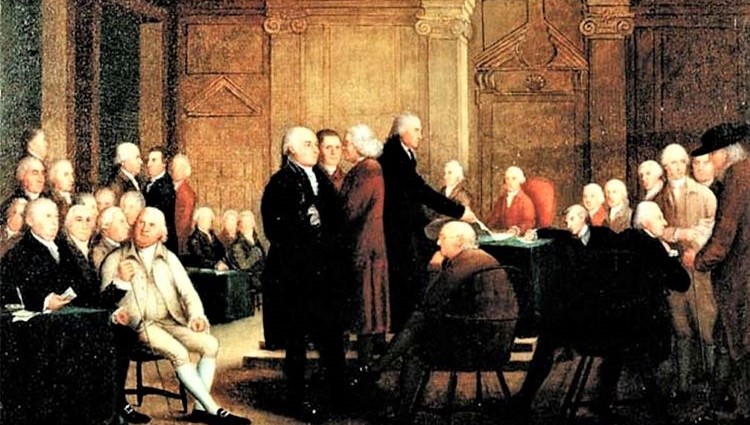
The adoption of the Declaration of Independence of “the thirteen united States of America” on July 4, 1776 formally ended a process that had been set in motion almost as soon as colonies were established in what became British North America. The early settlers, once separated physically from the British Isles by an immense ocean, [...]

Nationalism & Globalism in American Politics

By |2025-06-28T19:41:06-05:00June 27th, 2025|Categories: American Republic, Donald Trump, Globalism, Nationalism, Politics, Presidency, Teddy Roosevelt|

In both rhetoric and substance, the ideologies of globalism and nationalism have been playing a major role in current events and controversies. How have they shaped American and world attitudes and actions over centuries? Introduction The current controversy about the violent riots in Los Angeles and President Trump’s military response to them is part of [...]

Edmund Burke and the Defense of America

By |2025-06-23T16:08:35-05:00June 23rd, 2025|Categories: American Republic, American Revolution, Books, Bradley J. Birzer, Edmund Burke, Senior Contributors|

The most interesting response from Parliament to the imperial crisis came, not surprisingly, from Edmund Burke. An Irishman by birth, Burke had been raised Church of England though his mother and sister were Roman Catholic. Crucially, this upbringing in a mixed family radically shaped Burke’s understanding of the world, he as always sided with the [...]

Go to Top