What Anti-Semites and Pro-Abortionists Have in Common

By |2019-01-15T11:46:04-06:00January 17th, 2019|Categories: Abortion, Ethics, Government, Joseph Pearce, Morality, Rights, Senior Contributors, Virtue, Western Civilization|

It is not about right and left but about right and wrong, and those who see politics in terms of right and wrong, and not in terms of right and left, will see parallels between the contempt of the anti-Semite towards the dignity of the human person and the contempt of the pro-abortionist towards the [...]
The Right to Create Your Own Universe?

By |2019-04-25T12:01:47-05:00August 17th, 2018|Categories: Abortion, American Republic, Homosexual Unions, Marriage, Politics, Rights, Supreme Court, Supreme Court Precedent Series|

The Supreme Court apotheosized the right of privacy in its now-famous words: “At the heart of liberty is the right to define one’s own concept of existence, of meaning, of the universe, and of the mystery of human life”… Editor’s Note: This essay continues a discussion of the Supreme Court’s sexual “right of privacy” cases, which [...]

Anthony Kennedy’s Jurisprudence of Extreme Individualism

By |2018-07-10T22:23:57-05:00July 10th, 2018|Categories: American Republic, Bruce Frohnen, Politics, Rights, Supreme Court|

The paradigm motivating Justice Kennedy’s jurisprudence is of an individual who must be protected by the courts from all outside pressures. The result has been increasing hostility toward the fundamental institutions on which our constitutional order relies… Justice Anthony Kennedy Justice Anthony Kennedy’s tenure on the Supreme Court was filled with irony. Had it [...]

Can an Alfie Evans Case Happen in the United States?

By |2018-05-17T00:29:18-05:00May 17th, 2018|Categories: Christianity, Culture, Death, Europe, Government, Politics, Pope Francis, Rights, Rule of Law|

In the case of the now-deceased toddler, Alfie Evans, the British government, through its Royal College of Pediatrics and its courts, had legal authority. Alfie had legal “interests,” which the government defined in his case, but he did not have any “rights.” Alfie’s parents only had a right to be heard; they had no substantive rights or [...]

A Fire Bell in the Night: The Southern Conservative View

By |2021-04-22T19:16:10-05:00October 11th, 2017|Categories: American Founding, Freedom, M. E. Bradford, Rights, South, The Imaginative Conservative, Thomas Jefferson|

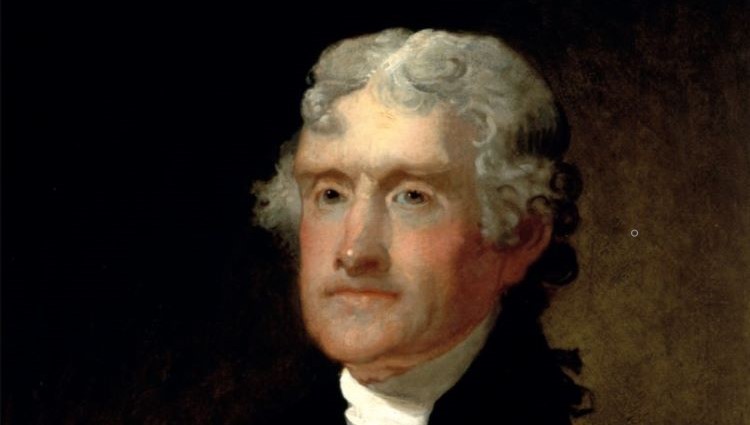
At this time, as perhaps never before, we Americans are as a people well on our way to being forced into belated recognition of the truth behind Mr. Jefferson’s alarm at the Compromise of 1820, our first attempt in employing the engines of national power to regulate and reform our domestic economic and social relations [...]

Thomas Jefferson on Rights and Duties

By |2021-04-29T09:44:09-05:00October 1st, 2017|Categories: American Founding, American Republic, Citizenship, Rights, Thomas Jefferson, Timeless Essays|

The Jeffersonian philosophy of rights and duties is not to be blamed for the explosion and inflation of rights. It is by doing our duties that we protect our rights, and rights come at cost of these duties. Today’s offering in our Timeless Essay series affords readers the opportunity to join Paul Kuntz as he [...]

What Is Human Dignity?

By |2021-04-27T21:29:23-05:00July 8th, 2017|Categories: American Republic, Immanuel Kant, Peter A. Lawler, Philosophy, Rights|

We display our dignity by imposing our will on nature to create a world where we can live as dignified beings—or not as miserably self-conscious and utterly precarious accidents… As we remember our friend Peter Augustine Lawler (1951–2017), we are proud to publish this selection from his insightful book Modern and American Dignity (Intercollegiate Studies Institute, 2010). [...]

A Healthcare Solution: Solidarity, Not Socialism

By |2017-09-19T09:32:48-05:00June 17th, 2017|Categories: Catholicism, Christianity, Featured, Government, Joseph Pearce, Politics, Rights, Senior Contributors, Socialism|

The answer to the healthcare conundrum is not be found in Congress or in the White House, or in any draconian centre of usurped power; it is to be found on our own doorstep, in our own homes and in the homes of our neighbors… Healthcare is a problem, and not apparently a merely sociopolitical [...]

What Is the Constitution For?

By |2021-03-03T16:27:55-06:00May 24th, 2017|Categories: American Founding, American Republic, Bruce Frohnen, Constitution, Featured, Founding Document, Rights|

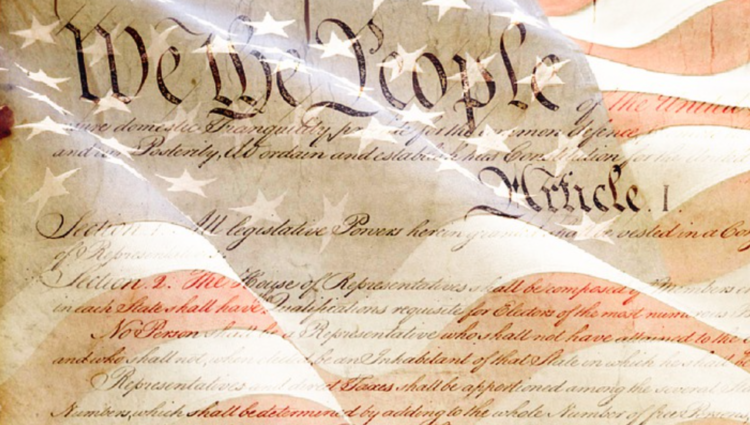
The United States Constitution is important, and great, precisely because it recognizes that people and their rights are social by nature, and must remain rooted in their communities if we are to enjoy the benefits of ordered liberty under the rule of law. All nations have constitutions—whether written down or not. Why? Because every nation [...]

What Is the Promise of the Free Enterprise System?

By |2019-11-14T14:59:47-06:00June 27th, 2016|Categories: Alexander Hamilton, Audio/Video, Economics, Equality, Freedom, Rights|

The Free Enterprise System is dynamic. It is disruptive, yet also full of opportunities in its competitive nature. It requires hard work and virtue in order for it to be possible. If capitalism is to rise above cronyism, a proper understanding must not only be cultivated but also promoted. Dr. David Azerrad offers us such an [...]

The Necessity of the Bill of Rights

By |2023-06-08T11:01:52-05:00June 8th, 2016|Categories: American Founding, James Madison, Liberty, Quotation, Rights|

It may be said, indeed it has been said, that a bill of rights is not necessary, because the establishment of this Government has not repealed those declarations of rights which are added to the several State constitutions; that those rights of the people, which had been established by the most solemn act, could not [...]

Rights Fallout: “Economic Rights” and the Undevelopment of Poor Countries

By |2019-04-23T16:07:20-05:00March 31st, 2015|Categories: Bruce Frohnen, Economics, Modernity, Rights|

The good intentions of the UN Universal Declaration of Human Rights took place in stages. Drafted in large measure as a response to the horrors of World War II and in the face of the continuing horrors of communism, the 1948 Declaration sought to “transcend” political, religious, and ethnic differences in the name of an [...]

Go to Top