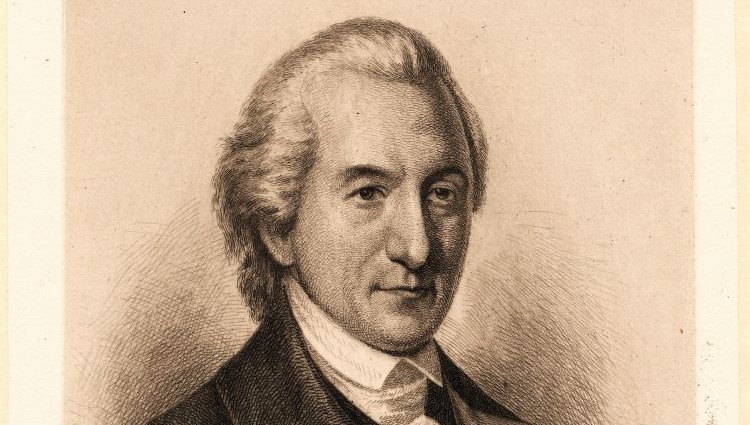
Melvin E. “Mel” Bradford (May 8, 1934 – March 3, 1993) was a conservative political commentator and Professor of Literature at the University of Dallas. He was the author of “A Better Guide than Reason: Federalists and Anti-Federalists”, “Original Intentions: On the Making and Ratification of the Constitution”, “Founding Fathers: Brief Life of the Framers of the Constitution”, and “The Reactionary Imperative: Essays Literary & Political.”
A Fire Bell in the Night: The Southern Conservative View

By |2021-04-22T19:16:10-05:00October 11th, 2017|Categories: American Founding, Freedom, M. E. Bradford, Rights, South, The Imaginative Conservative, Thomas Jefferson|

At this time, as perhaps never before, we Americans are as a people well on our way to being forced into belated recognition of the truth behind Mr. Jefferson’s alarm at the Compromise of 1820, our first attempt in employing the engines of national power to regulate and reform our domestic economic and social relations [...]
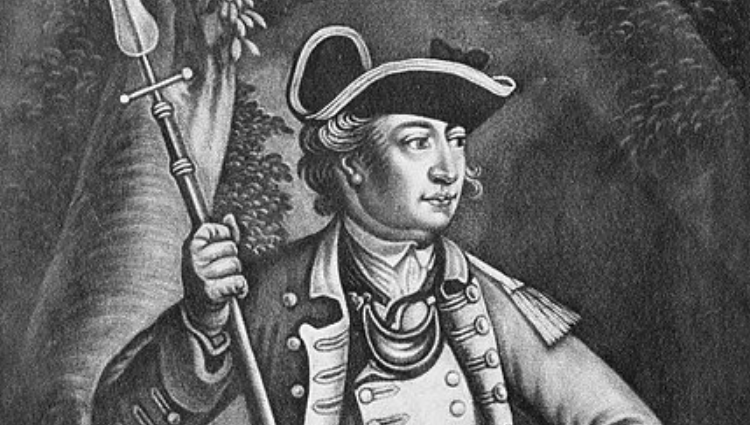
At the Center of the Storm: John Sullivan of New Hampshire

By |2020-06-15T14:17:19-05:00September 25th, 2017|Categories: American Founding, M. E. Bradford, Military, Revolution, The Imaginative Conservative|

Controversy surrounds the story of John Sullivan’s life. Yet he is among the representative Americans of his time—gen­erous to a fault, jealous of his personal honor, optimistic, gregarious, ambitious, and “larger than life.” John Sullivan (1740-1795), lawyer, entrepreneur, soldier, and political leader of New Hampshire during and after the American Revolution. Both a commercial and [...]

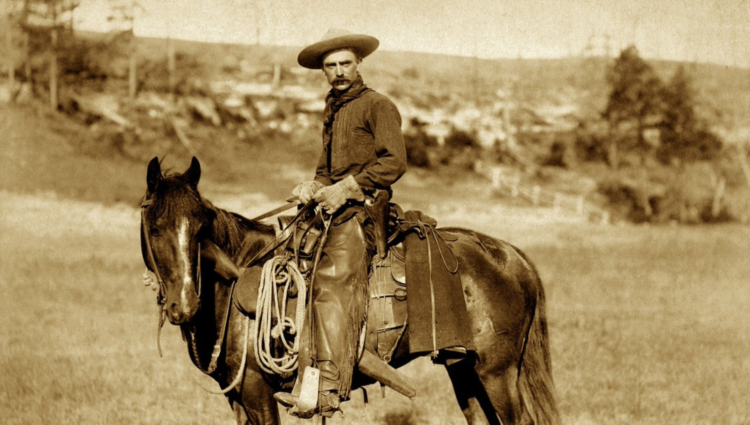
More Freedom Than We Want: The Literature of the American West

By |2021-03-01T12:59:13-06:00June 9th, 2017|Categories: Agrarianism, Literature, M. E. Bradford, South|

The literature of the American West embodies a clear perception of the frailty of corporate freedom and of the importance of men who have learned on their own to face down the barbarian, even though no one backs their play. There are two important corporate myths that shaped the life of eighteenth and nineteenth century America. [...]

Ten Books That Shaped America’s Conservative Renaissance

By |2022-01-17T13:57:28-06:00March 12th, 2017|Categories: Conservatism, Economics, Edmund Burke, Eric Voegelin, Featured, Friedrich Hayek, George Nash, Ludwig von Mises, M. E. Bradford, Robert Nisbet, Russell Kirk, T.S. Eliot, The Conservative Mind, The Imaginative Conservative, Timeless Essays, Wilhelm Roepke, William F. Buckley Jr.|

If we are to know and rebuild a conservative civil social order in this country, then we need to “rake from the ashes” of recent American history the books that influenced a generation of conservative scholars and public figures, books whose message resonated with much of the American populace and resulted in astonishing political triumphs. [...]

Dividing the House: The Gnosticism of Abraham Lincoln

By |2020-08-19T23:48:57-05:00July 14th, 2016|Categories: Abraham Lincoln, M. E. Bradford, The Imaginative Conservative|

What are the final implications of the political example of Abraham Lincoln? And what the enduring consequences of his sanctification as our only Father and preceptor in times of national crisis? The “House Divided Speech” is the wa­tershed of Abraham Lincoln’s political career.[56] In this address, given to the Republican state conven­tion that nominated their tall [...]

The Language of Lincoln

By |2020-10-26T00:11:04-05:00July 7th, 2016|Categories: Abraham Lincoln, Language, M. E. Bradford, The Imaginative Conservative|

As a promising young centralist, Abraham Lincoln played the role of champion for what Professor Michael Oakeshott has called the “enterprise associa­tion” theory of the state.[21] While serving as the elected representative of Sangamon (1834—1842), he first made a name for himself by enacting this part. Joining with other soon-to­-be forefathers of the Republican Party, [...]

The Myth of Abraham Lincoln

By |2020-10-26T00:16:43-05:00June 30th, 2016|Categories: Abraham Lincoln, M. E. Bradford|

After over one hundred years, it continues to be almost impossible for us to ask certain basic questions about the role of Abraham Lincoln in the formation of a characteristically American politics. At every appropriate point of inquiry, the Lincoln myth obtrudes. Since 1865 no one has denied the extraordinary purchase of that imaginative construct upon the idiom and [...]

M.E. Bradford & the Intoxicated Air of the Modernist Moment

By |2021-08-12T10:44:26-05:00June 2nd, 2016|Categories: Agrarianism, Aristotle, Books, Dante, Featured, Homer, Literature, M. E. Bradford, Marion Montgomery, Plato, South, Southern Agrarians, St. Augustine|

IV M.E. Bradford The principle underlying the Agrarian­-New Critic’s position as literary critic, shared generally in the New Critical move­ment at large, may be simply put: Some poems are better than other poems. He judges them as things existing in them­selves, made by that intellectual crea­ture—man. The problem term, of course, is better, since it commits intellect, willy­ [...]

M.E. Bradford: Traditionalist as Rememberer

By |2021-08-12T10:47:23-05:00May 26th, 2016|Categories: Agrarianism, Books, Featured, Language, Literature, M. E. Bradford, Marion Montgomery, South, Southern Agrarians, Tradition|

We spoke of much else besides [our business of the day]: of friends and mentors and the tumors of both—their fortunes and misfortunes, their origins and our own; of illustrative stories, many of them drawn from outside the narrow confines of the academy; of adversaries ancient and modern; of our delight in the progress of [...]

On Remembering Who We Are: A Political Credo

By |2020-05-08T15:30:29-05:00May 7th, 2016|Categories: American Founding, American Republic, Constitution, Equality, Featured, Freedom, M. E. Bradford|

We should learn from the political credo of the Venetians, who never forgot the history that had made them a special nation. To be a patriot is to embody our connection to the national bond through devotion to a "practice." It is good to be enthralled by dogmas of the quiet past, remembering who and [...]

How Equality Is Misleading

By |2022-07-06T10:21:14-05:00February 28th, 2016|Categories: Abraham Lincoln, Constitution, Declaration of Independence, Equality, Featured, History, M. E. Bradford, Slavery|

Equality as a moral or political imperative, pursued as an end in itself is the antonym of every legitimate conservative principle. Contrary to most Liberals, new and old, it is nothing less than sophistry to distinguish between equality of opportunity and equality of condition. I Let us have no foolishness, indeed.* Equality as a moral or [...]

A Better Guide than Reason: The Politics of John Dickinson

By |2021-07-03T17:19:10-05:00October 28th, 2015|Categories: American Founding, American Republic, Christendom, Featured, John Dickinson, M. E. Bradford|Tags: |

Of all the men significantly involved in the major events leading up to and following from the American Revolution none has been so undeservedly neglected by our political historians as the mysterious John Dickinson. The oversight would seem on its face unlikely. For this planter and prototypical Philadelphia lawyer is as complicated and intellectually interesting [...]

A Teaching for Americans: Roman History and the Republic’s First Identity

By |2021-04-21T15:59:43-05:00October 19th, 2015|Categories: American Founding, American Republic, Essential, Featured, History, M. E. Bradford, Republicanism, Rome, Timeless Essays|

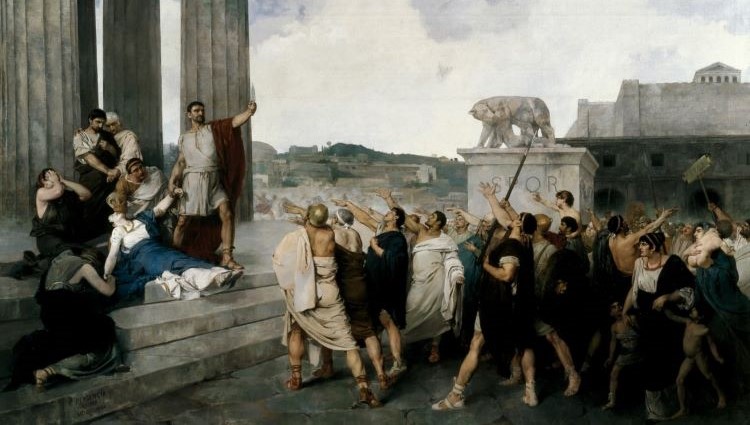
What did Rome mean to the original Americans? What counsel did its early history contain? And what must we conclude about our forefathers from their somewhat selective devotion to the Roman analogue? The Federal District of Columbia, both in its formal character as a capital and also in its self-conscious attempt at a certain visual [...]

Go to Top