Wagner versus Nietzsche

By |2026-03-06T20:22:18-06:00March 6th, 2026|Categories: Friedrich Nietzsche, Joseph Pearce, Music, Philosophy, Richard Wagner, Senior Contributors|

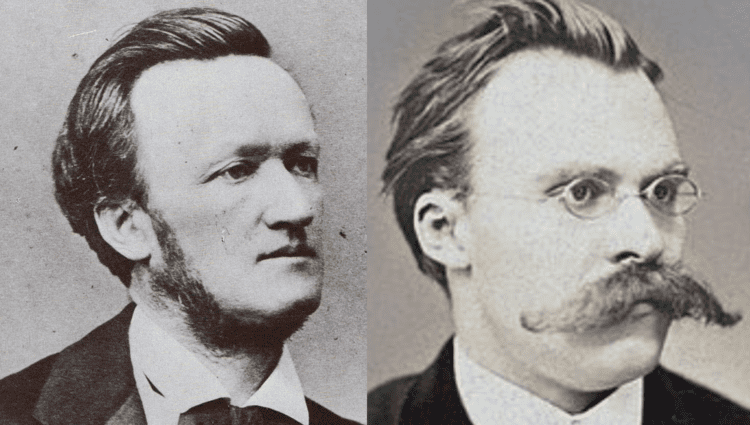
“Strong art destabilizes the self,” a reader commented on my recent essay, “that’s its job.” Really? On the contrary, great art edifies. It engages the isolated and alienated self with goodness, truth, and beauty. It moves us beyond the confusion of the unstable self towards the true stability found in the fusion of sanity and [...]

Antonio Vivaldi: “The Red Priest” Rediscovered

By |2026-03-03T17:41:41-06:00March 3rd, 2026|Categories: Antonio Vivaldi, Audio/Video, Culture, Jean-Jacques Rousseau, Music, Stephen M. Klugewicz, Timeless Essays|

The popularity of Vivaldi’s “Four Seasons” has paradoxically led us to underestimate the Venetian’s true greatness. Once renowned across Europe, by the early twentieth century Vivaldi was considered a minor composer. Then, several events occurred to re-awaken interest in the music of “The Red Priest.” Inevitably, when one hears the name of Antonio Vivaldi, one [...]

Finding and Losing Train Culture

By |2026-02-27T18:41:40-06:00February 27th, 2026|Categories: American West, Bruce Frohnen, Culture, Timeless Essays|

Train culture itself helped integrate communities into the larger, state, and national society in a way that left local autonomy intact. The nice thing about trains is that they bring people and things to your community and take them from your community to the wider world without erasing your actual community. My family and I [...]

Religion and Politics in Public Life

By |2026-02-25T12:04:56-06:00February 25th, 2026|Categories: American Republic, Catholic Culture Series, Catholicism, Politics, Religion|

Ours is the first nation under God which makes no real provision for God in its public life, owing to a great and sundering wall of separation between Church and State, religion and politics, faith and life. We live in a country whose citizenry have been, almost from the beginning of the Republic, carefully coached to [...]

On the Imagination

By |2026-02-25T12:21:11-06:00February 25th, 2026|Categories: Art, Beauty, Culture, E.B., Eva Brann, Imagination, In Honor of Eva Brann at 90 Series, Senior Contributors, St. John's College, Timeless Essays, Wisdom|

The imagination invests the world with that richness and resonance which makes it an attractive dwelling for the intellect. But the imagination is indispensable to action as well. For the real world is worth our exertion only when the visionary imagination sets the scene for action. Tonight I shall commit the deliberate indiscretion of trying [...]

Ten Odd Facts About Handel’s “Messiah”

By |2026-02-22T19:56:25-06:00February 22nd, 2026|Categories: Christianity, Christmas, History, Music|

By 1741, George Frideric Handel had fallen deeply into debt, and was even threatened with debtors’ prison. Instead, he departed to Ireland for a sabbatical, where he wrote his "Messiah" in just twenty-four days. While Handel’s Messiah is, for many, an annual Advent spectacle, in the Classical Girl household, the 1741 oratorio gets pulled out during [...]

Rediscovering Our Roots

By |2026-02-18T11:59:38-06:00February 18th, 2026|Categories: Catholic Culture Series, Catholicism, Christendom, Christianity, Christopher Dawson, Civil Society, Culture, Family, Western Civilization|

Catholic culture is, first and foremost, a society built upon a family whose identity draws from the Holy Family. In a culture where every contour of the public life assists in communicating the message of Jesus Christ, the first citizen of the realm will be the Church, she who is both Bride and Body of Christ, [...]

T.S. Eliot’s Long Lent

By |2026-02-17T17:21:14-06:00February 17th, 2026|Categories: Ash Wednesday, Beauty, Catholicism, Culture, Dwight Longenecker, Featured, Lent, Poetry, Religion, T.S. Eliot, Timeless Essays|

In “Ash Wednesday,” T.S. Eliot repudiated his ironic style along with his despairing and nihilistic view of the world. When he wrote it, he was turning from the hell of the wasteland of unbelief to receive his ashes and begin his long Lent. T.S. Eliot’s secret baptism in 1927 marked one of the most remarkable [...]

Art Is the Signature of Man

By |2026-02-14T13:24:18-06:00February 14th, 2026|Categories: Art, Beauty, Culture, G.K. Chesterton, Imagination, Joseph Pearce, Nature of Man, Senior Contributors|

The one thing that unites man with his most ancient of ancestors and which divides him from all other creatures is his status as a sub-creator, as the imago Dei, who uses his imagination to create in the image of the Creator Himself. Art is the signature of man. —G.K. Chesterton G.K. Chesterton begins his [...]

Ten Great Requiem Masses

By |2026-02-24T07:51:06-06:00February 14th, 2026|Categories: Audio/Video, Camille Saint-Saëns, Hector Berlioz, Michael Haydn, Music, Stephen M. Klugewicz, Timeless Essays, Wolfgang Amadeus Mozart|

“Should not church music be mostly for the heart?” —Joseph Martin Kraus The Roman Catholic Mass for the Dead—the Requiem, sometimes called Missa pro Defunctis (or Defuncto) or Messe des Morts—is surely the most dramatic of liturgical forms and has inspired countless composers, from medieval times to the present. What the Czech composer Antonin Dvořák, a devout [...]

Cultivating the Soil

By |2026-02-04T13:38:53-06:00February 4th, 2026|Categories: Catholic Culture Series, Catholicism, Culture|

We can only bloom where we are planted. So, our job as finite beings—rooted in the soil of this world while yet being summoned to an infinite and eternal destiny—is to provide the best possible soil: culture. How to account for the Good News of Jesus Christ? The short answer is the Holy Ghost, who, in [...]

The Glory of Chamber Music

By |2026-02-02T14:53:47-06:00February 2nd, 2026|Categories: Antonin Dvorak, Audio/Video, Felix Mendelssohn, Ludwig van Beethoven, Music, Wolfgang Amadeus Mozart|

Chamber music is sometimes the best work of the best composers, and for that there is no acceptable substitute. When I first heard chamber music, it seemed an acquired taste, and subsequently a taste I acquired. So I will recite some personal history without any illusion that it matters because it was my experience. On [...]

The 1928 Book of Common Prayer: An Appreciation

By |2026-02-01T14:01:16-06:00February 1st, 2026|Categories: Anglicanism, Bible, Books, Christian Living, Christianity, Prayer, Religion, Timeless Essays|

The 1928 Book of Common Prayer is an important cultural artifact, whose influence on English language and literature rivals that of the Authorized Version of the Bible and the works of William Shakespeare. You will recall Parson Thwackum in Henry Fielding’s classic novel History of Tom Jones, a Foundling (1749). Mr. (never, in proper ecclesiastical usage, Reverend) Thwackum [...]

Go to Top