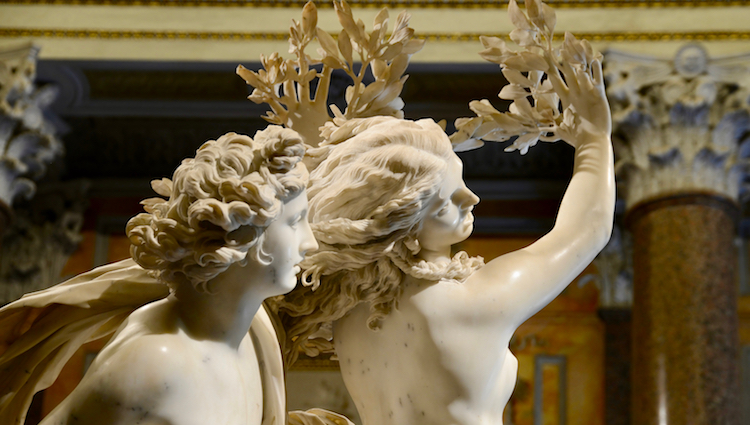
Motion, Moments, & Sculptural Art: The Imagination and Time

By |2020-03-28T18:25:26-05:00March 28th, 2020|Categories: Christianity, Imagination, Philosophy, Religion, Theology, Time|

The imagination allows the human experience to be of both motion and stability, both becoming and being—but could it be that contained in our experience of time is an experience of divine nature? In his Consolation of Philosophy, Boethius writes that “the infinite motion of temporal things tries to imitate the ever present immobility of [...]
The Shire and Pestilence: A Fairytale

By |2020-03-27T17:23:35-05:00March 27th, 2020|Categories: Civil Society, Economics, Fiction, Imagination, Joseph Pearce, Senior Contributors|

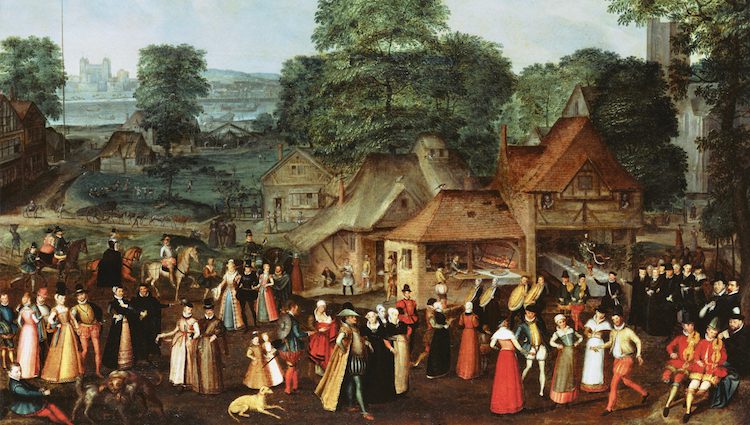
Once upon a time there was a beautiful land that called itself the Shire. Its people were happy. They lived and worked on their own small pieces of land, growing their own food and trading the surplus with their neighbours. Many of them were also craftsmen, making and fixing things so that everyone could work [...]

David Weimer’s “The City as Metaphor”

By |2020-03-26T10:56:58-05:00March 27th, 2020|Categories: Books, Christine Norvell, Fiction, Imagination, Literature, Senior Contributors|

David Weimer’s “The City as Metaphor” traces the concept of the city through a century of American fiction, to find that its depiction has a trend. Where once the city was a symbol of hope, a place to seek one’s fortune, where expectant immigrants and starry-eyed farmboys sought success, all has changed. The City as [...]

What if This Is the End?

By |2020-03-26T15:50:58-05:00March 26th, 2020|Categories: Bradley J. Birzer, Coronavirus, Imagination, Morality, Senior Contributors|

Well, for the sake of argument, let’s say this is The End. It wasn’t nuclear war or an asteroid or a rogue planet or even some mystical force. But, merely—in a whimper—a cursed bug. Would it really matter? “An apocalypse is a work of literature dealing with the end of human history. For millennia apocalypses [...]

A Case for Context: Horace’s “Ars Poetica”

By |2021-06-23T21:24:10-05:00March 11th, 2020|Categories: Christine Norvell, Horace, Imagination, Literature, Poetry, Senior Contributors|

In ancient times and modern, theories of poetry interpretation abound. By Aristotle’s standards, poetry aptly portrays tragedy. Plato equates poetry with art and demeans it as imitation, as lesser importance, because it is reflection not reality. As a successful poet in the first century, Horace not only proffers advice on how to write poetry, but [...]

The Mixed Legacy of Christopher Tolkien

By |2026-01-07T09:12:44-06:00March 7th, 2020|Categories: Fiction, Imagination, J.R.R. Tolkien, Joseph Pearce, Literature, Senior Contributors|

Only the works published during J.R.R. Tolkien’s lifetime should be considered canonical, whereas the unfinished works collected, collated, and edited by Christopher Tolkien should be considered extra-canonical. I would even venture to suggest that Christopher Tolkien’s work should be considered as footnotes to his father’s corpus and not an extension of it. In the wake [...]

On Naming

By |2020-02-22T18:51:51-06:00February 29th, 2020|Categories: Christian Living, Christianity, Imagination, Language|

To cast off our name is to cast off who we are. By embracing a name, crying out to it, we somehow do the opposite. We embed it into ourselves. With every repetition of the Sacred Name, we change the entire cosmos, and we change ourselves. “As the most effective prayer the Church Fathers use [...]

“Ballade of the New History”

By |2020-02-22T10:44:24-06:00February 23rd, 2020|Categories: Culture War, History, Imagination, Poetry|

They held a meeting and they said They could no longer tolerate His portrait peering down while they were fed With college food and facts that led to hate; Quite frankly, there’d be no debate – And as to motive, there would be no mystery; They wouldn’t burn it, but they’d put it in a [...]

Aristotle’s Revenge

By |2021-04-22T17:40:15-05:00February 18th, 2020|Categories: Aristotle, Books, Imagination, Philosophy, Truth|

Insights into the nature of Aristotle’s philosophy confirm Edward Feser’s detailed argument that Aristotle, under the gentle care of later scholastically-minded thinkers, turns out to be right about more things than most of us dare hope. Aristotle’s Revenge: The Metaphysical Foundations of Physical and Biological Science, by Edward Feser (Editiones Scholasticae, 515 pages, 2019) Philosophy [...]

Go to Top