The Case for the Liberal Arts: Stronger Than Ever?

By |2021-05-05T16:49:37-05:00May 5th, 2021|Categories: Classics, Education, Featured, Liberal Arts, Liberal Learning, Plato, St. John's College, Timeless Essays, Wilfred McClay|

The chief public benefit of liberal education is the formation of a particular kind of person, a particular kind of citizen, who robustly embodies the virtues of both inquiry and membership, and therefore is equipped for the truth-seeking deliberation and responsible action that a republican form of government requires. If we are to make any [...]

Saving the Classics From Cancel Culture

By |2021-04-14T11:06:42-05:00April 23rd, 2021|Categories: Civilization, Classics, Culture, Great Books, Joseph Pearce, Literature, Senior Contributors|

Joseph Pearce, series editor of the Ignatius Critical Editions, is interviewed by Paul Senz. Paul Senz: What prompted you and Ignatius Press to produce the series of Ignatius Critical Editions? Joseph Pearce: As someone who has taught undergraduate students for many years, I am well aware of the hijacking of the study of literature by [...]

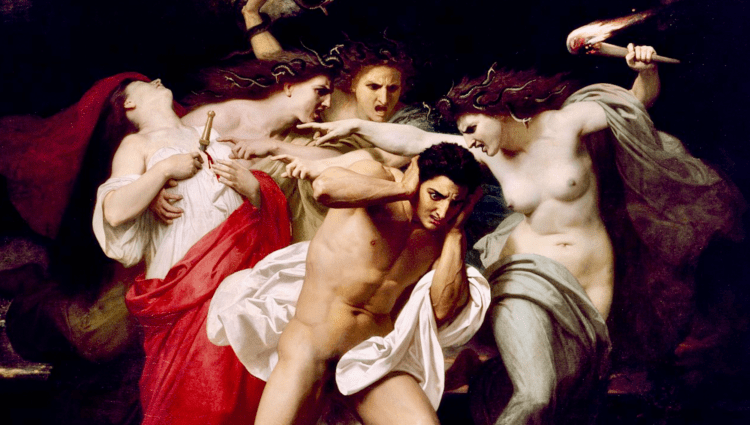
Furies: The Myopia of the Present Moment

By |2021-01-15T16:52:37-06:00January 15th, 2021|Categories: Civilization, Classics, Glenn Arbery, Great Books, Senior Contributors, Wyoming Catholic College|

Turning away from the news and attending with imagination to the “Oresteia” takes faith, both in God and in the wisdom of our forebears. This will be a worthier endeavor, both for the present moment and for the time to come, than trying to tear down the very structures that give us the promise of [...]

Geography of Being

By |2021-04-22T09:48:34-05:00October 17th, 2020|Categories: Classics, Glenn Arbery, Great Books, History, Homer, Odyssey, Senior Contributors, Wyoming Catholic College|

When we study the classics, we might have the atlas open beside the book to remind us where we are and when we live. We can feel the overlays of history and empires and languages that sweep over the same disputed places. Relevant and contemporary to us, the great actions of mind and spirit strive [...]

The “Eumenides”: Patriotism & Moderated Modernity

By |2023-07-18T17:14:06-05:00October 4th, 2020|Categories: Books, Classics, E.B., Eva Brann, Featured, Great Books, Literature, Senior Contributors, St. John's College, Timeless Essays|

The “Eumenides” is not a tragedy of the unresolvable impasse, of the unavoidable fatality. It is a “pragma,” an affair practically handled, whose outcome is not all-round cleansing by devastation, but a future of good daily living. Aeschylus invests this drama of sweet reason, of moderation triumphant, with exhilarating solemnity and participatory splendor. Aeschylus’ Eumenides is [...]

Does Classical Education Promote Diversity?

By |2020-08-24T16:47:29-05:00August 24th, 2020|Categories: Classical Education, Classical Learning, Classics, Education, Liberal Learning|

Today we are not inclined to ask who said something, but to ask to which identity group the person who said it belongs. This is profoundly opposed to the spirit of inquiry that classical education proposes to students—a spirit that seeks truth, beauty, and goodness. Though classical learning is gaining steam again in many parts [...]

The Unique Advantages of Latin and Greek

By |2020-08-19T14:02:23-05:00August 20th, 2020|Categories: Classical Education, Classics, Education, Intelligence, Language, Liberal Learning, Music|

In order to reap the full rewards of a classical education, schools should prize the classical languages as highly as they do the mathematical arts. The qualitative and the quantitative are essential aspects of human understanding, without which no one may be fully educated. Every rule has a story. Perhaps you have read an old [...]

Shakespeare and Classical Antiquity

By |2020-06-09T11:03:05-05:00April 22nd, 2020|Categories: Books, Classics, Culture, Literature, William Shakespeare|

Jonathan Bate’s wide-ranging and capacious knowledge of classical antiquity is what used to constitute the core of an education in England. That makes him an excellent guide to the territory he unveils in “How the Classics Made Shakespeare,” as he surveys the manifold ways in which Shakespeare drew upon classical sources. How the Classics Made [...]

The Ancient Hebrew Roots of the Christian Logos

By |2023-10-08T19:34:06-05:00January 9th, 2020|Categories: Bible, Bradley J. Birzer, Christianity, Classics, Great Books, Senior Contributors|

Though originally a Jew, St. John was clearly a Hellenized Jew who might have taken his own concepts from either the pagans or the Jews. As he describes the Incarnate Word in his Gospel, the Incarnation resembles most closely the Memra of the Jews. As I discussed in my previous essay, the Pagan Logos had [...]

The Pagan Roots of the Christian Logos

By |2020-01-10T09:38:29-06:00January 7th, 2020|Categories: Bradley J. Birzer, Christian Humanism, Christianity, Cicero, Classics, Great Books, Liberal Learning, Virgil|

Any understanding of human dignity in the twenty-first century demands an understanding of the Judeo-Christian Logos (Memra in Hebrew). Without it, there is only chaos and darkness, dispiritedness and confusion, blackness and the abyss. One only has to witness the evil sown by the attempted coup against the Judeo-Christian Logos in the last century by [...]

Eva Brann on Happiness and Learning

By |2020-05-06T00:22:41-05:00January 6th, 2020|Categories: Classics, Eva Brann, Happiness, Liberal Learning, St. John's College|

There is a moment in every class when students’ eyes light up, or go wide, and they have a moment where it clicks and makes sense, where you can see they are learning something that they will never forget—these are the very highlights for Eva Brann, longtime tutor at St. John's College, Annapolis. It was [...]

Pre-Socratics or First Philosophers?

By |2023-05-21T11:29:14-05:00November 25th, 2019|Categories: Classics, E.B., Eva Brann, Great Books, Heraclitus, In Honor of Eva Brann at 90 Series, Philosophy, Senior Contributors, Socrates, St. John's College|

The Pre-Socratics may be thought of as deficient, lacking something, primitive in the derogatory sense. But there is also the opposite perspective: These men were not primitive, without sophistication, but primeval, deeper, more receptive to origins. Think how peculiar this appellation is: “Pre-Socratics.” A whole slew of thinkers, poetical, aphoristic, prosaic—condemned to be known as [...]

What Has Athens To Do With You?

By |2023-05-21T11:29:26-05:00September 2nd, 2019|Categories: Art, Classics, Culture, E.B., Eva Brann, Great Books, History, In Honor of Eva Brann at 90 Series, Liberal Learning, Philosophy, Plato, Senior Contributors, St. John's College|

The humanly full life is concretely local and intellectually wide, to be lived in a face-to-face community whose members can talk to each other about anything, where nothing of human interest is interdicted; where no one owns a specialty so that others have to venture opinions with the disclaimer, “Of course, that’s not my subject.” [...]

Plato’s “Timaeus”: A Unique Universe of Discourse

By |2023-05-21T11:29:42-05:00May 6th, 2019|Categories: Books, Classics, E.B., Eva Brann, Great Books, In Honor of Eva Brann at 90 Series, Liberal Learning, Philosophy, Plato, Senior Contributors, St. John's College|

Plato’s Timaeus is less a dialogue than a short tale of antiquity by Critias followed by an account of the cosmos by Timaeus, in which, the question is asked: Why is the greatest philosophical work on the cosmos framed by politics? Before reviewing Peter Kalkavage’s Focus Press translation of the Timaeus, I must, in all [...]

Go to Top