Atheism: Disproved by Science?

By |2021-05-19T10:46:55-05:00September 9th, 2016|Categories: Atheism, Existence of God, George Stanciu, Science, St. John's College|

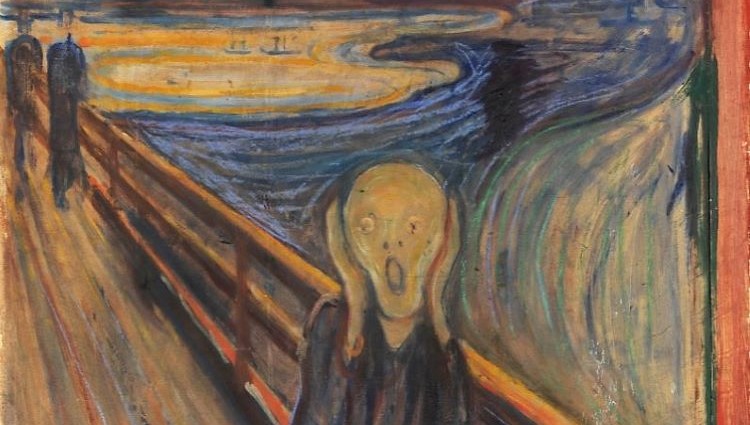
I, like you, was born in the Kali Yuga, the Dark Age of Hindu mythology, when all the great faiths of the world are on the wane. The secular faith in the Nation-State, in grand schemes to institute Paradise on Earth, and in placing transcendent hope in human institutions has been destroyed by history. No [...]

Life in the Image-World

By |2019-09-05T12:54:46-05:00August 23rd, 2016|Categories: Character, Civil Society, Culture, Featured, Film, George Stanciu, History, Information Age, Modernity, St. John's College, Technology, Television|

Recently, I went with a group of friends to a concert of American choral music based on black spirituals. At the intermission, my friends and I spoke excitedly about what we experienced. The sole musician amongst us praised the balance of the ensemble and the conductor’s energy. One woman noticed how nervous the lead soprano [...]

How Should We Read a Book?

By |2023-05-21T11:30:50-05:00August 17th, 2016|Categories: E.B., Eva Brann, Quotation, Senior Contributors, St. John's College|

Peter Kalkavage's The Logic of Desire presents an exemplary attitude for a reader to adopt toward a book. To use a fancy term, it embodies a “hermeneutic,” a principle of interpretation. The most respectful such hermeneutic rule I know is the so-called “principle of charity:” give the text a chance to make maximum sense. Mr. [...]

When Gentlemen Dispute

By |2020-11-04T16:06:40-06:00August 14th, 2016|Categories: Essential, Politics, St. John's College, Timeless Essays, Wisdom|

Demonstrations that are political possess a tendency to be governed by loudness and force rather than by reflection and thought, and thus bear the shrill dictates of power instead of being willing servants to truth. And above all, we should remember that there is simply no point in winning the argument if we know we [...]

Nihilism, American-Style

By |2021-05-19T11:00:51-05:00August 14th, 2016|Categories: Democracy in America, Featured, George Stanciu, Philosophy, Politics, Religion, St. John's College|

Old-World nihilism belongs to a handful of intellectuals persuaded by philosophical arguments that human knowledge, on the whole, is worthless as a reliable guide for living. Consider Heinrich von Kleist, the nineteenth century dramatist and short-story writer, who became intellectually unglued when he read Immanuel Kant’s The Critique of Pure Reason. In a letter to [...]

Caterpillar Destinations: A Defense of Classical Education

By |2021-07-09T14:35:19-05:00August 2nd, 2016|Categories: Classical Education, Education, Featured, St. John's College, T.S. Eliot|

Unreal City, Under the brown fog of a winter dawn, A crowd flowed over London Bridge, so many, I had not thought death had undone so many. —The Wasteland by T.S. Eliot I moved frequently in the later years of my childhood—not just from town to town, state to state, or country to country, but from [...]

Reductionism: A Reasonable Goal or an Idiotic Quest?

By |2021-05-19T11:26:14-05:00June 30th, 2016|Categories: George Stanciu, Reason, Science, St. John's College|

In January 2011, an intriguing announcement arrived in my email inbox. The upcoming issue of The New Yorker was to contain “Social Animal” by David Brooks, The New York Times columnist and guru of middle-class American life. I could hardly wait to read “how the new sciences of human nature can help make sense of [...]

Graduation Day: Do You Want to Change the World?

By |2023-05-21T11:30:51-05:00June 28th, 2016|Categories: E.B., Eva Brann, Featured, Liberal Learning, Senior Contributors, St. John's College|

Parents and Relatives, Fellow Tutors and Mr. President, Board Members and, above all, Santa Fe Seniors and Graduate Institute students! Some of you will remember that radio-telephone distress signal of old: “Mayday, Mayday.” It had, alas, nothing to do with the “merry month of May.” Our seniors, who have all learned a lot of French, [...]

Determinism: Science Commits Suicide

By |2019-07-23T14:05:22-05:00June 10th, 2016|Categories: Aristotle, George Stanciu, John Locke, Plato, Science, St. John's College|

Despite the advent of relativity, quantum physics, and chaos theory, most scientists, including most physicists, intellectually inhabit the Newtonian Cosmos. In stark contrast to the Aristotelian Cosmos, where plants and animals possess an inner agency that causes them to emulate the Prime Mover, the Newtonian Cosmos is mechanical, where lifeless matter as well as animate [...]

Myth, Sacred Story & Epic: Imagination and Making Fictions

By |2023-05-21T11:30:52-05:00June 7th, 2016|Categories: E.B., Eva Brann, Featured, Homer, Iliad, Imagination, Literature, Myth, Odyssey, Senior Contributors, Sophocles, St. John's College|

A Reflection on Three Questions Concerning the Re-telling of Sacred Stories and of Myths (An Academically Disreputable Inquiry) Questions: Are there canonical sources—gold-standards—for myths, and how would we recognize them? Should our re-visioning of sacred persons and mythical people stay true to the standard version? Should there be myth-dilations? […]

Wonder and Love: How Scientists Neglect God and Man

By |2021-05-19T11:32:39-05:00June 4th, 2016|Categories: Culture, George Stanciu, Religion, Science, St. John's College|

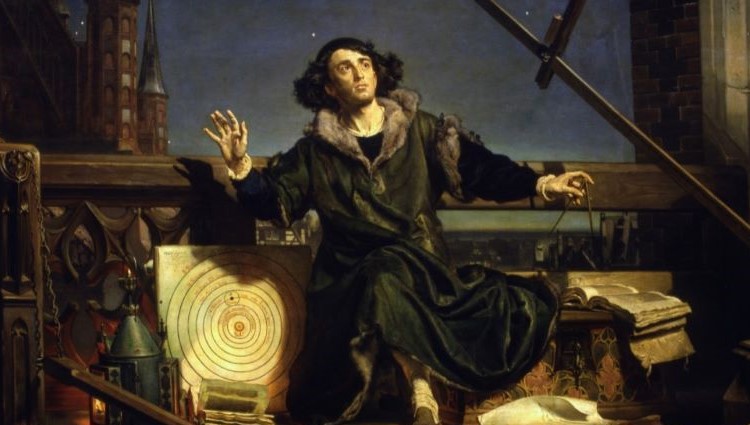
In the Western World, religion is in decline. Early in his pontificate, Benedict XVI lamented the weakening of churches in Europe, Australia, and the United States. He told a meeting of clergy in the Italian Alps, where he vacations, that “the so-called traditional churches look like they are dying.”[1] For many people, spirituality has replaced [...]

Music: Giving the World a Rhythmic Sway

By |2020-06-26T13:34:53-05:00May 31st, 2016|Categories: Featured, Happiness, Music, Peter Kalkavage, Plato, St. John's College|

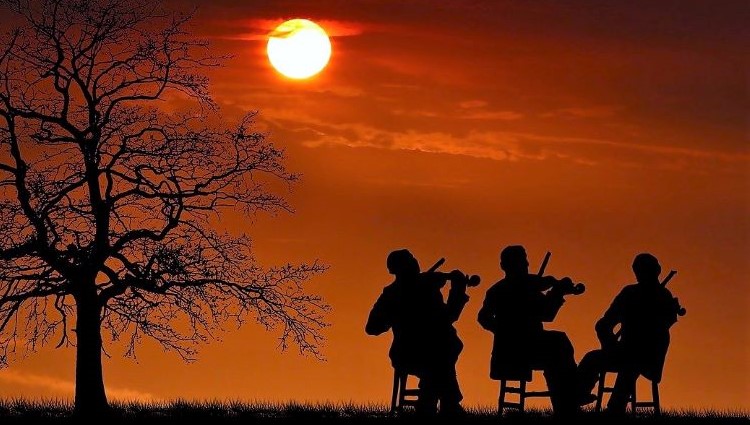
Music, as a living presence that comes to us, offers itself to us, assures us that we are not alone: that there is something out there in the world that knows our hearts and may even teach us to know them better. Music, too, is nature. —Victor Zuckerkandl, Sound and Symbol. This essay explores the [...]

Socrates on Age and the Progress of Study

By |2023-05-21T11:30:52-05:00May 23rd, 2016|Categories: Aristotle, E.B., Education, Eva Brann, Philosophy, Plato, Senior Contributors, Socrates, St. John's College, The Music of the Republic series by Eva Brann|

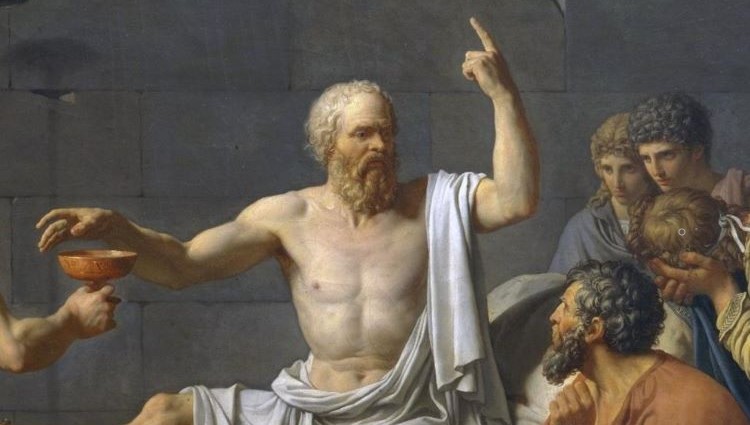
1c-d. The activity of this higher logos, dialectic itself, is beyond Glaucon’s present reach and no part of the preliminary survey. To set out on the dialectical road would be to see “no longer an image… but the true itself” (533a3); the “most serious matters” are withheld from Glaucon, and so from any mere reader [...]

Go to Top