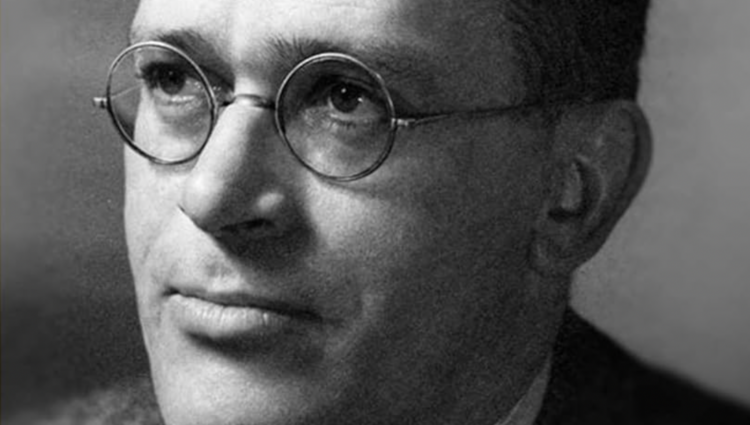
Dr. Weaver was Professor of English at the University of Chicago from 1945 until his death in 1963. The best known of his works are Ideas Have Consequences (University of Chicago Press, 1953), and The Ethics of Rhetoric (Regnery, 1953).
Richard Weaver’s “Visions of Order”

By |2025-03-12T19:51:38-05:00March 12th, 2025|Categories: Books, Conservatism, Education, G.K. Chesterton, Richard Weaver, Russell Kirk|

The purpose of education has not remained the same over the course of roughly four centuries. By the early 20th century, education for Protestantization and Americanization began to give way to something called "progressive education.” Not surprisingly, it is progressive education that Richard Weaver targets. Published in 1964, Richard Weaver’s Visions of Order: The Cultural [...]


Richard Weaver’s Conservatism of Affirmation & Hope

By |2025-02-18T09:03:38-06:00February 17th, 2025|Categories: Conservatism, Featured, Ludwig van Beethoven, Plato, Relativism, Richard Weaver, South, Timeless Essays, Western Civilization|

Against a modern age that denied notions of meaning, purpose, and truth, Richard Weaver articulated a conservatism of hope and affirmation based on the Platonic-Christian heritage and its manifestation in the Amer­ican South. Richard Weaver reasoned it was the emergence of nominalism, the departure from Plato­nism and Christianity, which produced the intellectual heresies leading to [...]

Richard Weaver: The Conservatism of Piety

By |2025-02-09T15:34:00-06:00February 9th, 2025|Categories: Conservatism, Faith, Featured, Plato, Richard Weaver, St. Augustine, Timeless Essays, Western Tradition|

Confronted with choices between evil and good, man frequently chooses evil with its accompanying anguish. Would not wisdom and prudence dictate that man ought to be modest, restrained, and humble—in a word, pious? Born in Weaverville, North Carolina in 1910, Richard Malcolm Weaver was raised in Lexington, Kentucky. Elected to Phi Beta Kappa, Weaver graduated [...]

Gather Round the Hearth to Enjoy Things

By |2024-08-22T21:54:34-05:00August 22nd, 2024|Categories: Glenn Davis, Old Republic, Richard Weaver, Russell Kirk, Timeless Essays|Tags: |

How do we redeem the time? We start by "brightening the corner where we are," by improving ourselves, by helping our neighbors, by loving our families, by setting high standards for our students, and by exercising the inherited liberty bequeathed to us from the founders, responsibly, yet joyfully. With the Louisiana Purchase, the original republican [...]

Irving Babbitt & Richard Weaver: Conservative Sages

By |2023-08-16T18:07:14-05:00August 16th, 2023|Categories: Character, Conservatism, Culture, Featured, George A. Panichas, Irving Babbitt, Order, Richard Weaver, Timeless Essays|Tags: |

Moral indolence and apathy, both Babbitt and Weaver stress, must be surpassed if one is to fly beyond the nets of naturalism and temperamental excesses. Character and Culture: Essays on East and West, by Irving Babbitt, with a new Introduction by Claes G. Ryn Visions of Order: The Cultural Crisis of Our Time, by Richard [...]

Richard Weaver, the Gospel, & the Restoration of Culture

By |2023-10-08T19:42:04-05:00July 31st, 2023|Categories: Bible, Bradley G. Green, Culture, Richard Weaver, Senior Contributors, Timeless Essays|

Richard Weaver desired to “restore culture,” and countless twentieth and twenty-first century pilgrims have been helped by his wisdom. Many have certainly moved from despair to hope (or from naïve utopianism to a more profound hopefulness) because of Weaver. But to restore “culture” means of course to restore persons. Somewhere along the way, many twentieth-century pilgrims [...]

Arguing With Lincoln: The Views of M.E. Bradford & Richard Weaver

By |2020-09-21T16:43:27-05:00September 21st, 2020|Categories: Abraham Lincoln, Civil War, M. E. Bradford, Richard Weaver|

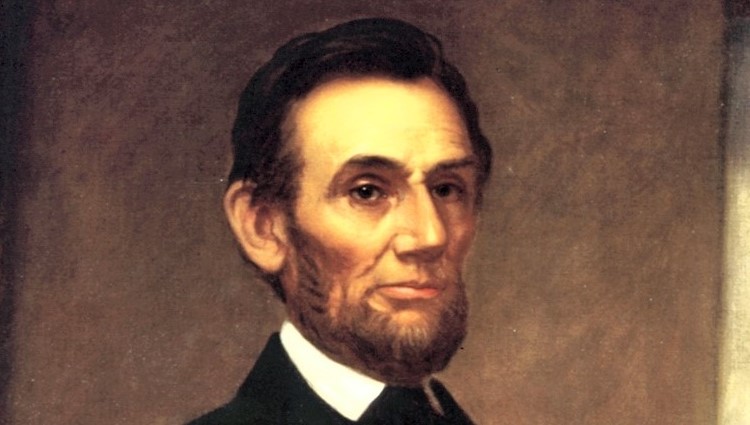
If for M.E. Bradford, Abraham Lincoln was a gnostic renegade and heretic beyond the pale, he was for Richard Weaver a political and rhetorical father figure with whom one might argue but never condemn. These Southerners’ differing critiques of Lincoln’s person, views, and actions cast some light on this complex figure, one who continues to [...]

The Richard Weaver-Abraham Lincoln Debate

By |2020-06-01T19:06:06-05:00June 1st, 2020|Categories: Abraham Lincoln, Civil War, Conservatism, Literature, Reason, Richard Weaver, South|

For some time I had puzzled over a discrepancy or inconsistency between two of Richard Weaver’s essays which treat of Lincoln to one degree or another. In his “Abraham Lincoln and the Argument from Definition” (1953), Weaver praises Lincoln as a “conservative” by virtue of his employment of the argument from definition on such issues [...]

The Importance of Cultural Freedom

By |2018-06-26T23:20:46-05:00June 26th, 2018|Categories: Art, Culture, Poetry, Richard Weaver, T.S. Eliot, The Imaginative Conservative|

Culture by its very nature tends to be centripetal, or to aspire toward some unity in its representational modes. The reason for this is that every culture polarizes around some animating idea, figment, or value, toward which everything that it produces bears some discoverable relation… Culture in its formal definition is one of the fulfillments [...]

The Attack on Memory

By |2020-03-10T10:59:31-05:00June 21st, 2018|Categories: American Republic, Andrew Lytle, Civil Society, Richard Weaver, Robert E. Lee, South|

History is the “remembered past,” remembered according to values and virtues that are the inheritance of a particular people. The story as told gives meaning to the “facts,” and the story must be told to be remembered. “Remember therefore from whence thou art fallen, and repent, and do the first works; or else I will [...]

Up, Maybe, From Liberalism

By |2019-02-14T13:39:58-06:00May 9th, 2018|Categories: Conservatism, Ideology, Liberalism, Politics, Richard Weaver, The Imaginative Conservative|

What has alarmed me most as I moved away from liberalism—or as it moved away from me—was how quick my liberal friends were to renounce and reject our delicate social fabric as oppressive, as exclusionary, or as just plain worthless. Churches? Schools? Communities? Not just anachronisms, according to the New Liberalism, but dangerous threats to [...]

The Lasting South? A Reconsideration

By |2020-07-19T15:05:18-05:00April 25th, 2018|Categories: Books, Mark Malvasi, Richard Weaver, Social Institutions, South|Tags: |

Ambiguities and contradictions aside, the Southern conservative tradition, by a heroic act of mind, may yet be summoned against the distortions of modernity, and, in particular, against the alluring gnostic supposition, now so prevalent, that men can alter the nature of existence and transmute the substance of being. From the perspective of the twenty-first century, [...]

Studies in Words

By |2021-04-27T13:41:26-05:00March 8th, 2018|Categories: Books, C.S. Lewis, Language, Liberalism, Richard Weaver, The Imaginative Conservative|

Since the present meaning of a word is often vaguely swayed by past meanings which have dropped into the subconscious, a knowledge of particular semantic histories can increase our facility and sometimes save us from an inadvertent error. Studies in Words by C.S. Lewis (352 pages, Cambridge University Press, 1960) Anyone reading the literature of modern semantics [...]

The Closing of the Western Mind

By |2021-05-10T19:45:54-05:00January 19th, 2018|Categories: Conservatism, Culture, Culture War, Freedom, History, Modernity, Richard Weaver, Roger Scruton|

Allan Bloom’s diagnosis in The Closing of the American Mind can explain far more about the sorry state of American higher education and the Western condition than popular stories that blame the Enlightenment, or democracy, or medieval nominalism. And it is therefore a valuable starting point… Last year marked the thirtieth anniversary of Allan Bloom’s [...]

Go to Top