Etched in Glass and Stone: The Childhood of Christopher Dawson

By |2021-05-24T14:43:21-05:00March 20th, 2018|Categories: Bradley J. Birzer, Catholicism, Christian Humanism, Christianity, Christopher Dawson|

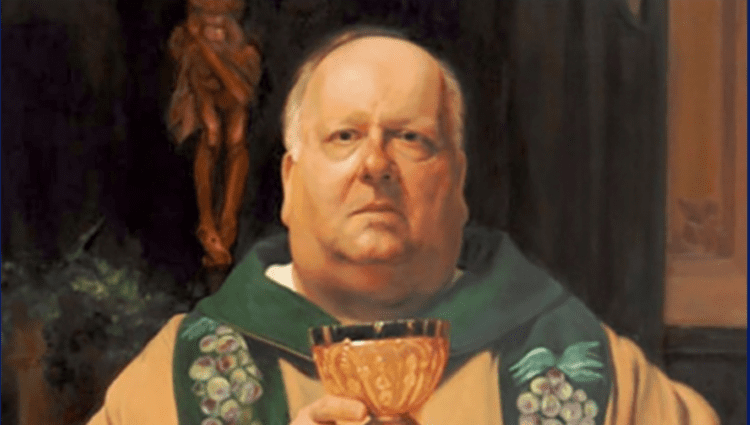
Stories of glass and stone—which told of the holy and sainted—convinced young Christopher Dawson that a saint was a saint not because of his or her individual talents, but as a continuation of the deepest longings and desires of the Church. In 1889, when Henry Christopher Dawson entered the world, he did so with style. [...]

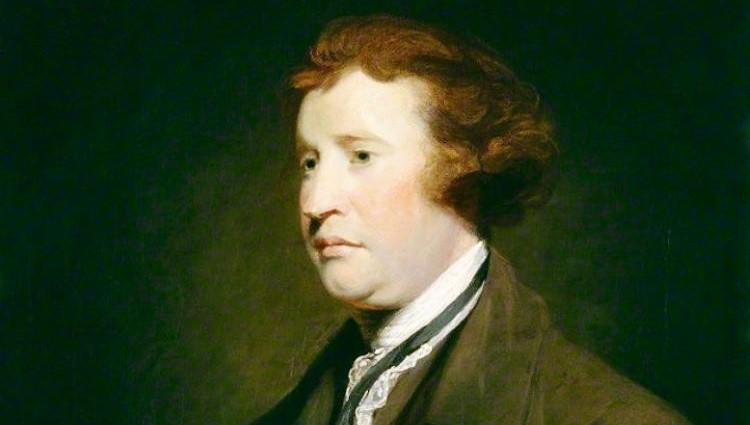
Reflecting on Edmund Burke’s “Reflections”

By |2021-04-07T11:22:36-05:00March 13th, 2018|Categories: Bradley J. Birzer, Civil Society, Conservatism, Edmund Burke, Edmund Burke series by Bradley Birzer, Europe, Featured, History, Revolution, The Imaginative Conservative, Wisdom|

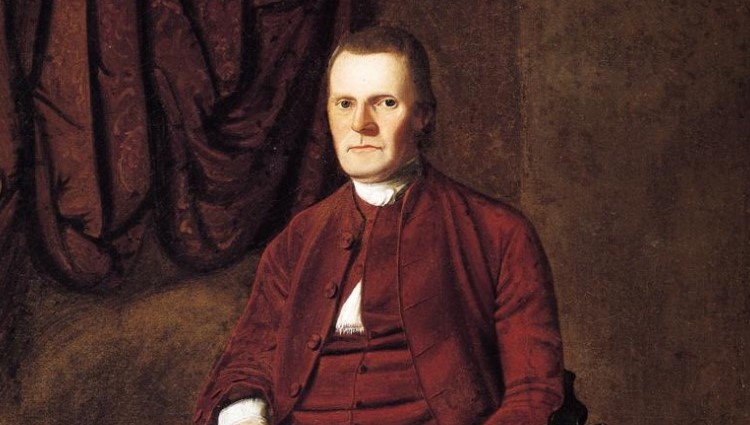
It would be difficult to find a more beautiful republican thought in all of Edmund Burke’s writings than this: “A man full of warm speculative benevolence may wish his society otherwise constituted than he finds it; but a good patriot, and a true politician, always considers how he shall make the most of the existing [...]

Edmund Burke & the French Revolutionaries

By |2019-07-09T13:30:01-05:00March 7th, 2018|Categories: Bradley J. Birzer, Conservatism, Edmund Burke, Edmund Burke series by Bradley Birzer, Featured, Revolution|

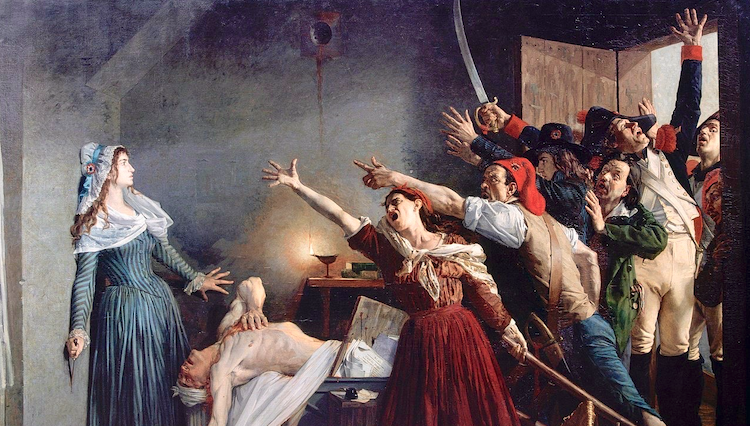
The French Revolutionaries, Edmund Burke rightly understood, sought not just the overturning of the old, but, critically, they also desired the destruction of the true, the good, and the beautiful. Only by lying about the nature of the human person could they accomplish their goals… One of the most important duties of any good person, [...]

Intelligent Piety: The Christian Humanism of Flannery O’Connor

By |2022-08-02T12:17:20-05:00February 21st, 2018|Categories: Books, Bradley J. Birzer, Catholicism, Christian Humanism, Christianity, Eric Voegelin, Featured, Flannery O'Connor, Romano Guardini, Russell Kirk|

Not only was Flannery O’Connor one of the most important Christian Humanists of the twentieth century, but she also well understood what made Christian Humanism what it was. While it might very well be conservative, it was always imaginative, allowing one to imagine what must be conserved. The Presence of Grace by Flannery O’Connor (192 pages, [...]

Russell Kirk’s Unfinished Justice

By |2021-04-27T12:37:36-05:00February 11th, 2018|Categories: Aristotle, Bradley J. Birzer, History, Justice, Plato, Russell Kirk|

Russell Kirk thought that because justice is rooted in nature and because in its perfection transcends all time and space, one can innately observe virtue in the actions of wise women and men. Such observation of our heroes and those we admire might be the best teacher in our current day, serving as reminders of [...]

The Quest for Modern Conservatism

By |2021-05-27T12:43:22-05:00January 28th, 2018|Categories: Alexis de Tocqueville, Bradley J. Birzer, Community, Conservatism, Edmund Burke, History, Robert Nisbet, Russell Kirk|

The job of every conservative is twofold: First, he must fight tirelessly against the centralized, unitary state; second, he must do everything possible to promote that which makes the free society not just an ordered one, but a good one. Prior to the publication of Russell Kirk’s masterful The Conservative Mind in 1953, no real [...]

How Power Destroys Community

By |2019-10-10T13:42:05-05:00January 22nd, 2018|Categories: Bradley J. Birzer, Civil Society, Community, Conservatism, Edmund Burke, History, Robert Nisbet|

Power, in and of itself, has become an “ideology,” according to Robert Nisbet. It is, by its very nature, incapable of understanding nuance… As I had the opportunity to write in my previous essay for The Imaginative Conservative, Oxford University Press gave the grand sociologist and historian of ideas, Robert A. Nisbet, a chance to [...]

Aliens in America!

By |2019-10-10T13:08:21-05:00January 15th, 2018|Categories: American Republic, Bradley J. Birzer, Community, Conservatism, Culture, Featured, History, Robert Nisbet|

In no society in the world, Robert Nisbet believed, has any people become so remote from nature as have Americans. As technology allowed him to dominate or ignore nature, the American became detached from place, having neither loyalty nor respect for the land that once nourished him… After the rather massive and—at least to the [...]

The Conservatism of Robert Nisbet

By |2021-04-27T21:06:48-05:00January 7th, 2018|Categories: Bradley J. Birzer, Christopher Dawson, Conservatism, Culture, Edmund Burke, History, Imagination, Irving Babbitt, Religion, Robert Nisbet, Romano Guardini, Russell Kirk, T.S. Eliot, Tradition|

Robert Nisbet, in direct contrast to Russell Kirk, argued that conservatism was purely a modern ideology. For Nisbet, the entire history of conservatism began as a reaction to the French Revolution… When it came to the history of conservatism, the grand sociologist and man of letters, Robert Nisbet, disagreed with the mighty founder of modern [...]

Temperance & Abundance: Romano Guardini’s “Letters from Lake Como”

By |2023-03-07T08:43:58-06:00January 1st, 2018|Categories: Bradley J. Birzer, Christianity, Gospel Reflection, History, Romano Guardini, Virtue|

When we begin to refashion things in our image rather than in God’s, we ourselves become displaced and disjointed. Strangely enough, by asserting only our humanity, we lose what makes us essentially and beautifully human… In truth, nature begins to relate to us only when we begin to indwell it, when culture begins in it. [...]

The Christian Humanism of Steven Wilson’s “Hand. Cannot. Erase.”

By |2023-01-02T09:25:53-06:00December 19th, 2017|Categories: Bradley J. Birzer, Christian Humanism, Christianity, Culture, Death, Music|

English musician Steven Wilson’s "Hand. Cannot. Erase" is extraordinary by the standards of any genre. His subject matter is the uniqueness of each human person, and he focuses on the life of one lost soul. An Incarnational Whole One of the greatest things in this whirligig of a world—however fraught with a string of perilous [...]

A True Conservative: Lee Edwards

By |2017-12-12T10:43:00-06:00December 12th, 2017|Categories: Bradley J. Birzer, Conservatism, History, Politics, Ronald Reagan, William F. Buckley Jr.|

Lee Edwards has not just known the greats of post-World War II conservatism, but he has also lived with them, and as one of them… Celebrating his eighty-fifth year on this earth, Lee Edwards is a remarkable cultural treasure, a man’s man, a gentleman’s gentleman, and a conservative’s conservative. Biographer of Ronald Reagan and of [...]

Irving Babbitt vs. Progressivism

By |2021-04-28T10:22:28-05:00December 6th, 2017|Categories: American Founding, Bradley J. Birzer, Christian Humanism, Christianity, Culture, Liberal Arts, Philosophy, Progressivism|

Progressives lack imagination, and, in their desire to create a world made in their image, they can only mimic what they see with straight, sterile lines. When considering that Thomas Jefferson delivered his first inaugural address in 1801—perhaps the finest statement up to that point in history on the dignity of the Western and Socratic [...]

The Mysterious Origins of the Roman Republic

By |2020-04-20T21:41:13-05:00November 14th, 2017|Categories: Bradley J. Birzer, Civil Society, History, Plato, Rome, Western Odyssey Series|

Exactly how the Roman republic came into existence remains shrouded in mystery. Critically so. As with our tradition of English common law and the necessity of knowing that its origins are “beyond the memory of man,” from “time immemorial,” “ancient beyond memory or record,” and “time out of mind,” so it is with the best [...]

Go to Top