“The Habsburg Manifesto”: A Conversation in Four Acts

By |2022-07-20T07:34:27-05:00December 25th, 2017|Categories: Books, Conservatism, Culture, Marcia Christoff Reina, Philosophy, Politics, Progressivism, Theater, Time, Tradition|

Is Time itself best understood by those things in life which are Time-less? Such is the main question posed in my play, “The Habsburg Manifesto.” It is not a political play but a philosophical one, whose main theme is the inner nobility of the individual as that which withstands and transcends all politics, all ideology, [...]
Can a Conservative Be Progressive?

By |2019-04-04T12:30:41-05:00November 6th, 2017|Categories: Conservatism, Culture, Liberalism, Tradition|

By affirming our human limitations, conservatism actually opens our minds to learning and discovering… Conservatives have always been portrayed as backward and unenlightened simpletons. This is true especially today because intellectual conservatives are being sidelined by identitarian and populist conservatism. This is not to excuse the Left. On the contrary, the Left’s insistence on presenting conservatives [...]

Dismantling the Idea of the West

By |2021-05-03T14:56:29-05:00September 12th, 2017|Categories: American Founding, Bradley J. Birzer, Humanities, Liberal Arts, Philosophy, The Imaginative Conservative, Tradition, Western Civilization|

The dismantling of the idea of the West unwittingly wrought massive damage upon the very ways in which Western citizens viewed themselves, disconnecting them not only from other cultures and peoples but also from one another. The dismantling of the idea of the West began when medieval philosophers began re-introducing the Sophist notions reduced to [...]

How Can We Fix the Liturgy?

By |2017-09-02T22:08:48-05:00September 2nd, 2017|Categories: Catholicism, Christianity, Music, Theology, Tradition|

Mass is not supposed to make me comfortable—it’s supposed to make me more holy… After thirty-five years as a liturgical musician, it’s amazing how little I really know about the liturgical music of the Roman Rite. Then again, what should I expect when my earliest memories of music at Mass tend to involve now-forgotten attempts to make [...]

On the Mystery of Teachers I Never Met

By |2021-04-28T14:37:02-05:00July 21st, 2017|Categories: Aristotle, Christian Humanism, Education, Fr. James Schall, Great Books, Hilaire Belloc, Literature, Philosophy, Plato, St. Augustine, Tradition, Truth|

The mystery is how one person whom I never met, through recountings down the ages of how many others whom I also have never met, could shed light on each other, eventually to enlighten me. In The Apology, Socrates brought up the question of whether he was paid for being a teacher, like the Sophists, who were paid [...]

“Baseball Is Our Game”

By |2023-04-17T23:38:41-05:00June 28th, 2017|Categories: Baseball, Culture, Quotation, Tradition|

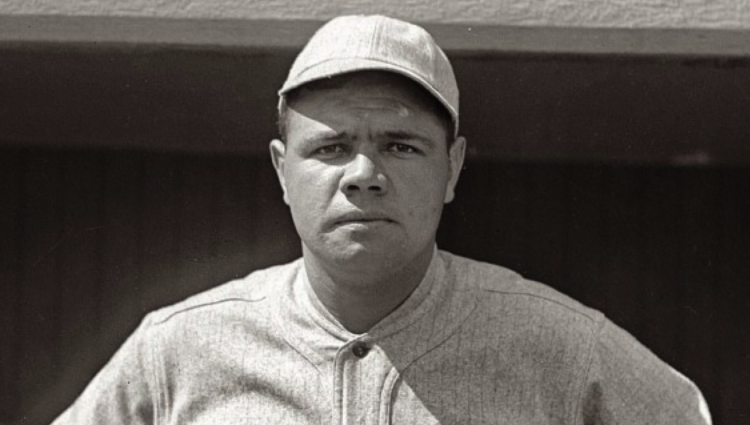
"I like your interest in sports ball, chiefest of all base-ball particularly: base-ball is our game: the American game: I connect it with our national character. Sports take people out of doors, get them filled with oxygen generate some of the brutal customs (so-called brutal customs) which, after all, tend to habituate people to a [...]

Where Have All the Apples Gone?

By |2020-01-23T12:15:20-06:00June 17th, 2017|Categories: Culture, Economics, Featured, Free Markets, Tradition|

In their drive to provide abundance, mass markets suppress variety. Far from enriching a culture, mass markets can impoverish it… One of the benefits of modern mass markets is supposed to be the proliferation of choices. The modern consumer can choose from so many things available on a variety of platforms, be it off or [...]

On the Meaning of the Classical Movement in Architecture

By |2022-03-31T18:07:31-05:00May 22nd, 2017|Categories: Architecture, Art, Christendom, History, Tradition|Tags: |

The beautiful sadness of the classical movement in architecture can be a message, urging all people of the third millennium to retrieve what was lost at the end of the second: the human need for transcendent meaning beyond history… What is the meaning of what we now generally refer to as the “New Classicism” or [...]

The Role of the University in the Twilight of the West

By |2018-10-30T14:31:11-05:00May 16th, 2017|Categories: Bradley J. Birzer, Education, Featured, Robert Nisbet, Tradition|

The primary purpose of the university is to preserve the great ideas of the past and to introduce the present generation to timeless conversations, thus preserving such wisdom for countless and unknown future generations… Conservatives rarely remember the profound influence Robert A. Nisbet (1913-1996) had on the press, academia, and the public at large in [...]

Who Is the Conservative Intellectual?

By |2017-06-08T09:20:33-05:00May 12th, 2017|Categories: Clyde Wilson, Conservatism, Featured, History, Tradition|Tags: |

The task of the conservative intellectual remains the same as it has always been, though acquiring new urgency. That task is to keep alive the wisdom that we are heir to and must keep and hand on… Carlyle defined history as ”the essence of innumerable biographies.” This is only one of the many inadequate but [...]

Russell Kirk on the Variety and Mystery of Human Existence

By |2022-06-20T20:06:12-05:00May 10th, 2017|Categories: Alexis de Tocqueville, American Founding, Edmund Burke, John Adams, Russell Kirk, Ted McAllister, The Conservative Mind, Tradition|Tags: |

Too often the public conversation about universal truths divides along rather sterile ideological lines. Russell Kirk’s great warning is that this is not really a battle of ideas, understood abstractly, but a battle of sentiments or affections… Since the nation’s founding, a salutary tension has informed American political thought—a tension between the abstract, universal truths [...]

What Can the Southern Tradition Teach Us?

By |2017-04-25T21:56:15-05:00April 25th, 2017|Categories: History, Richard Weaver, South, Southern Agrarians, Tradition|

Looking at the whole of the South’s promise and achieve­ment, I would be unwilling to say that it offers a foundation, or, because of some accidents of history, even an example. The most that it offers is a challenge… History is a liberal art and one profits by studying the whole of it, including the [...]

Can Subsidiarity Restore American Self-Government?

By |2019-01-04T11:40:22-06:00April 16th, 2017|Categories: Bruce Frohnen, Catholicism, Christianity, Civil Society, Family, Politics, Tradition|

Just as it is gravely wrong to take from individuals what they can accomplish by their own initiative and industry and give it to the community, so also it is an injustice and at the same time a grave evil and disturbance of right order to assign to a greater and higher association what lesser [...]

Go to Top