Race Riots, Nietzsche, and “Django Unchained”

By |2020-06-08T16:48:44-05:00June 8th, 2020|Categories: Christianity, Culture, Dwight Longenecker, Film, Friedrich Nietzsche, Great Books, Senior Contributors|

During the last fifty years we have seen the cities of America crumble into race riots time and again. The problem of racism is solved by the way of the cross, by the way of the ordinary person who, filled with transcendent insight, sees a problem, owns it, then rolls up his sleeves to do [...]
Richard Wagner and the Seduction of Nietzsche

By |2023-07-26T07:58:29-05:00February 7th, 2020|Categories: Beauty, Christianity, Culture, Friedrich Nietzsche, Joseph Pearce, Music, Richard Wagner, Senior Contributors|

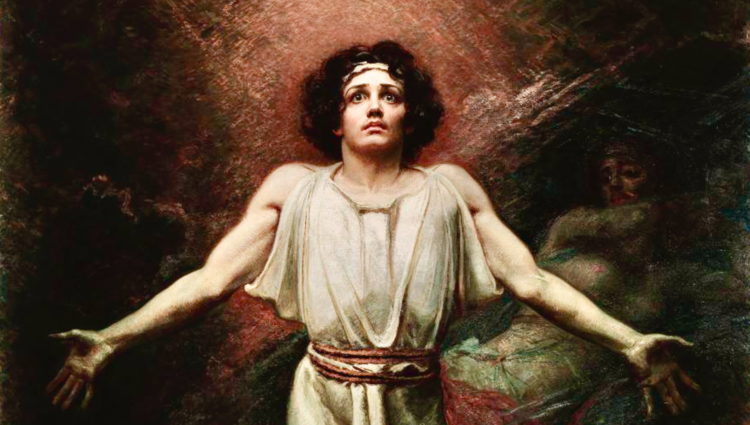
The sheer power and magnitude of Wagner’s “Parsifal”—the fruit of his recent conversion to a vague form of Christianity—shook the resolve and philosophy of his long-time disciple, Friedrich Nietzsche, to their foundations. Having recently watched a superb and breathtaking performance of Wagner’s last and perhaps greatest work, I feel constrained to share some thoughts on [...]

Paul Elmer More’s Nietzsche

By |2020-01-22T11:15:07-06:00January 24th, 2020|Categories: Bradley J. Birzer, Conservatism, Friedrich Nietzsche, Paul Elmer More, Philosophy, Senior Contributors|

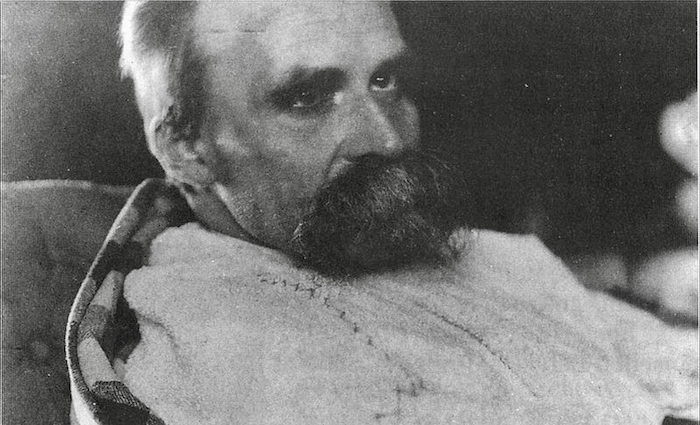
Paul Elmer More offered one of the single best critiques of Friedrich Nietzsche, delving deeply into the essence of his thought, in both attraction and repulsion, finding that it is in the attempt to reconcile the love and apprehension about Nietzsche that best allows one to understand him. “Who has ever been concerned for me [...]

Nicolás Gómez Dávila: The Nietzsche From the Andes

By |2021-04-27T20:23:38-05:00July 11th, 2019|Categories: Conservatism, Culture, Friedrich Nietzsche, Liberalism, Politics, Progressivism, Western Civilization|

A philosopher in his own right, and more impressively, an autodidact, Nicolás Gómez Dávila contributed some of the most thoughtful analyses of twentieth-century thought through one of the least conventional ways of political interpretation: aphorisms. Civilization is not an endless succession of inventions and discoveries, but the task of ensuring that certain things last. [...]

The Moral Project of Nietzsche’s “Beyond Good and Evil”

By |2021-04-27T20:24:42-05:00June 26th, 2019|Categories: Education, Friedrich Nietzsche, Great Books, Morality, Philosophy|

Friedrich Nietzsche has long been smeared as a ghastly nihilist who repudiated all conceptions of morality. Critics point to the title of his famous work, Beyond Good and Evil, which appears to call for the repudiation of morality, as well as contain his vociferous condemnations of eternal moral standards. With his proclamation that “God is [...]

Telling Lies

By |2023-05-21T11:29:36-05:00June 17th, 2019|Categories: Aristotle, E.B., Eva Brann, Friedrich Nietzsche, Homer, Iliad, In Honor of Eva Brann at 90 Series, Odyssey, Plato, Senior Contributors, St. John's College|

We should learn to cultivate the unwillingness to tolerate the unwitting, untold lie in the soul, and the wit and wisdom to transmute the unavoidable lying of any utterance into the telling lies that reveal truth… The first lecture of the school year is, by an old tradition, dedicated to the freshmen among us. Whether you [...]

Nietzsche and the Short Nineteenth Century

By |2021-04-25T18:19:11-05:00March 18th, 2019|Categories: Bradley J. Birzer, Friedrich Nietzsche, History, Modernity, Philosophy, Senior Contributors|

As Christopher Dawson argued, the nineteenth century proved a short century. When the century began, Thomas Jefferson delivered his gorgeous blueprint for a liberal republican world in the form of the first inaugural address. “But every difference of opinion is not a difference of principle. We have called by different names brethren of the same [...]

How Friedrich Nietzsche Changed Philosophy Forever

By |2021-04-27T20:59:07-05:00June 19th, 2018|Categories: Christianity, Friedrich Nietzsche, Modernity, Philosophy, Relativism, Science, Truth|

Friedrich Nietzsche sought to change the world, and there is significant evidence that the existentialist philosopher succeeded. Many of the contemporary world’s assumptions regarding the primacy of individualism and the disavowal of universals were exposited by Nietzsche.[1] Yet, one of this thinker’s most important revolutions lay in his complete redefinition of philosophy. The dominant ideas [...]

The Nietzschean Shakespeare

By |2021-04-27T21:00:31-05:00June 13th, 2018|Categories: Books, Ethics, Friedrich Nietzsche, History, Philosophy, William Shakespeare|

Friedrich Nietzsche has no explanation for the process by which Christianity conquered Rome, by which the strong accepted the morality of the weak. When it comes to a depth of understanding of the development of Christianity, William Shakespeare is the true superman… Shakespeare’s Rome: Republic and Empire by Paul A. Cantor (University of Chicago Press, 2017) [...]

Reflections on Christ and the Classics

By |2021-04-27T12:45:23-05:00January 20th, 2018|Categories: Christianity, Dante, Friedrich Nietzsche, Gospel Reflection, Great Books, History, Homer, Virgil|

In a certain way, Christ is both priest and offering, a self-sacrifice transcending both concepts. This is something the classical world found disquieting. The extent to which the pagan classical world and Christianity are able to tell a common story has had an uneven history. In late antiquity, the Church Fathers were reluctant disciples of [...]

“Crime and Punishment”: A Timeless Psychological Masterpiece

By |2021-04-27T21:12:35-05:00November 14th, 2017|Categories: Friedrich Nietzsche, History, Literature, Western Tradition|

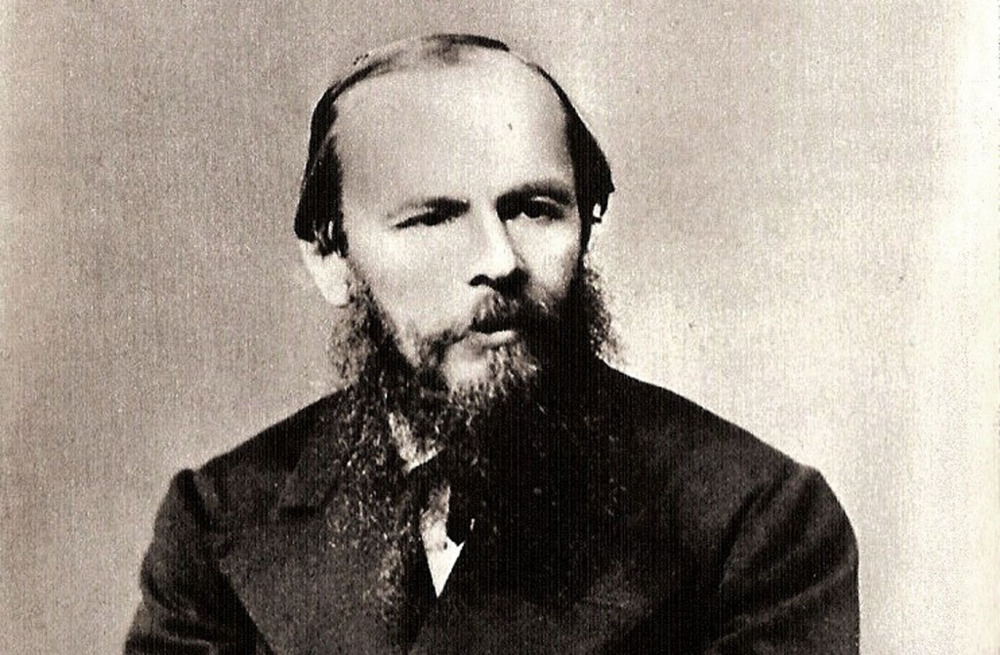
“There are chance meetings with strangers that interest us from the first moment, before a word is spoken,” writes Dostoevsky in Crime and Punishment. And such is the impression made upon us by Dosteovsky’s incredible psychological masterpiece… “Personally, I require a ceiling, although a high one. Yes, I like ceilings, and the high better than [...]

Leo Strauss: Escaping the Stifling Clutches of Historicism

By |2022-02-23T11:18:05-06:00April 7th, 2016|Categories: Conservatism, Featured, Friedrich Nietzsche, Great Books, Jean-Jacques Rousseau, John Locke, Leo Strauss, Plato, William F. Buckley Jr.|

Leo Strauss (1899-1973) was a native of Germany. "I was," he reported near the end of his life, "brought up in a conservative, even orthodox Jewish home some­where in a rural district of Germany."[1] Strauss received his doctorate from Hamburg University in 1921. In 1938, he emigrated to the United States and commenced teaching political [...]

Superman vs. Mass Man in the Technocratic Age

By |2023-03-07T08:50:20-06:00March 10th, 2016|Categories: Catholicism, Christianity, Friedrich Nietzsche, Modernity, Romano Guardini|

The writings of German theologian, philosopher, and cultural analyst Romano Guardini (1885-1968), one of the most influential Catholic intellectuals in the 20th century, have come to the fore with the papacy of Pope Francis, well-known to be a great admirer of his. Pope Francis’ encyclical, Laudato Si’, has spurred a re-examination of Guardini’s apocalyptic writing The End [...]

Eric Voegelin’s Gnosticism

By |2016-03-28T10:39:17-05:00February 16th, 2016|Categories: Bradley J. Birzer, Christianity, Culture, Eric Voegelin, Featured, Friedrich Nietzsche|

In my previous essay, “Eric Voegelin: A Primer,” I had the privilege to offer a brief sketch of this German intellectual’s life and thought. In this essay, I would like to explore one of Voegelin’s three most important ideas: his critique of Gnosticism. As in the previous essay, I am drawing heavily upon the fine [...]

Go to Top