Berlioz and Shakespeare

By |2023-04-23T10:33:03-05:00August 15th, 2019|Categories: Audio/Video, Hector Berlioz, Hector Berlioz Sesquicentennial Series, Music, Stephen M. Klugewicz, William Shakespeare|

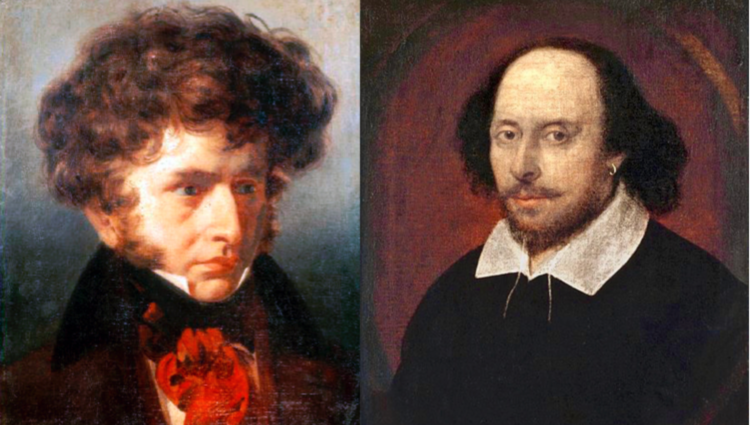
From his first experience of "Hamlet" in 1827 to his death in 1869, Hector Berlioz found William Shakespeare's plays to be an ongoing source of almost-divine inspiration for his music. Indeed, Berlioz's love for "the father of artists" led to the creation of what many consider to be his greatest work: the dramatic symphony, "Roméo [...]

If Shakespeare Was a Woman, Might Jane Austen Have Been a Man?

By |2019-06-01T22:41:22-05:00June 1st, 2019|Categories: Books, Culture, Jane Austen, Joseph Pearce, Literature, Senior Contributors, William Shakespeare|

We live in a mad, mad world where anything goes and many things have gone. One of the things that appears to have gone is a sense of sanity. Take, for instance, a recent essay in The Atlantic which claims to show that William Shakespeare was in fact a woman.[*] The essay itself, which was written [...]

“Othello” and the Devil Inside

By |2018-11-17T22:38:30-06:00November 17th, 2018|Categories: Books, Character, Ethics, Evil, Humanities, Liberal Arts, Literature, Tragedy, Virtue, William Shakespeare|

In Othello, William Shakespeare, the philosopher of everyday life, holds up a mirror to us and shows us what human beings are capable of. Beneath our most pleasantly cultivated exterior, there often lurks a serpent… William Hazlitt is widely recognized as one of the greatest of Shakespearean critics. Yes, there is Dr. Johnson; yes, there [...]

Can Shakespeare Save Civilization?

By |2020-06-28T13:01:13-05:00September 15th, 2018|Categories: Catholicism, Christianity, Civilization, Conservatism, Culture, Joseph Pearce, William Shakespeare|

Those who seek the conservation, restoration and resurrection of civilization must seek to propagate Shakespeare’s presence as widely as possible within the culture. Perhaps an apology might be necessary for the sheer audacity of beginning any essay with such a question and with such a seemingly absurd claim. Of course, Shakespeare cannot save civilization, at [...]

Conscience in Montaigne’s “Essays” & Shakespeare’s “Macbeth”

By |2022-05-14T12:56:40-05:00August 22nd, 2018|Categories: Ethics, Evil, Mitchell Kalpakgian, Morality, William Shakespeare|

Despite the number of times the witches repeat “Fair is foul, and foul is fair,” Macbeth testifies to the objectivity of natural law and universal knowledge of good and evil known to conscience and written on the heart and mind of all persons...   In the culture of sixteenth-century Europe that witnessed revolutions in geography with [...]

“Romeo & Juliet”: A Tragedy, Not a Romance

By |2021-10-03T08:58:08-05:00July 11th, 2018|Categories: Joseph Pearce, Love, Tragedy, William Shakespeare|

Seeing something noble in Romeo and Juliet’s self-obsessive and self-destructive passion is to see it with eyes that are blind to the moral that Shakespeare teaches. Romeo and Juliet is not the only Shakespeare play that the modern world, modern critics, and modern teachers get wrong. Truth be told, Shakespeare abuse is rampant. Just about every [...]

The Nietzschean Shakespeare

By |2021-04-27T21:00:31-05:00June 13th, 2018|Categories: Books, Ethics, Friedrich Nietzsche, History, Philosophy, William Shakespeare|

Friedrich Nietzsche has no explanation for the process by which Christianity conquered Rome, by which the strong accepted the morality of the weak. When it comes to a depth of understanding of the development of Christianity, William Shakespeare is the true superman… Shakespeare’s Rome: Republic and Empire by Paul A. Cantor (University of Chicago Press, 2017) [...]

Shakespeare vs. The Puritans: The Malevolence of Malvolio

By |2019-10-16T13:59:58-05:00May 3rd, 2018|Categories: Christianity, Culture, Joseph Pearce, Religion, William Shakespeare|

A dark and malevolent aspect of the Puritans, which explains Shakespeare’s dark and malevolent portrayal of Malvolio, is the manner in which they were directly responsible for the persecution of England’s Catholics, including members of Shakespeare’s own family… If Shylock in The Merchant of Venice is a thinly-veiled Puritan (see my previous essay), so is [...]

Shakespeare vs. The Puritans: Shylock and Usury

By |2018-04-28T00:47:19-05:00April 27th, 2018|Categories: Catholicism, Christianity, Culture, History, Joseph Pearce, Religion, William Shakespeare|

Usury was a hot topic in William Shakespeare’s day, and one which divided people on religious lines. It is interesting, therefore, that Shakespeare takes the Catholic side in the argument, as opposed to the Puritan position, a fact that surely heightens the possibility that Shylock is really a Puritan wearing a Jewish mask… In my last [...]

Miasmic Misreadings: Exposing Shakespeare Abuse

By |2018-04-19T11:13:00-05:00April 19th, 2018|Categories: Books, Catholicism, Christianity, Homosexual Unions, Joseph Pearce, William Shakespeare|

To attempt to mould William Shakespeare into the image of what Evelyn Waugh called “our own deplorable epoch” is not merely absurd, it disqualifies those endeavouring to do so from being taken seriously as scholars or critics… There are few things more onerous in the field of literary criticism than the constant abuse of Shakespeare [...]

Perpetrating a Freud on Sophocles and Shakespeare

By |2019-12-05T10:41:39-06:00January 27th, 2018|Categories: Christianity, Culture, Featured, Joseph Pearce, Sophocles, Virtue, William Shakespeare|

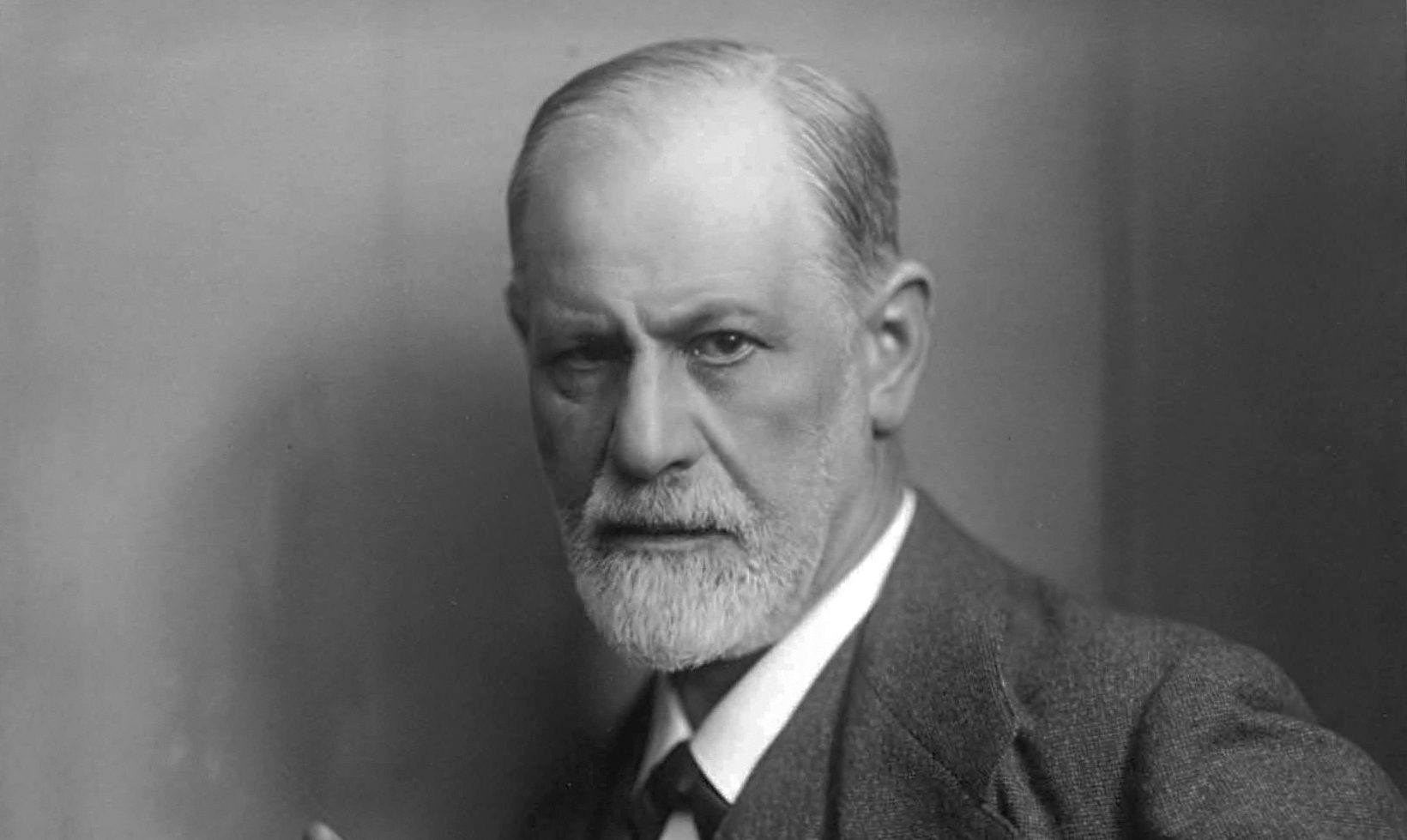
After tainting Oedipus, Sigmund Freud goes even further in his defaming of virtuous characters in literature, dragging the noble Hamlet through the same ignoble mire of his smutty, sex-obsessed imagination… The ignorant pronounce it Frood, to cavil or applaud. The well-informed pronounce it Froyd, But I pronounce it Fraud. —G.K. Chesterton (“On Professor Freud”) Poor old Oedipus. [...]

How Music and Memorization Can Save Our Failing Schools

By |2019-05-23T13:20:27-05:00October 10th, 2017|Categories: Classical Education, Education, Imagination, Music, William Shakespeare|

While the common-sense approach to early childhood education was standard practice for centuries, it has been abandoned in recent years. Shunning rote learning, we have instead told young children to draw on their own (limited) experience or feelings when completing school assignments... We all want the best for our kids. Because of this desire, it’s [...]

Sonnet 73

By |2017-10-01T14:47:50-05:00September 30th, 2017|Categories: Poetry, William Shakespeare|

That time of year thou mayst in me behold When yellow leaves, or none, or few, do hang Upon those boughs which shake against the cold, Bare ruin’d choirs, where late the sweet birds sang. […]

Go to Top