Lewis, Letters, and Love

By |2021-04-23T12:29:21-05:00September 5th, 2018|Categories: Bradley J. Birzer, C.S. Lewis, Christian Humanism, Love, Paul Elmer More, T.S. Eliot|

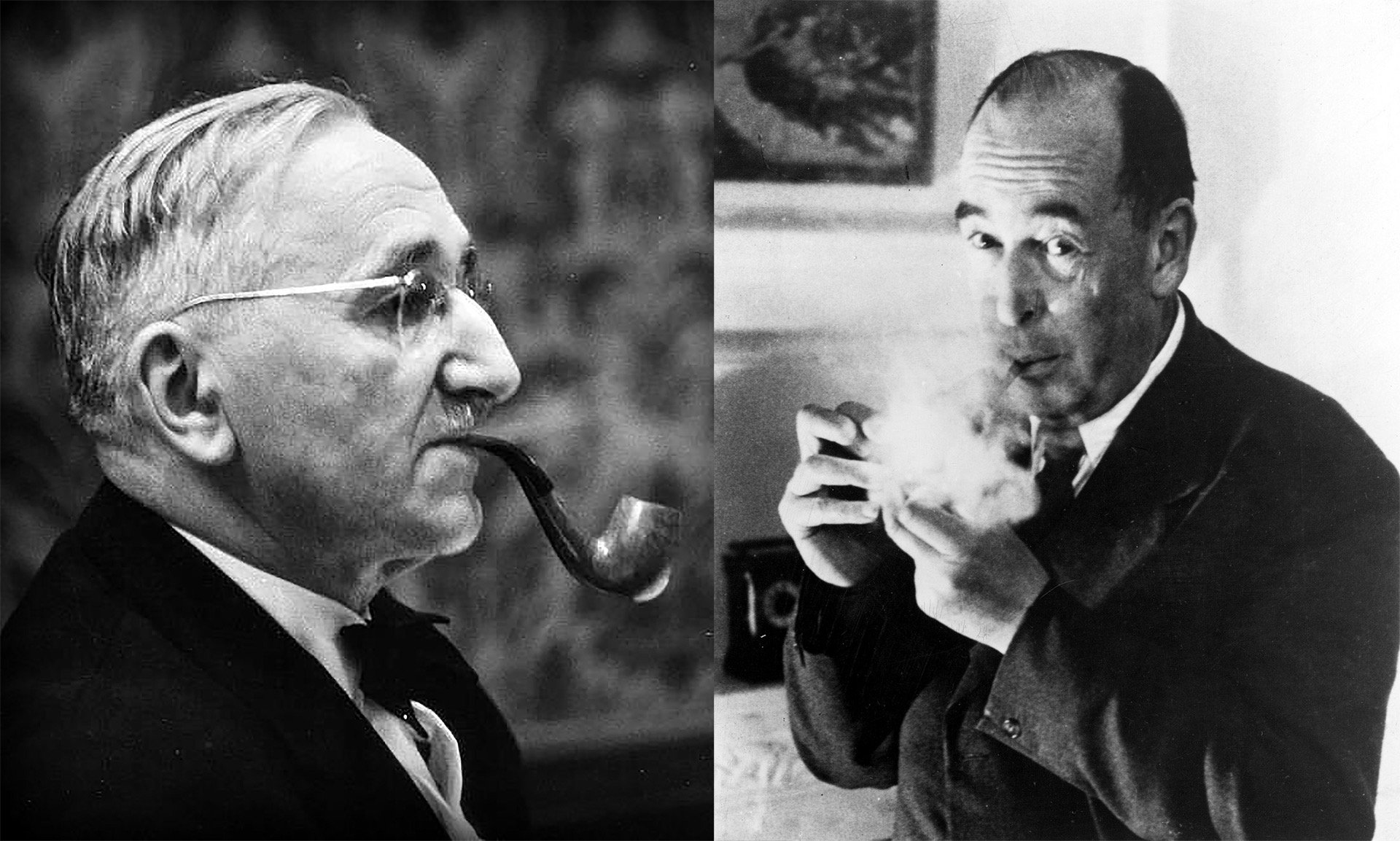
Real, actual letters are a gift, an insight into our best and our worst selves. Unlike the present world of the ephemeral email and hatchet posts on social media, letters of the pre-internet era could be gorgeous works of art. In them, the writer shares just a bit of his soul, preserving it for time, [...]
An Emblematic American: The Critical Legacy of Irving Babbitt

By |2023-07-16T00:39:56-05:00August 31st, 2018|Categories: Books, Christian Humanism, Conservatism, Featured, George A. Panichas, Irving Babbitt|

Irving Babbitt was in no way a dogmatic, ossified traditionalist. He was a creative traditionalist: He encouraged renewed expressions of imaginative vision, and he was open to the possibility of a deepening and an expansion of humane knowledge. The Critical Legacy of Irving Babbitt by George A. Panichas (235 pages, Intercollegiate Studies Institute, 1999) I [...]

Imagination and Conservatism

By |2019-07-03T14:24:21-05:00August 26th, 2018|Categories: Bradley J. Birzer, Conservatism, Education, Great Books, Imagination, J.R.R. Tolkien, The Imaginative Conservative|

Our world drowns in information, facts, bites, noise, opinions, and other particulars. Yet, even the best of our students have the most difficult time connecting one thing to another. It is myth that allows us to transcend the immediate and the ephemeral... About ten years ago, I proposed a course of study for first-year college [...]

How T.S. Eliot Predicted the Coming of Male Millennials

By |2019-05-08T22:58:57-05:00August 9th, 2018|Categories: Character, Love, Marriage, Poetry, T.S. Eliot|

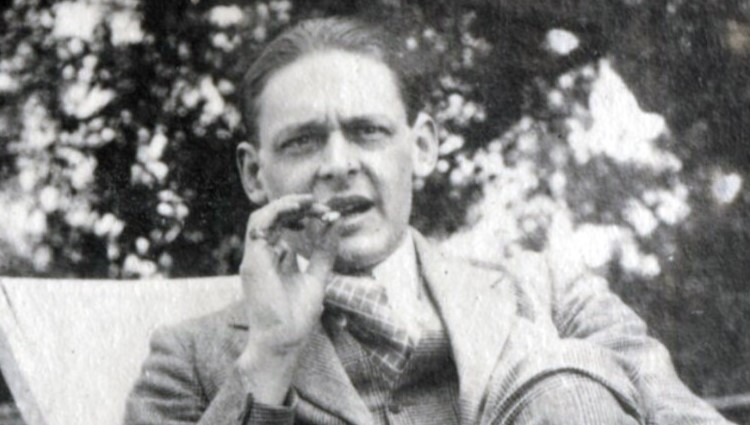
T.S. Eliot’s poem, “The Love Song of J. Alfred Prufrock,” shows that men do not need more pleasurable escapes or more time, but loving friends and an introduction to reality. They need to listen to human voices instead of the illusive mermaids out in the ocean. And they need to do this before the shock [...]

The Americanization of James Iredell

By |2021-04-23T14:42:35-05:00August 3rd, 2018|Categories: American Founding, American Republic, Constitution, M. E. Bradford, Politics|

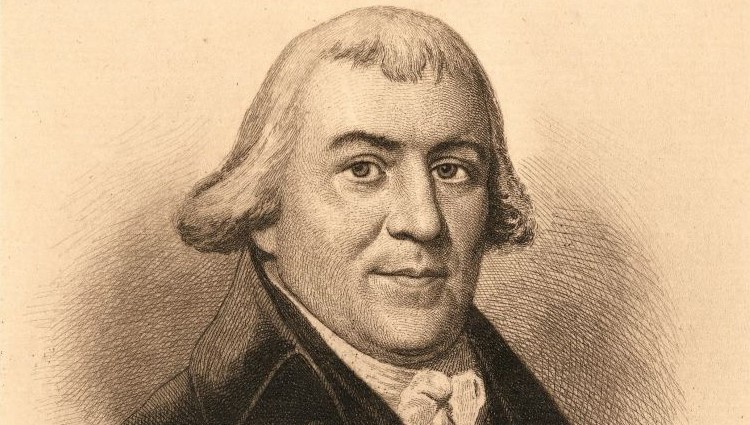
James Iredell’s careful apologia for the American cause—a teaching which he developed in a series of essays and public letters written from 1773-1778—clearly contains a foreshadowing of what he thought should be in a constitution for the United States. James Iredell was born at Lewes, Sussex County, England. He was the eldest of the five [...]

T.S. Eliot’s “Dry Salvages” & the Christian Philosophy of A.E. Taylor

By |2021-04-23T16:33:50-05:00July 27th, 2018|Categories: Books, Christianity, Conservatism, Great Books, History, Inklings, Plato, Poetry, T.S. Eliot|

Jesus saved a hurting T.S. Eliot. And Eliot, the greatest poet of the twentieth century, thought Jesus could save us as well. A person can hate the conclusion, but if English is your mother tongue, then you cannot ignore Eliot or his ideas. He shaped the twentieth-century imagination through his poetry and use of language. [...]

When Feelings Became Facts: Rousseau, Burke, & Outrage Culture

By |2022-06-27T18:04:23-05:00July 17th, 2018|Categories: Edmund Burke, Jean-Jacques Rousseau, Morality, Reason|

Edmund Burke understood that the individual’s own natural reasoning would never be as deep or profound as the wisdom of our ancestors, bequeathed to us through tradition and custom. He believed that looking inwards, as Jean-Jacques Rousseau advocated, would precipitate our demise. On our college campuses, the clashes between liberals and conservatives have grown hostile. [...]

The Moral Imagination & Imaginative Conservatism

By |2023-05-21T11:30:24-05:00July 16th, 2018|Categories: Books, Conservatism, E.B., Edmund Burke, Eva Brann, Imagination, Jane Austen, Jean-Jacques Rousseau, Moral Imagination, Senior Contributors|

Moral imagination runs not incidentally but necessarily in tandem with a certain aspect of conservatism, what I think of as imaginative conservatism. The Moral Imagination: From Edmund Burke to Lionel Trilling, by Gertrude Himmelfarb (259 pages, Ivan R. Dee, 2006) The Moral Imagination is a very engaging collection of a dozen essays on a dozen authors [...]

These Too Shall Pass: The Arena, Not the Bunker

By |2020-12-26T13:28:37-06:00July 10th, 2018|Categories: Bradley J. Birzer, Conservatism, The Imaginative Conservative|

The Imaginative Conservative has never once proclaimed originality. Rather, it has proclaimed that true and abiding things exist, untouched by the mockery or ignorance of man. There are things that always exist, but are often forgotten… The Imaginative Conservative is eight years old today (July 10). A quick calculation shows that I’ve written roughly 416 [...]

The Importance of Cultural Freedom

By |2018-06-26T23:20:46-05:00June 26th, 2018|Categories: Art, Culture, Poetry, Richard Weaver, T.S. Eliot, The Imaginative Conservative|

Culture by its very nature tends to be centripetal, or to aspire toward some unity in its representational modes. The reason for this is that every culture polarizes around some animating idea, figment, or value, toward which everything that it produces bears some discoverable relation… Culture in its formal definition is one of the fulfillments [...]

The Attack on Memory

By |2020-03-10T10:59:31-05:00June 21st, 2018|Categories: American Republic, Andrew Lytle, Civil Society, Richard Weaver, Robert E. Lee, South|

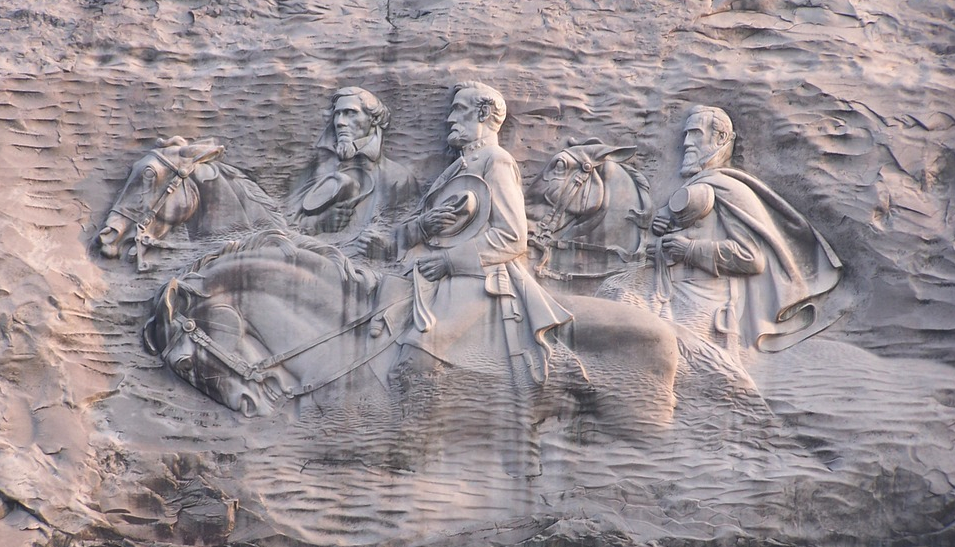
History is the “remembered past,” remembered according to values and virtues that are the inheritance of a particular people. The story as told gives meaning to the “facts,” and the story must be told to be remembered. “Remember therefore from whence thou art fallen, and repent, and do the first works; or else I will [...]

René Girard’s Challenge to Fusionism

By |2023-11-25T12:46:50-06:00May 23rd, 2018|Categories: Civilization, Conservatism, Culture, Eric Voegelin, Politics, Rene Girard, Western Civilization|

At a minimum, a restoration of conservative thought requires paying attention to primitive history and to what it might tell us about the things that fusionism has long assumed are most important about tradition—as well as what this new knowledge reveals about the viability of freedom…   Modern American conservatism rose in the 1950s under [...]

Go to Top