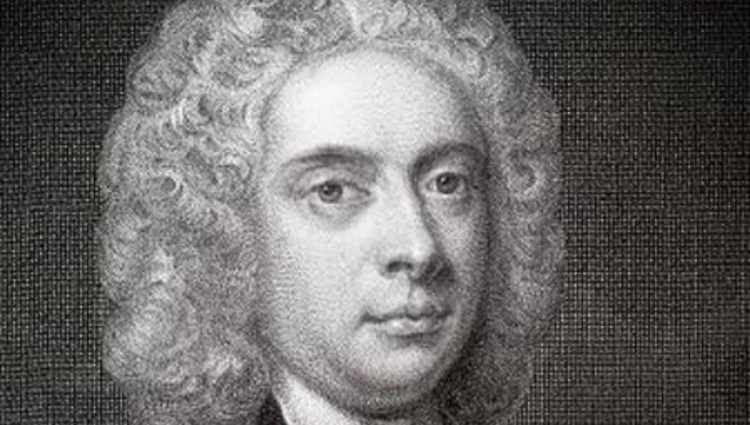
Joseph Butler & the Unity of Faith and Nature

By |2023-02-02T14:47:38-06:00February 2nd, 2023|Categories: Books, Christianity, Michael De Sapio, Philosophy, Senior Contributors, Theology|

Joseph Butler—Anglican bishop, theologian, and philosopher—strikes me as a man deeply involved with the great program of Christian humanism, one who did his bit to guide the ship of Western thought back to its moorings after skepticism had blown it off course. The Analogy of Religion, by Joseph Butler, edited by David McNaughton (259 pages, [...]

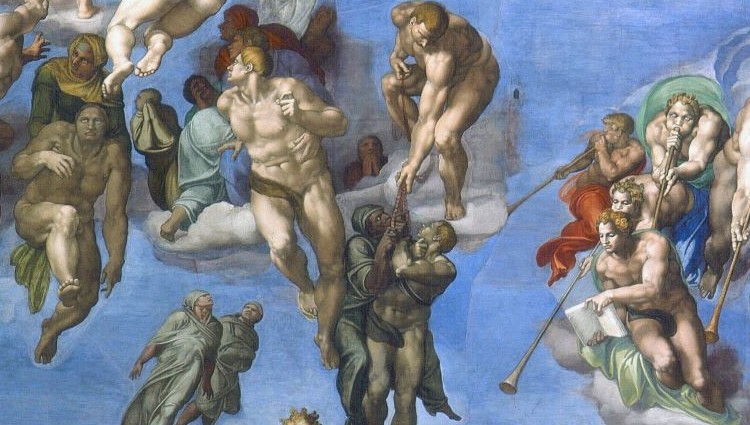
Aquinas & the Theology of Grace in Michelangelo’s “The Last Judgement”

By |2024-01-28T07:51:09-06:00January 27th, 2023|Categories: Art, Christianity, Culture, Heaven, St. Thomas Aquinas, Theology, Timeless Essays|

Portraying the souls of the faithful and those of the damned, “The Last Judgement” of Michelangelo serves as a powerful reminder of the theology of grace and of the importance of one’s own volition in accepting and actively cooperating with the grace which God so freely gives to men. The Last Judgement When [...]

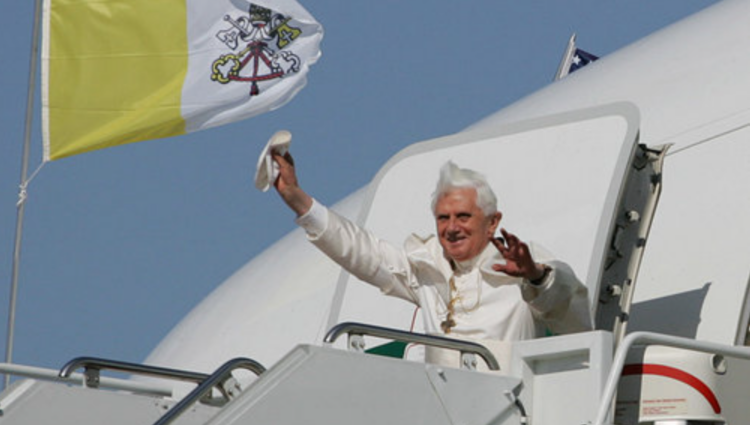
The Political Philosophy of Joseph Ratzinger

By |2023-01-09T13:13:35-06:00January 9th, 2023|Categories: Catholicism, Modernity, Philosophy, Politics, Pope Benedict XVI, Theology|

Joseph Ratzinger was aware of the central event of modernity, namely the transferal of basic Christian categories from the transcendent order to the political order of this world. Like many classically trained German scholars, Joseph Ratzinger was learned in many spheres of knowledge. He displayed a considerable familiarity with those areas in which he did [...]

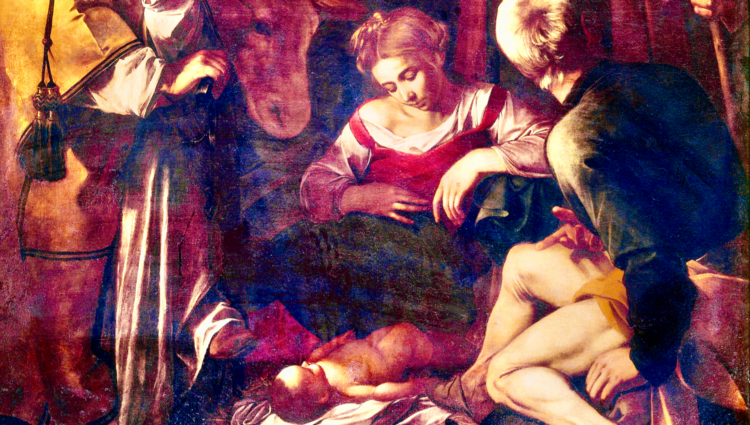
The Scandal of Christmas

By |2022-12-24T10:37:05-06:00December 24th, 2022|Categories: Christianity, Christmas, Culture, Dwight Longenecker, Religion, Senior Contributors, Theology, Timeless Essays|

The Nativity is an outrage. God who is outside of time should not step into time. God the omnipotent should not become a helpless child. God the all-knowing should not empty himself and lock himself into the limitations of mortality. However, it is the incredible outrage of it all that gives one pause. After all, [...]

How We Split the World Apart: The Separation of Faith & Philosophy

By |2023-05-21T11:28:46-05:00November 29th, 2022|Categories: E.B., Eva Brann, Faith, Philosophy, Religion, Senior Contributors, St. John's College, Theology, Timeless Essays|

This is an edited version of a conversation between Eva Brann, the longest-serving tutor at St. John’s College, and Hamza Yusuf, President of Zaytuna College, recorded in March 2019. You can listen to the full podcast here. Hamza Yusuf: We’re really fortunate today to have with us, I think, one of the treasures of our [...]

C.S. Lewis’ “Weight of Glory”: Longing in the Poets, Composers, & Theologians

By |2022-07-02T13:31:50-05:00July 2nd, 2022|Categories: C.S. Lewis, Christianity, Music, Poetry, Religion, Theology|

People are often ashamed or confused about the idea of wrestling with eternal longing because it means first acknowledging a very specific kind of emptiness, one that can’t be filled by cake or any other earthly pleasure. C.S. Lewis gives his listeners heart by echoing St. Augustine, who said “God gives where he finds empty [...]

Why Study Theology?

By |2021-07-10T12:48:44-05:00July 10th, 2021|Categories: Christianity, Michael De Sapio, Philosophy, Senior Contributors, Theology|

I found in theology something missing from philosophy as I experienced it—the undergirding of a received and popular body of knowledge found in scripture and religious tradition. Theology is a mansion with many rooms and has something to say to every aspect of the human condition. As “discourse about God,” “reasoning about God,” or “the [...]

Picking a Bone With René Girard

By |2023-11-25T12:06:56-06:00June 5th, 2021|Categories: Catholicism, Christianity, Civilization, Culture, Rene Girard, Theology|

René Girard was a polymath—not only writing on literature, but bringing his theory to bear on anthropology, philosophy, sociology, psychology, and theology. While I greatly admire his work, I would presume to pick a bone with his thought on sacrificial systems in religion. René Girard I was first introduced to the French thinker [...]

The Importance of the Ascension

By |2025-05-29T11:48:20-05:00May 12th, 2021|Categories: Books, Christianity, Michael De Sapio, Senior Contributors, Theology|

The theological study, “The Ascension of Christ,” shows us why the ascension is an important and necessary mystery of Christianity: It is the link between Christ’s resurrection and his second coming. It marked a new beginning, opened a new era, and drove the future course of history. The Ascension of Christ: Recovering a Neglected Doctrine, [...]

Ecumenical Truth Versus the Falsehoods of Ecumenism

By |2021-02-06T08:23:48-06:00February 6th, 2021|Categories: Christianity, Joseph Pearce, Language, Religion, Senior Contributors, Theology, Truth|

The authentic definition of “ecumenical” has nothing to do with the modern understanding of “ecumenism,” which appears to be the willingness to dilute or delete doctrine in pursuit of a perceived unity among disparate groups of believers. Being ecumenical is being evangelical, whereas the new-fangled word ecumenism is the failure to evangelize. It is important [...]

Is Christianity a Story?

By |2021-02-01T20:41:07-06:00February 2nd, 2021|Categories: Books, Christianity, Faith, Michael De Sapio, Myth, Reason, Senior Contributors, Theology|

If we accept that Christianity is a story, emphasize the primacy of faith, and deemphasize historical testimony, are we not merely reduced to telling our different stories, without being able to point to anything as having compelling objective truth? The mythopoetic appeal of Christianity is strong and valid. Yet there has to be something that [...]

Ten Truths of Christian Humanist Theology

By |2020-09-30T15:10:04-05:00October 3rd, 2020|Categories: Bradley J. Birzer, Christian Humanism, Christianity, Senior Contributors, Theology|

1. Theology is often the study of what we do not know. In theology, it is easier to disprove than to prove. Therefore, we begin by studying what we know and what we do not know. Once we have ruled out the incorrect, there is significant room for agreement, disagreement, and exploration within what remains. [...]

Go to Top