Christian Platonism in Boethius’ “Consolation of Philosophy”

By |2023-10-23T09:50:47-05:00October 22nd, 2023|Categories: Christianity, Great Books, Philosophy, Plato, Timeless Essays, Wisdom|

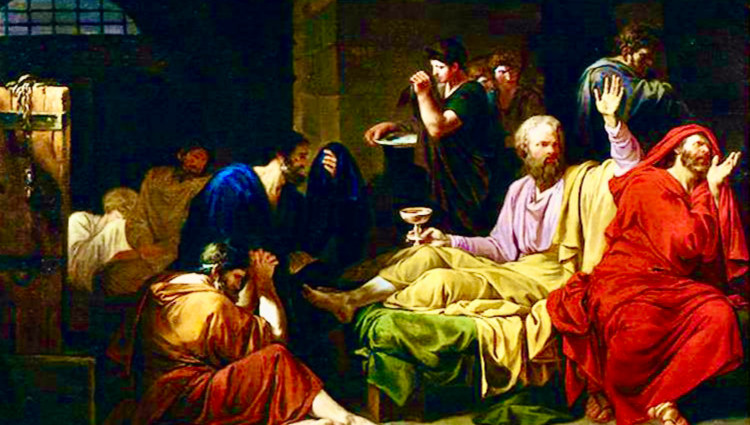
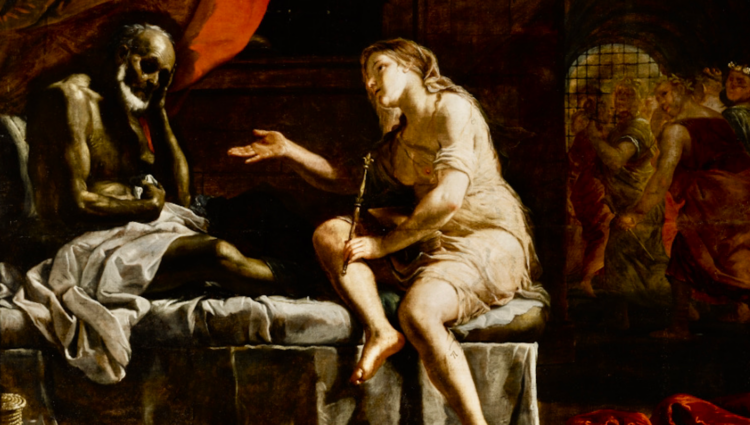
As a robust Christian Platonist, Boethius saw a profound resonance between the truths of Platonic philosophy and Christian faith. The articulation of Platonic thought furnished an occasion for Boethius to tacitly meditate upon and be nourished by his own Christian faith, without having to draw explicit parallels in “The Consolation of Philosophy.” The Consolation of [...]
Image, Being, & Form in the Platonic Dialogues

By |2023-06-26T16:55:38-05:00June 26th, 2023|Categories: Books, E.B., Eva Brann, Featured, Jacob Klein, Plato, Senior Contributors, Socrates, St. John's College, Timeless Essays|

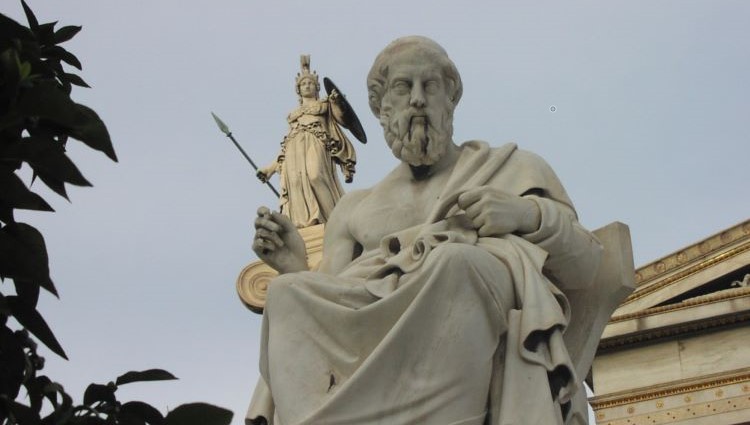
Modernity is best apprehended as being in a ruptured continuum with Greek antiquity—a continuum insofar as the terms persist, ruptured insofar as they take on new meanings and missions. That perspective makes those who hold it avid participants in the present. Jacob Klein was in the last year of his nine-year tenure as dean of [...]

A Backwards Civilization: Unthinking Leaders, Frenzied Citizens

By |2023-02-07T17:08:49-06:00February 7th, 2023|Categories: Civil Society, Civilization, Democracy, Featured, Meno, Modernity, Plato, Political Philosophy, Politics, Socrates, Timeless Essays|

In America today, we are living in a toxic political climate that is the product of a very dangerous combination: Our rulers lack the learning necessary to ask the kinds of deep and fundamental questions that leaders and lawgivers ought to make a habit of pondering, while our people rebelliously scrutinize all orthodoxies and impose [...]

Hamlet in the Metaxy

By |2023-07-18T17:18:33-05:00January 24th, 2023|Categories: Eric Voegelin, Literature, Philosophy, Plato, William Shakespeare|

We must decide and act, but because this process occurs in the metaxy—the experience of being itself, the experience of a tension between the poles of time and eternity—we, like Hamlet, find ourselves, more often than not, in highly equivocal circumstances. For both William Desmond and Eric Voegelin Plato’s concept of the metaxu or metaxy [...]

The Purpose of Mathematics in a Classical Education

By |2023-01-23T17:32:19-06:00January 23rd, 2023|Categories: Classical Education, Mathematics, Plato, Timeless Essays|

One of the chief aims of mathematics has always been to reveal and describe an order in the natural world. Mathematics, as a language, reveals this order and harmony, yet it should also be lifted from this concrete foundation and brought into the world of the abstract. A resurgence of interest in classical education has [...]

Plato’s “Timaeus” and the Will to Order

By |2022-11-11T22:08:39-06:00November 11th, 2022|Categories: Books, Classics, Featured, Peter Kalkavage, Philosophy, Plato, Socrates, St. John's College, Timeless Essays|

Plato, through the drama of the “Timaeus,” reminds us of the dangers of being human as well as the dangers of philosophy. Danger and safety, perhaps the most central terms of the Platonic dramas, become central because of Plato’s care for what we do and what we suffer. And whoever thinks another a greater friend [...]

The Crisis of the Intellectual Life

By |2022-11-06T15:45:29-06:00November 6th, 2022|Categories: Aristotle, Featured, Humanities, Liberal Learning, Plato, St. John's College, Timeless Essays|

The removal of intellectual life from the world, the withdrawn person’s independence from contests over wealth or status, provides or reveals a dignity that can’t be ranked or traded. This dignity, along with the universality of the objects of the intellect—that is, that they are available to everyone—is what opens up space for real communion. [...]

A Socratic Response to Revelation

By |2022-10-11T08:19:34-05:00October 10th, 2022|Categories: Christianity, Philosophy, Reason, Socrates|

A truly Socratic response to revelation—passive surprise, perplexed skepticism, clarifying refutation, heroic confirmation, relative exceptionalism, creative revision, and persistent service—offers us, perhaps, a way out of the cultural impasse we are in. The parties of reason and revelation seldom treat one another well: Those fond of reason all too often do not believe in revelation [...]

Can Socrates Change Your Life?

By |2022-10-02T20:18:09-05:00October 2nd, 2022|Categories: Christianity, Featured, Philosophy, Plato, Politics, Socrates, Timeless Essays, Truth, Virtue|

If Socrates reveals anything about the moral life, it is how uncertain and unstable it is without grounding in knowledge of the Good; and yet he confesses that such grounding is beyond his reach, beyond the reach of human reason itself to attain. In this way Socrates reveals the genuine problem of moral relativity that [...]

A Short History of the Human Soul

By |2022-09-25T17:34:37-05:00September 25th, 2022|Categories: Aristotle, Christianity, Great Books, History, Philosophy, Plato, Timeless Essays|

To understand the journey of the human imagination across civilizations and centuries, one must grasp how the utterly fascinating Hellenic invention of the “democratized” concept of moral judgment in the afterlife came into its beautiful philosophical maturity. And so they came to Rome —Acts IV. “I was not, I was, I am not, I do [...]

Socrates’ Ethics

By |2022-09-21T16:29:17-05:00September 21st, 2022|Categories: Bradley J. Birzer, Cicero, Philosophy, Senior Contributors, Socrates, Western Civilization|

Though we often associate the Greeks with the “order of the mind,” we should note that Socrates had a deeply spiritual and theological side, which embraced divine reason as the language of the living and the dead. When someone—and, in 2022, it’s likely nearly everyone in the world of academia and in the world at [...]

Liberal Learning and Plato’s “Meno”: Interview With Eva Brann

By |2023-05-21T11:28:50-05:00September 3rd, 2022|Categories: Classics, E.B., Eva Brann, Liberal Learning, Meno, Plato, Senior Contributors, St. John's College, W. Winston Elliott III|

“First attend to the adjustment of your own soul, particularly the regulative liberal learning of your intellect, then project your internal economy on the world as social and political justice. The other way around is headless.”  – Eva Brann, The Music of the Republic: Essays on Socrates’ Conversations and Plato’s Writings Eva Brann is a [...]

The Trials and Death of Socrates

By |2022-08-22T17:23:36-05:00August 22nd, 2022|Categories: Apology, Christopher B. Nelson, Classics, Crito, Liberal Learning, Phaedo, Socrates, St. John's College, Timeless Essays|

The body of Socrates may be gone but the Real Socrates has stayed with Phaedo, his friends and with all of us who will take up a life devoted to philosophy. I am grateful for the opportunity to have reflected on the life of Socrates as I wrote this evening’s lecture. Of course, it’s not [...]

The Virtue of Recollection in Plato’s “Meno”

By |2022-08-07T08:52:39-05:00August 6th, 2022|Categories: Meno, Peter Kalkavage, Philosophy, Plato, St. John's College, Timeless Essays, Virtue|

To question is not merely to know that one lacks knowledge but to love knowledge passionately, to pursue it and never give up. “…by indirections find directions out…” ~Hamlet, 2.1 The Meno holds a distinguished place in the St. John’s curriculum. As the first Platonic dialogue that our freshmen read, it is the gateway to [...]

Go to Top