Liberal Learning, the Human Person, and Plato’s “Meno”

By |2023-05-21T11:29:55-05:00January 28th, 2019|Categories: Audio/Video, Classics, E.B., Eva Brann, Great Books, In Honor of Eva Brann at 90 Series, Liberal Learning, Meno, Plato, Senior Contributors, St. John's College|

“First attend to the adjustment of your own soul, particularly the regulative liberal learning of your intellect, then project your internal economy on the world as social and political justice. The other way around is headless.”  – Eva Brann, The Music of the Republic: Essays on Socrates’ Conversations and Plato’s Writings Eva Brann is a [...]

Talking, Reading, Writing, Listening

By |2023-05-21T11:30:03-05:00December 10th, 2018|Categories: Classics, E.B., Eva Brann, Great Books, In Honor of Eva Brann at 90 Series, Liberal Learning, Plato, Senior Contributors, St. John's College|

I imagine that on Parents’ Weekend there might be some parents attending this once weekly occasion when the college assembles to hear a lecture. By its very name, a lecture is read—but read out loud, delivered in the writer’s voice. Thus, the sequence goes: I thought, I wrote, I read, I speak. Although this is the principal way of [...]

Questions Are Better Than Answers: On the Socratic Method

By |2021-04-23T12:16:16-05:00September 11th, 2018|Categories: Christianity, Education, Humanities, Liberal Arts, Liberal Learning, Socrates|

The end of liberal education is not the learning of settled truths, and the inculcation of useful habits for obtaining useful goods, but the perfection of the human as human, not, primarily, as worker, citizen, or even believer. While people with backgrounds more religious and those with more secular mindsets may disagree about what gives [...]

The Student’s Problem

By |2023-05-21T11:30:19-05:00August 20th, 2018|Categories: E.B., Education, Eva Brann, Great Books, Immanuel Kant, Liberal Arts, Liberal Learning, Philosophy, Plato, Senior Contributors, St. John's College|

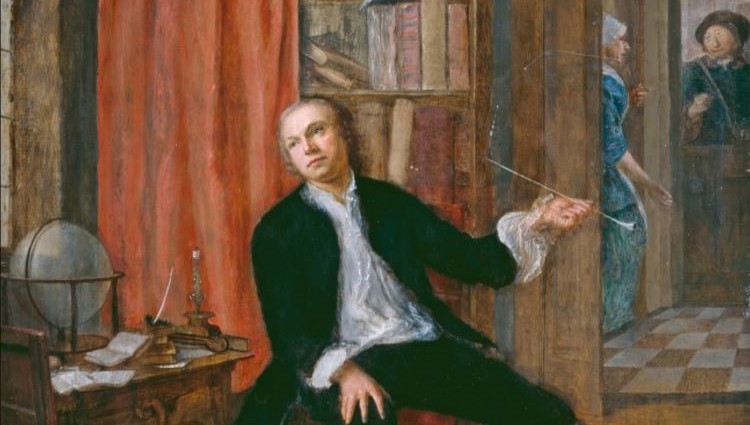
There is a sickness, traditionally called melancholy, which is particularly at home in communities of learning such as ours. Its visible form can be seen in the engraving by Duerer called Melencolia Prima. Amidst the signs and symbols of the liberal arts, especially geometry, sits heavily a winged woman. Her eyes are fixed intently on visions [...]

Why We Learn Mathematics

By |2021-04-23T14:49:45-05:00August 1st, 2018|Categories: Education, Mathematics, Plato, Socrates|

When we learn math, we are using our mind alone, not our senses. Socrates calls it a study that “by nature leads to intellection.” It is a common occurrence: A math teacher stands at the front of the classroom, struggling to keep the student’s attention. One student is on the phone. Another stares straight ahead [...]

T.S. Eliot’s “Dry Salvages” & the Christian Philosophy of A.E. Taylor

By |2021-04-23T16:33:50-05:00July 27th, 2018|Categories: Books, Christianity, Conservatism, Great Books, History, Inklings, Plato, Poetry, T.S. Eliot|

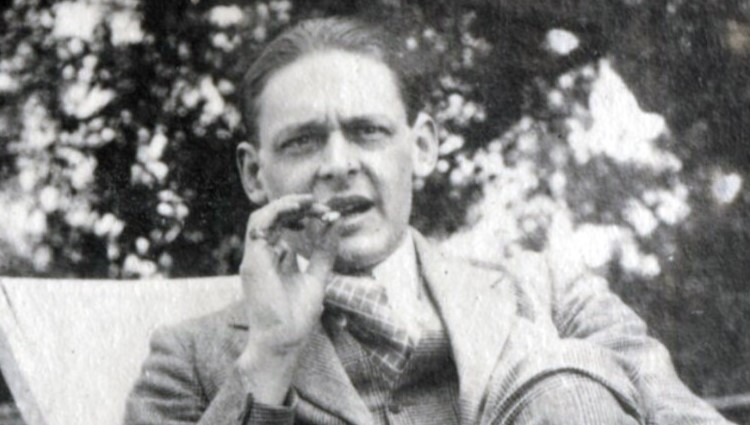
Jesus saved a hurting T.S. Eliot. And Eliot, the greatest poet of the twentieth century, thought Jesus could save us as well. A person can hate the conclusion, but if English is your mother tongue, then you cannot ignore Eliot or his ideas. He shaped the twentieth-century imagination through his poetry and use of language. [...]

Plato’s “Republic”: Impossible Polity

By |2023-05-21T11:30:22-05:00July 23rd, 2018|Categories: Books, Civil Society, E.B., Eva Brann, Great Books, Philosophy, Plato, Senior Contributors, St. John's College|

Plato’s Republic: A Study by Stanley Rosen (432 pages, Yale University Press, 2008) Plato’s Republic, Stanley Rosen says at the beginning of his book, is “both excessively familiar and inexhaustibly mysterious.” Thus it invites ever more interpretations, not, I think, by reason of any willful indeterminacy or woolly grandeur on Plato’s part, but because a false [...]

Was Aristotle the Father of Radical Individualism?

By |2021-04-26T15:00:57-05:00June 18th, 2018|Categories: Aristotle, Great Books, Justice, Philosophy, Plato, Socrates, Virtue|

A recent essay proposes Aristotle to have “opened a path” to today’s radical individualism and relativism. In order to evaluate this thesis, we must turn to the Great Tradition of the “perennial philosophy” and ask what the great philosophers taught about virtue, justice, friendship, and the nature of man. There is a story about H.L. [...]

The Ancients on the Use and Abuse of Alcohol

By |2021-01-25T20:53:49-06:00June 7th, 2018|Categories: Aristotle, Culture, Plato, Science, Virtue|

Modern philosophy, empirical science, and our social sciences stand mute before moral questions and the human spirit. Let us, therefore, turn to the Ancients for their understanding of alcohol’s effects upon the soul. “What’s this chemical ferment called life all about? I shall be impelled to strong drink if something exciting doesn’t happen along pretty [...]

How Aristotle Got Virtue Wrong

By |2021-04-26T15:29:30-05:00June 2nd, 2018|Categories: Aristotle, Character, Christianity, Community, Philosophy, Plato, Socrates, Virtue|

Aristotle’s reasoning about virtue, with its emphasis on man’s relationship to his own soul and man’s ability to perfect his own virtue, opened a path to relativism and radical individualism. All philosophical inquiry is united by two foundational elements. First the philosopher acknowledges that man’s existence is defined by his relationships. While philosophers may differ [...]

The “Me Too” Movement: What Would Plato Say?

By |2021-04-29T16:24:05-05:00May 16th, 2018|Categories: Aristotle, Culture, Plato, Politics, Sexuality, Virtue|

Sexual misconduct is usually characterized as some kind of “power grab,” typically carried out by ruthless men seeking to prey upon the vulnerability of a woman. Yet Plato suggests that disordered sexual desire is a problem of the democratic soul. Speaking about British actress Kadian Noble’s lawsuit filed against Harvey Weinstein on the grounds of [...]

Plato’s “Timaeus”: Science, Mathematics, and a Life Lesson

By |2022-11-06T15:56:08-06:00May 12th, 2018|Categories: Great Books, History, Liberal Learning, Mathematics, Plato, Truth|

The first fragment of Plato's Timaeus is worth a lifetime of study. There is a whole education in just these few lines. The attention drawn to mathematics from them and the elevation of mathematics in the rest of the Timaeus made Western thinkers look to mathematics for truth. Science started when Christians thought hard about two books: [...]

Educating Young Socrates

By |2023-07-24T09:17:07-05:00April 13th, 2018|Categories: Education, Great Books, Plato, Socrates|

Young Socrates needed to learn how to clarify and defend an argument. He had to learn to push tirelessly against convention, if convention had no defense. As parents none of us are Mary or Joseph, so educating a young Jesus is beyond our skill set, but what about a young Socrates? If you were his [...]

Does Love Always Lead to Suffering?

By |2021-04-27T12:06:42-05:00March 21st, 2018|Categories: Aristotle, Christianity, Ethics, George Stanciu, Homer, Love, Plato, Religion, St. Augustine|

Much of suffering is an impenetrable mystery. But to a limited degree, we are able to understand suffering if we can come to understand what love is. Pope John Paul II, in Salvifici Doloris, writes, “Sacred Scripture is a great book about suffering.”[1] He then quotes the Old Testament to illustrate the spectrum of human suffering: the [...]

Go to Top