“Thermidor: An Ode to Reaction”
I The Dog-Star’s and the Lion’s days Oppress with more than searing rays: Fear grips the land, her demons gnaw, Loosed in a frenzied craze Now made the only law. […]
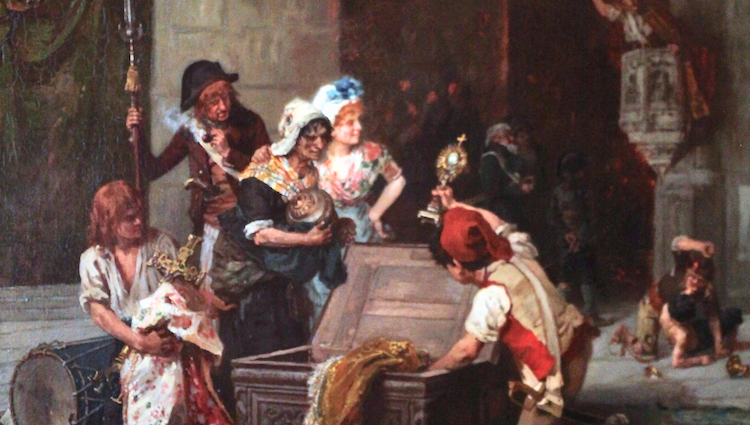
Defacing public monuments, streets, churches, and administrative buildings constitutes an act of secular iconoclasm that should be taken seriously—not because the things destroyed possess the sanctity of real icons, but because the spirit in which these places and things are being destroyed conveys a hatred on the part of the rioters towards their own fellow [...]
The revolutionaries of 1776 could be just as violent as those of today, but they were truly a lot more intelligent and interesting. Eighteenth-century Americans fought with several generations worth of finely-honed arguments—from law, from experience, and from scripture, whereas the protestors of today, while armed with anger, seem armed with little else. In every [...]
The paths we construct from theories tend to seem direct and flawless. We believe they will lead us where we want to go as a society. Yet, they often turn out to be dangerous. Literature is our way of asking locals—those who lived at the time—for directions as we travel along the course of history [...]
James Henry Stark was a historian and defender of the Loyalists in an age of high reverence for the American Revolution. Stark’s unhappiness at the public presentation and textbook renderings of the Revolution seethed for years, until finally in 1910 he published “Loyalists of Massachusetts” to settle the debate. In March 1910, the wealthy Boston [...]
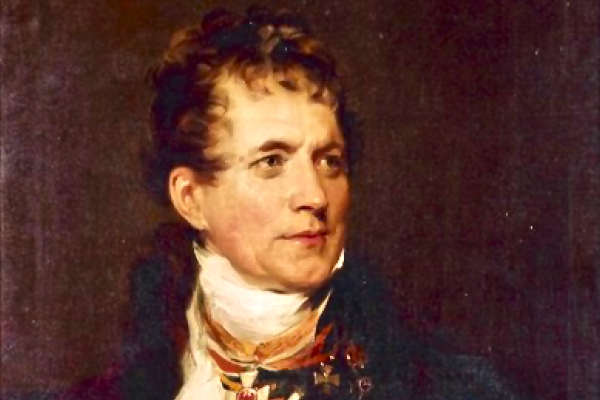
Friedrich von Gentz It is often said that the American Revolution resonated across the pond and inspired the French to rebel and liberate their country in a similar, heroic fashion to that of their American allies. The nature of these two revolutions, however, ran divergent intellectual courses that made their causes, and therefore [...]
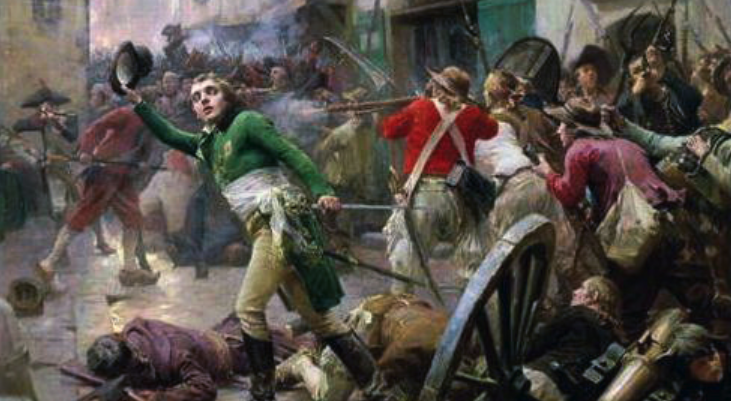
The series of battles that took place in the Vendée have been almost entirely excluded from any recounting of the Revolution. Why? The rising in the Vendée paints a darker picture of the evils that Revolutionists did to those citizens, most of them peasants, who would not adopt the principles of the Revolution. Something about the [...]
The Enlightenment, that is modern reason, failed us in part, Hegel shows, both for the history it left behind and the legacy it bequeathed us. Indeed it brought us and spirit to the point of self-destruction. Editor's Note: This essay is part of a series dedicated to Senior Contributor Dr. Eva Brann of St. John’s College, Annapolis, in [...]
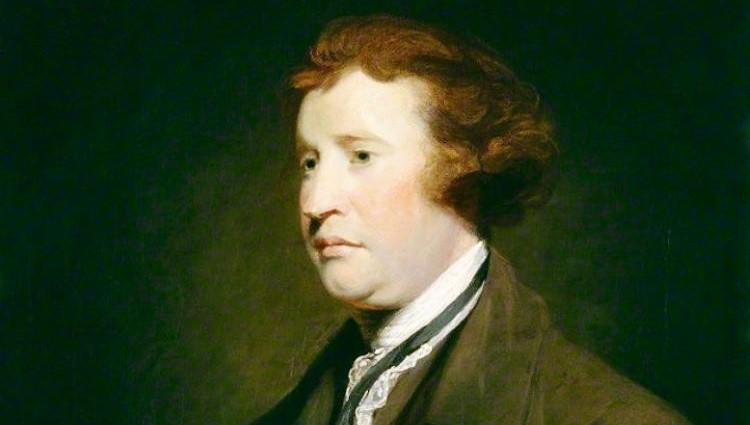
No government has ever made itself permanently wealthy through the plunder of its people—which destroys not just the productive capacity of a country but also its moral foundations. Though a classic in its own right, and arguably the first book on conservatism in the modern world, Edmund Burke’s Reflections on the Revolution in France of 1790 is [...]
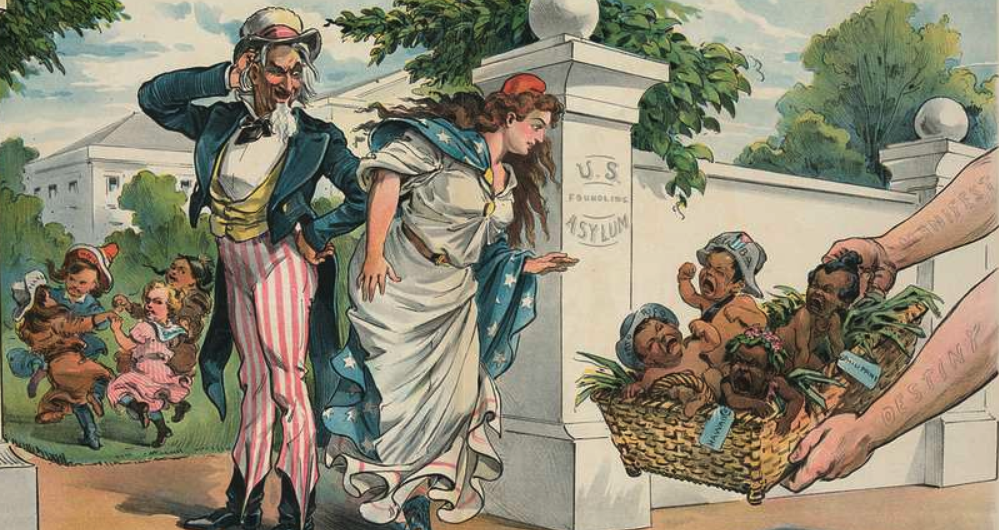
By the beginning of the Mexican war, even famed newspaper editor John L. O’Sullivan began to doubt his own expansionist infatuations. What would America do, for example, if she tried to incorporate not just Mexico but actual, honest-to-God Mexicans into the republic? Standing with his father as they watched the Battle of Bunker Hill in [...]
As revolutionary as they claimed to be, the French Revolutionaries were as old as sin, Edmund Burke assured his readers. “Trace them through all their artifices, frauds, and violences,” he argued, and “you can find nothing at all that is new.” Roughly four-fifths into his spectacular Reflections on the Revolution in France, Edmund Burke paused. [...]
It would be difficult to find a more beautiful republican thought in all of Edmund Burke’s writings than this: “A man full of warm speculative benevolence may wish his society otherwise constituted than he finds it; but a good patriot, and a true politician, always considers how he shall make the most of the existing [...]
The French Revolutionaries, Edmund Burke rightly understood, sought not just the overturning of the old, but, critically, they also desired the destruction of the true, the good, and the beautiful. Only by lying about the nature of the human person could they accomplish their goals… One of the most important duties of any good person, [...]
The image of reason cut adrift and order overthrown are universal symbols of enormous and compelling power. Each of us sees in the dethronement of discipline and order an immediate personal advantage… Today’s offering in our Timeless Essay series affords our readers the opportunity to join Stephen Tonsor as he explores the history of aestetic [...]