How Christopher Dawson Tried to Save History

By |2018-10-11T23:01:35-05:00August 21st, 2017|Categories: Bradley J. Birzer, Christopher Dawson, Featured, History, Humanities, Politics|

Christopher Dawson stood as an antagonist against the conformity of progressive and professional history, and he rightly noted that such history negates not just personality but the very essence of creativity itself… While the domestic violence (criminals, cops, mobs) of this summer pales in comparison to the outrageous behaviors of the previous one, our season [...]
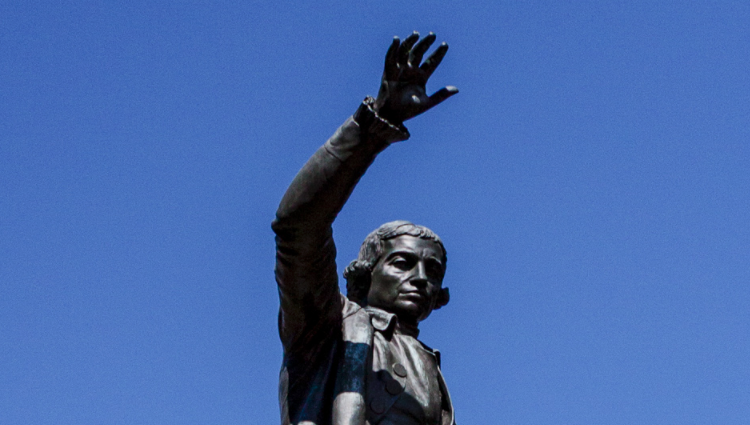
Edmund Burke: Old Whig

By |2021-04-22T19:27:21-05:00August 13th, 2017|Categories: American Founding, Christian Humanism, Classical Liberalism, Edmund Burke, Philosophy, Timeless Essays|

Edmund Burke, like his Whig forebears, believed in the existence of a higher moral law to which all valid positive law must conform, a universal law which manifests itself in diverse concrete forms, in the great variety of legal codes and customs that constitute particular cultural traditions. Edmund Burke, the passionate defender of the “ancient [...]

T.S. Eliot’s “The Fire Sermon”: Of Memory & Salvation

By |2024-01-04T14:12:46-06:00August 8th, 2017|Categories: Conservatism, Featured, Modernity, St. Augustine, T.S. Eliot|

T.S. Eliot reminds us that the answers to our soul’s depravity are all around us, in our collective culture—the books we read, the places we inhabit, the music we listen to—but also that culture can only survive if we remember it and keep it alive. “These things I do within, in that vast chamber of [...]

The Return of Christian Humanism

By |2022-03-17T17:39:50-05:00August 3rd, 2017|Categories: Books, Christianity, Communio, G.K. Chesterton, J.R.R. Tolkien, Literature, Pope Benedict XVI, T.S. Eliot|Tags: , |

Even when addressing non-Christians, Christian humanism’s willing receptiveness of the supernatural opens itself to the truths of revelation and of the human religious experience, allowing it to speak intimately and truthfully to the whole person… The Return of Christian Humanism: Chesterton, Eliot, Tolkien, and the Romance of History by Lee Oser (University of Missouri Press, [...]

What If? The Moral Imagination of Disney’s “Beauty and the Beast”

By |2017-08-31T12:02:36-05:00July 27th, 2017|Categories: Bradley J. Birzer, Charity, Christianity, Conservatism, Edmund Burke, Film, Moral Imagination, Senior Contributors|

The story of Beauty and the Beast is the oldest story in the Christian world. It’s the story about love, sacrifice, and redemption… Several nights ago, I reluctantly watched Disney’s 2017 live version of Beauty and the Beast. I must admit three things before I get into the heart of this essay. First, I’ve never [...]

“Eeldrop and Appleplex”

By |2017-07-18T22:55:58-05:00July 20th, 2017|Categories: Culture, Fiction, Imagination, Literature, T.S. Eliot|

The majority not only have no language to express anything save generalized man; they are for the most part unaware of themselves as anything but generalized men... I Eeldrop and Appleplex rented two small rooms in a disreputable part of town. Here they sometimes came at nightfall, here they sometimes slept, and after they had [...]

The Cultivation of Complexity: Reading Wendell Berry

By |2021-04-28T15:04:31-05:00July 13th, 2017|Categories: Aristotle, Civilization, Featured, Liberal Learning, Richard Weaver, Social Order, Southern Agrarians, Wendell Berry|

Wendell Berry’s poetry sings with the love of a man for his home, enticing the reader to embrace his vision of local agrarian economy as sufficient for the good life. “From knowledge of the forest comes/at last knowledge of forestry:/what, without permanent damage,/can be spared and carefully removed,/leaving the whole forest whole. This learning/’takes decades. [...]

Humanism in an Age of Science

By |2020-01-14T11:43:02-06:00July 12th, 2017|Categories: Christian Humanism, Culture, Featured, Richard Weaver, Science, The Imaginative Conservative|

The ideal of the human under the aegis of something higher provides the strongest counter-pressure against the fragmentation and barbarization of our world… Editorial Note: The essay has been edited from an untitled, undated transcript of a lecture which Richard Weaver delivered to a meeting of the Newman Club at the University of Chicago shortly [...]

Europe’s Immigration Crisis & the Vindication of Edmund Burke

By |2019-09-12T13:52:00-05:00July 2nd, 2017|Categories: Edmund Burke, Europe, History, Immigration|

Edmund Burke believed in change, knowing that a nation unwilling or unable to change would collapse. However, he believed in prudence, moderation, moral restraint, and gradual implementation with reflective assessment. Had modern Europeans believed in the same things, they would not be in this predicament now… “All circumstances taken together, the French Revolution is the [...]

“Revisions and Dissents”: Touching Upon Present and Past

By |2021-05-27T16:05:09-05:00June 27th, 2017|Categories: Books, Conservatism, Edmund Burke, Featured, Paul Gottfried, Russell Kirk|

As Paul Gottfried explains in “Revisions and Dissents,” the real division between right and left cuts not between finance capitalists and welfare statists, but “between those who wish to preserve inherited communities and their sources of authority and those who wish to ‘reform’ or abolish these arrangements.” Complaints about Donald Trump’s “divisiveness” strike Paul Gottfried [...]

A Responsible Rhetoric

By |2019-04-28T22:57:33-05:00June 19th, 2017|Categories: Language, Rhetoric, Richard Weaver, The Imaginative Conservative|

Responsible rhetoric is a rhetoric responsible primarily to the truth. It measures the degree of validity in a statement, and it is aware of the sources of controlling that it employs… Editorial Note: The text of “A Responsible Rhetoric” is taken from a transcription of a tape recording of a speech Richard M. Weaver delivered [...]

More Freedom Than We Want: The Literature of the American West

By |2021-03-01T12:59:13-06:00June 9th, 2017|Categories: Agrarianism, Literature, M. E. Bradford, South|

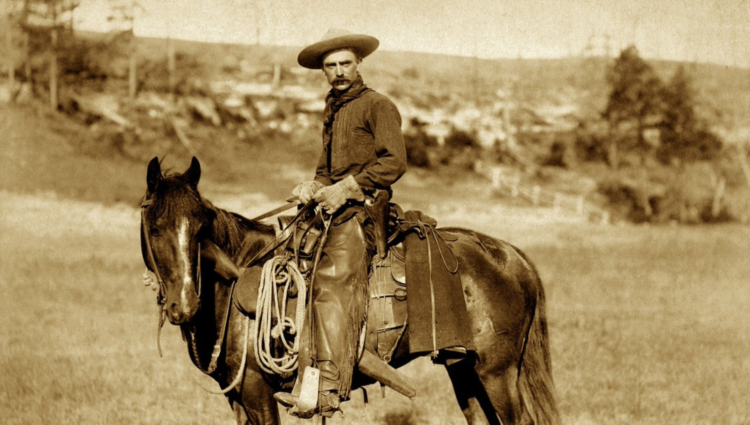
The literature of the American West embodies a clear perception of the frailty of corporate freedom and of the importance of men who have learned on their own to face down the barbarian, even though no one backs their play. There are two important corporate myths that shaped the life of eighteenth and nineteenth century America. [...]

The French Revolution: Did Edmund Burke Lose His Mind?

By |2022-07-13T18:29:49-05:00May 24th, 2017|Categories: Bradley J. Birzer, Edmund Burke, Edmund Burke series by Bradley Birzer, History, Liberty, Revolution|

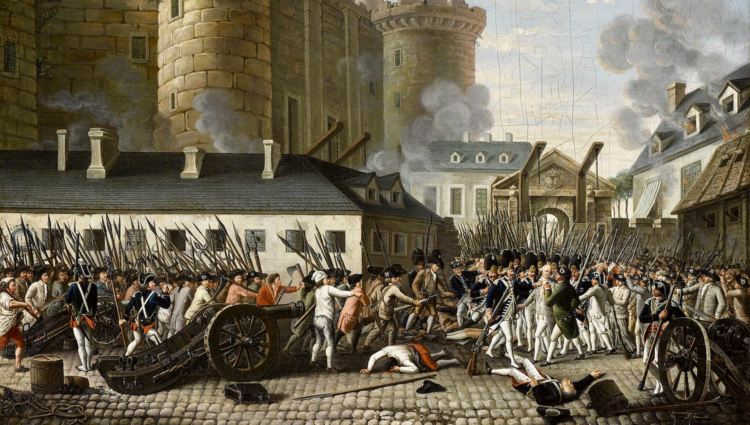
Thomas Paine and others charged that Edmund Burke unhesitatingly defended the French monarchy, monarchy in general, corruption in the Church, and oppressive governments, as long as they provided stability. But is this true? When challenging the “coffee-house” radicals who were so gleefully leading the French into generations of ruin through their mad abstractions, Edmund Burke [...]

On Debate and Existence

By |2019-04-04T11:22:41-05:00May 18th, 2017|Categories: Eric Voegelin, Ideology, Philosophy, Plato, Politics, St. Augustine, St. Thomas Aquinas|Tags: |

The speculations of classic and scholastic metaphysics are edifices of reason erected on the experiential basis of existence in truth. We cannot withdraw into these edifices and let the world go by, for in that case we would be remiss in our duty of “debate”… In our capacity as political scientists, historians, or philosophers we [...]

Go to Top