Richard Weaver: The Conservatism of Piety

By |2025-02-09T15:34:00-06:00February 9th, 2025|Categories: Conservatism, Faith, Featured, Plato, Richard Weaver, St. Augustine, Timeless Essays, Western Tradition|

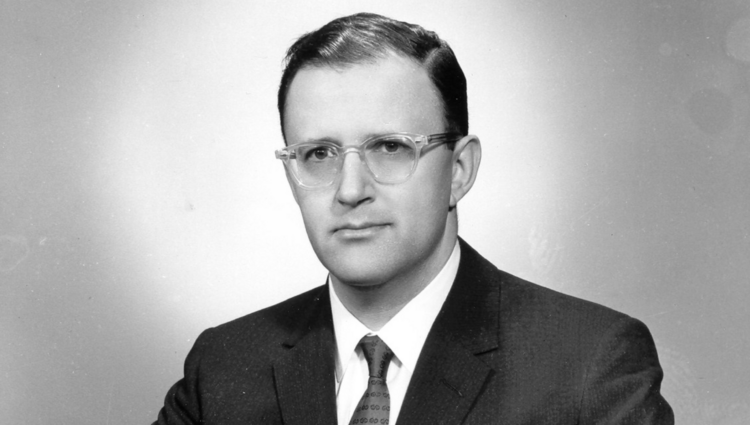
Confronted with choices between evil and good, man frequently chooses evil with its accompanying anguish. Would not wisdom and prudence dictate that man ought to be modest, restrained, and humble—in a word, pious? Born in Weaverville, North Carolina in 1910, Richard Malcolm Weaver was raised in Lexington, Kentucky. Elected to Phi Beta Kappa, Weaver graduated [...]

Edmund Burke and the Last Polish King

By |2025-01-11T21:07:34-06:00January 11th, 2025|Categories: Bradley J. Birzer, Civilization, Culture, Edmund Burke, History, Poland, Revolution, Senior Contributors, Timeless Essays|

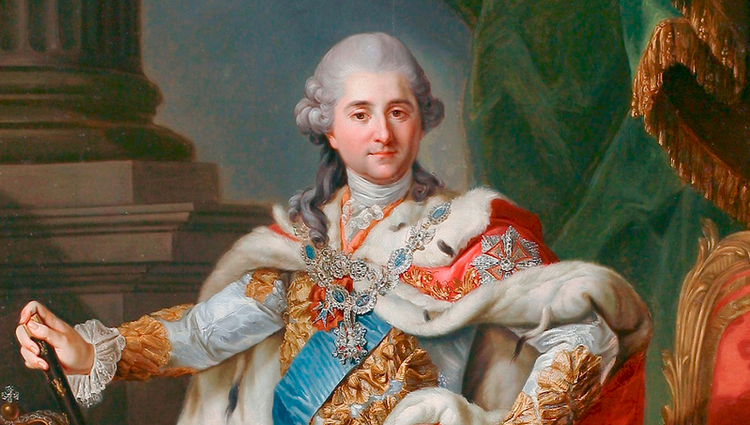
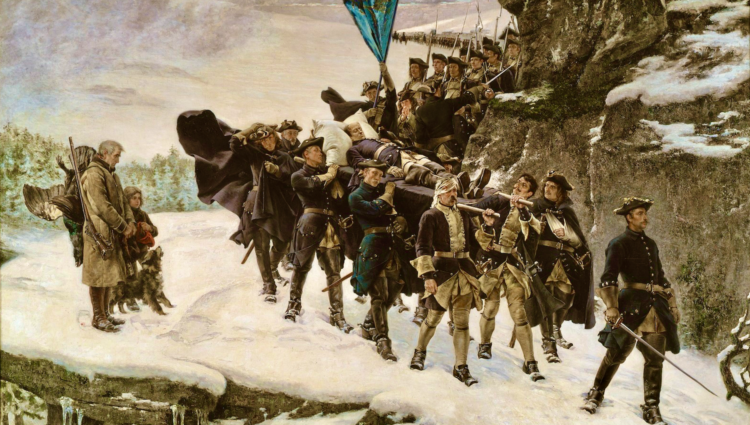
Poland’s reforms and constitution, Edmund Burke thought, offered real meaning, much closer to the experience of the American Revolution than that of the French Revolution. In significant ways, the Polish king succeeded because he embraced the laws of nature and “the array of Justice” without forcing anything of his own will upon his people. Stanislaw [...]

Death at Yuletude: T.S. Eliot and “The Journey of the Magi”

By |2025-01-05T19:24:08-06:00January 5th, 2025|Categories: Advent, Christianity, Epiphany, Imagination, Literature, Poetry, T.S. Eliot, Timeless Essays|

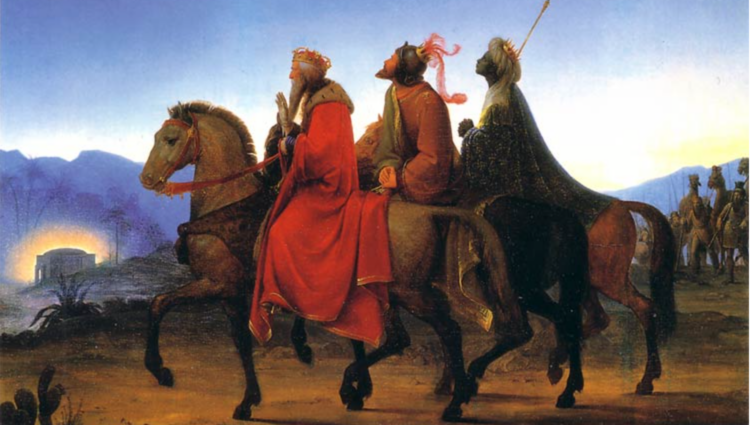
T.S. Eliot’s “The Journey of the Magi” is as sincere a conversion poem as one can have it: No fancy light shining down from the heavens or a thunderous call to holiness; just one small event that left a Magus perplexed by a new worldview that was unsettling and strange, for it put into question [...]

On the Twelfth Day of Christmas: Belloc & Eliot on Twelfth Night & Epiphany

By |2025-01-04T18:50:40-06:00January 4th, 2025|Categories: Christianity, Christmas, Epiphany, Hilaire Belloc, Joseph Pearce, Literature, Poetry, Senior Contributors, T.S. Eliot, Timeless Essays|

On the Twelfth Day of Christmas two of my great loves sent to me a couple of great meditations on the mystery of the Nativity. The first and better-known meditation is by T.S. Eliot, whose “Journey of the Magi” places the poet in the entourage of the Three Wise Men as they journey to Bethlehem. [...]

The Power of the Poet: In Conversation With T.S. Eliot About a Burning World

By |2025-01-03T11:55:42-06:00January 3rd, 2025|Categories: Audio/Video, Music, Poetry, T.S. Eliot, Timeless Essays|

You see, the poet haunts, casting a spell on the reader or listener. The power of the word in poetic form is nearly incomprehensible. Especially when paired with melody, the effect is extraordinary. This means that a songwriter, a hundred years down the road, having read only small, peripheral portions of his poetry, and having [...]

The Last Great Englishman: Arthur Wellesley

By |2024-10-24T17:51:18-05:00October 24th, 2024|Categories: Books, Europe, Featured, History, M. E. Bradford, The Imaginative Conservative, Timeless Essays, War|

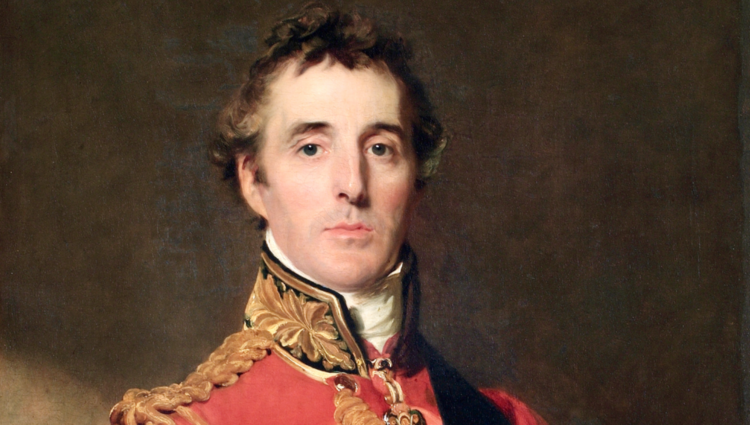
The Duke of Wellington was an exemplar of an older England—an England bound by blood, not interest. He affirmed the very English equality of manhood, which comes with honorable service in the line, the rule that he who is with the king on St. Crispin’s Day shall be by him called “brother.” The Great Duke, [...]

Crimes Against the Humanities: The Tragedy of Modernity

By |2024-10-24T18:04:56-05:00October 24th, 2024|Categories: Christianity, Culture, Evelyn Waugh, G.K. Chesterton, History, Humanities, Joseph Pearce, Literature, T.S. Eliot, Timeless Essays|

One of the most heinous crimes against humanity that modernity has perpetrated is its war on the humanities. And let’s not forget that the humanities are thus called because they teach us about our own humanity. A failure to appreciate the humanities must inevitably lead to the dehumanizing of culture and a disastrous loss of [...]

John Paul II, T.S. Eliot, & the Culture of Life

By |2024-10-25T16:34:41-05:00October 21st, 2024|Categories: Catholicism, Christianity, Conservatism, Culture, Culture War, Death, Poetry, St. John Paul II, T.S. Eliot, Timeless Essays|

Both John Paul II and T.S. Eliot give people something to hope for: St. John Paul speaks of a new springtime on the horizon signaling the emergence of a culture of life, and Eliot ends “The Waste Land” on a hopeful, if cryptic, note. We are all familiar with Saint John Paul II’s description of [...]

T.S. Eliot: Hope Beyond the Waste Land

By |2024-10-16T13:31:13-05:00October 16th, 2024|Categories: Literature, Poetry, St. Augustine, T.S. Eliot|

In The Waste Land, T.S. Eliot displays the dark and depraved qualities of humanity. These qualities are especially prevalent in “The Fire Sermon,” where society has fallen victim to sexual immorality and corruption. Due to this subject matter, scholars conclude that Eliot is pessimistic about the future of Western Civilization, but this point of view [...]

Christopher Dawson: Wielding the Sword of the Spirit

By |2025-03-22T15:24:13-05:00October 11th, 2024|Categories: Bradley J. Birzer, Christendom, Christian Humanism, Christianity, Christopher Dawson, Culture, Essential, Featured, Timeless Essays|

Christopher Dawson set himself the task of surveying the history of Western Civilization in the light of a master-idea: that religion is the dynamic force, the basic constituent and the inspiration of all higher human activity, and that therefore the culture of an era depends upon its religion. Looking back over the vast ruins and [...]

Revisiting Robert Nisbet’s Conservative Classic

By |2024-09-30T14:34:50-05:00September 29th, 2024|Categories: Community, Conservatism, Freedom, Modernity, Robert Nisbet, Timeless Essays|

In his analysis of alienation in the modern world, Robert Nisbet recognized an important truth about the human person, which makes “The Quest for Community” timely even today: The individual cannot be understood except in relationship to other individuals in time and space. The abstract, autonomous individual does not exist nor can he ever exist. [...]

Harry Jaffa and the Demise of the Old Republic

By |2024-09-26T14:29:39-05:00September 26th, 2024|Categories: American Republic, Conservatism, Constitution, Declaration of Independence, Edmund Burke, Featured, Foreign Affairs, History, Political Philosophy, Politics, Timeless Essays, Tradition|

Harry Jaffa’s constitutional history of America’s late-eighteenth-century is not credible nor, in keeping with many of his own pronouncements, is it conservative. The writing of history, as we have learned from authors as diverse as Thucydides, Voltaire, Nietzsche, Butterfield, Collingwood, and Oakeshott can and has been done in strikingly different ways while serving radically different [...]

The Spirit of American Constitutionalism

By |2024-09-16T15:27:37-05:00September 16th, 2024|Categories: American Founding, American Republic, Constitution, Edmund Burke, Featured, Federalist Papers, John Dickinson, Timeless Essays|

The Constitution described by John Dickinson in his “Letters of Fabius” is a model of prudence and moderation, based not primarily on theoretical arguments, but on experience and an extensive knowledge of history. Though virtually ignored by scholars in recent decades, John Dickinson was one of the most influential of the American Founders. When he [...]

Go to Top