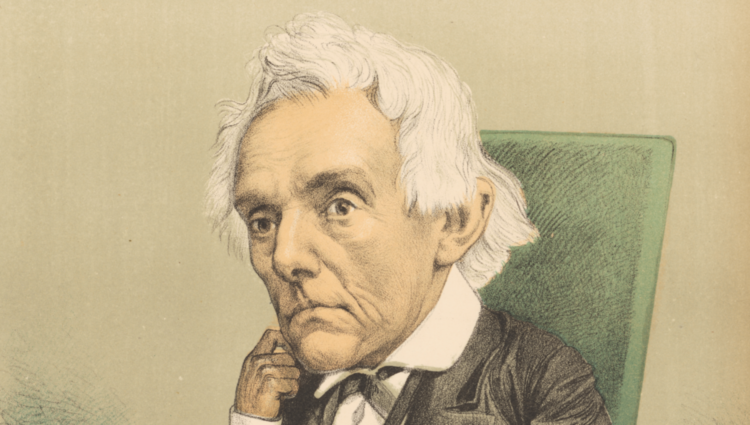
Mark Twain and Russell Kirk against the Machine

By |2019-03-21T12:27:58-05:00April 3rd, 2013|Categories: Bradley J. Birzer, Christendom, Mark Twain, Russell Kirk|

Though neither a humanist nor a Christian—nor, for that matter, even a romantic in the vein of Blake who feared the “dark Satanic mills” of Industrial England—Mark Twain identified the late-nineteenth century fear of the machine run amok perfectly in his last novel, the tragically whimsical A Connecticut Yankee in King Arthur’s Court. One of [...]

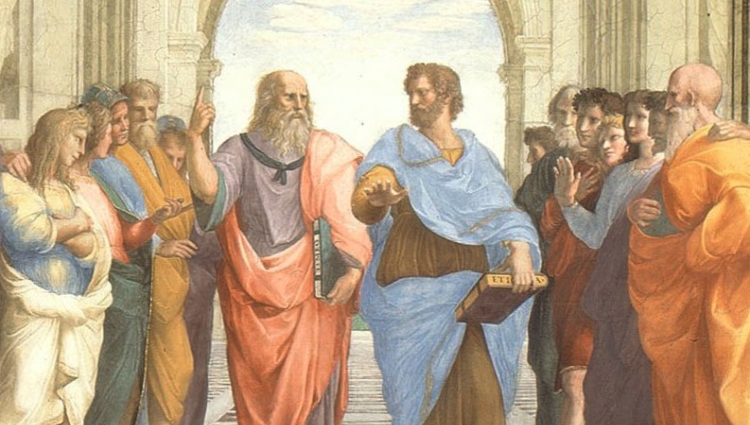
Teaching in an Age of Ideology: Leo Strauss

By |2016-01-18T22:16:11-06:00April 3rd, 2013|Categories: Education, Ideology, Leo Strauss|Tags: |

Leo Strauss So far I have examined a set of thinkers that could be classified in the same school of thought as “Voegelinian”: Eric Voegelin, Ellis Sandoz, Gerhart Niemeyer, and John H. Hallowell. In their different styles and approaches to teaching, each of them sought to show their students the true, the beautiful, [...]

Yin and Yang: “Dualisms”

By |2023-05-21T11:32:06-05:00April 2nd, 2013|Categories: Books, E.B., Eva Brann, Philosophy, Senior Contributors, St. John's College|Tags: , , |

Dualisms: The Agons of the Modern World, by Ricardo J. Quinones Dualisms stand at the very beginning of Western ways of viewing the world. Aristotle bears witness to this by recording in his Metaphysics the Pythagorean Table of Opposites, the contraries that are the complementary principles of all that is: good and bad, rest and [...]

Señor, You Will Kill Because You Are a Man

By |2013-12-22T16:21:34-06:00April 1st, 2013|Categories: Culture, Stephen Masty|

Reprinted from The Guardian (UK)  Dr. Josh, as everyone calls him, collected me at the Asunción airport in a battered Land Rover that was twenty years older than the young Canadian environmentalist. His chequered wool shirt, worn loose over jeans and a Molson’s t-shirt, surprised me for no good reason; I had expected something more [...]

Eric Voegelin on the Death of Plato

By |2020-08-12T16:26:09-05:00March 31st, 2013|Categories: Books, Christianity, Classics, Eric Voegelin, Fr. James Schall, Plato, Socrates|

Eric Voegelin was charmed by the death of Plato. Philosophy, Voegelin thought, had fled to the Academy—Plato’s Academy not ours—wherein poetry and the pleasure of music are received back no longer tainted by the polis using them for its own purposes. “But there is another sort of old age too: the tranquil and serene evening [...]

The Fact of the Incarnation: Luigi Giussani

By |2016-02-12T15:28:27-06:00March 30th, 2013|Categories: Christian Humanism, Christianity|

The Crowning with Thorns-Caravaggio The fact of the incarnation, this inconceivable Christian claim, has remained in history in its substance and entirety: a man who is God–who thus knows man–and whom man must follow if he is to have true knowledge of himself and all things. This initial experience has an unequivocal meaning: [...]

Alexander Stephens Reconsidered

By |2021-01-28T23:08:05-06:00March 30th, 2013|Categories: American Republic, History, Lee Cheek, Sean Busick|

Considering the large role he played in our nation’s past, Georgia’s Alexander Stephens deserves more than a footnote in our history. Limited by a popular and academic culture at the beginning of the 21st century that denigrates the past and places too much confidence in the present, the thoughtful student of Georgia politics and history [...]

Lost and Found in the Cosmos: Lovecraft, Lewis & Alien Worlds

By |2019-05-30T12:21:58-05:00March 29th, 2013|Categories: C. R. Wiley, C.S. Lewis, Christianity, Featured, Literature, Moral Imagination|

Recently some astronomers discovered two earth-sized planets orbiting Kepler-20, a star roughly 1,000 light years away. Congratulations to them; their detective work was nearly as awe-inspiring as the news. A flurry of articles followed the find, speculating on the nature of these worlds, along with a little speculation on whether or not we will ever [...]

Derrida’s Seriousness: On the “Existence” of Justice

By |2016-08-08T21:17:10-05:00March 29th, 2013|Categories: Conservatism, Culture, Justice, Peter Blum|Tags: |

This essay is a bit of a follow-up to my earlier essay, “Is Jacques Derrida Serious? or: How I Learned to Stop Worrying and Love Deconstruction.”  If you are at all familiar with the contents of Derrida’s Of Grammatology, you will get the inside joke if I say that this is a supplement to that [...]

A Life of Flannery O’Connor: A Review

By |2016-08-02T22:24:23-05:00March 28th, 2013|Categories: Books, Flannery O'Connor, Robert Cheeks, South|

A Life of Flannery O’Connor, by Brad Gooch Mary Flannery O’Connor described herself as a 13th century Catholic and she was right. Surprisingly in an age given to nihilism, progressivism, and consolidation this traditional, Southern, cerebral, talented and orthodox Catholic is among America’s most important writers. There are any number of literary, cultural, and psychological [...]

Deconstructing Progressives: Why We ‘Don’t Get It’

By |2014-04-23T12:09:31-05:00March 26th, 2013|Categories: Politics, Progressivism, Stephen Masty|

Good people, or even just straightforward souls lacking in guile, often mistakenly attribute to their adversaries their own virtues and values. Old China Hands explain that newly-arrived gringo businessmen are often surprised to learn that many people in China regard a signed contract not as a solemn pledge, but merely as a further step in [...]

The Iraq War 10th Anniversary: A Conservative Beginning?

By |2014-01-07T07:41:06-06:00March 26th, 2013|Categories: Conservatism, War|Tags: , , , |

(An excerpt from American Conservatism: An Encyclopedia, 2005) The roots of this ongoing conflict, a war which has raged at various levels of intensity from 1990 to the present, lie in the early twentieth century, when then colonial power Great Britain created from the ruins of the Ottoman empire the artificial nation of “Iraq.” At the [...]

What Is This Thing Called Justice?

By |2014-12-30T14:17:56-06:00March 25th, 2013|Categories: Bruce Frohnen, Justice|

“Jurisprudence” generally is defined as “the philosophy or science of law.”  Pardon the pun, but the definition does not do justice to the topic. Questions like “what is law?” and “what is justice?” and “how do we judge the first in relation to the second?” are intrinsically interesting, as well as important.  The definition is, [...]

Go to Top