Generations of Leaves

By |2021-04-27T13:56:10-05:00March 8th, 2018|Categories: Christianity, Education, Featured, Glenn Arbery, Great Books, Homer, Liberal Arts, Plato, Wyoming Catholic College|

Everything in nature changes—but love strives for the immortal. What keeps the form of a college supple and stable must be love for something essentially unchanging and yet eternally young, the “beauty so ancient and so new.” Listening to this year’s seniors present their orations last week at Wyoming Catholic College, I found myself subject [...]

Is Plato Necessary for Salvation?

By |2021-04-22T19:04:53-05:00February 24th, 2018|Categories: Catholicism, Christianity, Faith, Great Books, Plato, Sainthood, Wyoming Catholic College|

It would seem that in no way can reading Plato be necessary for salvation, since Jesus Christ alone is the Way, the Truth, and the Life. Yet Plato teaches us the essential spiritual and metaphysical truths, as well as the mystical habit of mind and soul, without which Faith and Grace are stillborn in our souls… [...]

Russell Kirk’s Unfinished Justice

By |2021-04-27T12:37:36-05:00February 11th, 2018|Categories: Aristotle, Bradley J. Birzer, History, Justice, Plato, Russell Kirk|

Russell Kirk thought that because justice is rooted in nature and because in its perfection transcends all time and space, one can innately observe virtue in the actions of wise women and men. Such observation of our heroes and those we admire might be the best teacher in our current day, serving as reminders of [...]

On Studying Imagination

By |2023-05-21T11:30:30-05:00January 30th, 2018|Categories: Aristotle, E.B., Eva Brann, Featured, Great Books, Imagination, John Milton, Plato, Senior Contributors, St. John's College|

Is memory deceptively transformative? Is the original imagination an organ for lying fictions, for deception, or a conduit for revelatory illumination? And so, more generally, how do we explain those images that are apparently not imitations, don’t have an origin in verifiable originals, be they stored in human memory or laid up with the Muses [...]

Cosmopolitanism: Citizens Without States?

By |2019-03-19T17:40:07-05:00January 8th, 2018|Categories: American Founding, Books, Civil Society, Culture, Great Books, History, Immanuel Kant, Immigration, Politics, Socrates, Timeless Essays|

What we need is a love for both our country and our humanity, whether it be through religion, reason, or both. Such a position steers clear of the perfectionist aspirations of cosmopolitans and draws back from parochial nationalist sentiments by combining the best elements of American conservatism and liberalism… Today’s offering in our Timeless Essay [...]

The Mysterious Origins of the Roman Republic

By |2020-04-20T21:41:13-05:00November 14th, 2017|Categories: Bradley J. Birzer, Civil Society, History, Plato, Rome, Western Odyssey Series|

Exactly how the Roman republic came into existence remains shrouded in mystery. Critically so. As with our tradition of English common law and the necessity of knowing that its origins are “beyond the memory of man,” from “time immemorial,” “ancient beyond memory or record,” and “time out of mind,” so it is with the best [...]

The Ciceronian Republic

By |2019-09-10T16:34:51-05:00November 9th, 2017|Categories: Bradley J. Birzer, Cicero, Culture, Socrates, Western Civilization, Western Odyssey Series|

Habits, mores, manners, and customs should prove more important in a republic than the law… “With Cicero fell the republic.”—Russell Kirk As one of my grand Hillsdale colleagues, Dr. Stephen Smith, once said to me, there has never been a serious reform or renaissance in Western Civilization since the fall of the Roman Republic without [...]

Cosmopolitanism and the Hellenistic World

By |2019-09-24T13:07:49-05:00November 2nd, 2017|Categories: Aristotle, Bradley J. Birzer, Christianity, Great Books, History, Philosophy, Plato, Socrates|

The desire to belong to something greater than one’s self is simply human, transcending time, place, and space. It’s as natural as our need to breathe. In this sense, Aristotle put it correctly when he noted that man is meant to live in community… When the polis of classical Greece collapsed brutally in the final [...]

Socrates and Free Government

By |2021-04-29T09:50:29-05:00October 25th, 2017|Categories: Apology, Gleaves Whitney, History, Plato, Socrates, Stephen Tonsor series|

A free government is only sustainable if citizens can govern themselves. Socrates patiently revealed, through conversations that held a mirror up to fellow citizens, that they did not sufficiently understand such basic concepts as justice, piety, virtue, truth, and goodness when applied to themselves. Yet they presumed to govern others? Author's Note: Following is my revised [...]

Cultural Obstacles to Dialogue

By |2021-04-29T09:56:28-05:00October 24th, 2017|Categories: Alexis de Tocqueville, Culture, Featured, George Stanciu, Socrates|

To engage in dialogue, we must be good listeners, seeking to hear an insight, perhaps fuzzily formulated and unclear even to the speaker, but nevertheless worthy of exploration. Every culture has its own conversational style that often inhibits genuine dialogue. In Japan, for instance, the division of scholars and scientists at universities and research institutes [...]

Inside Plato’s Cave

By |2021-04-29T10:03:10-05:00October 13th, 2017|Categories: Catholicism, Christianity, Philosophy, Plato, Socrates, Truth, Virtue|

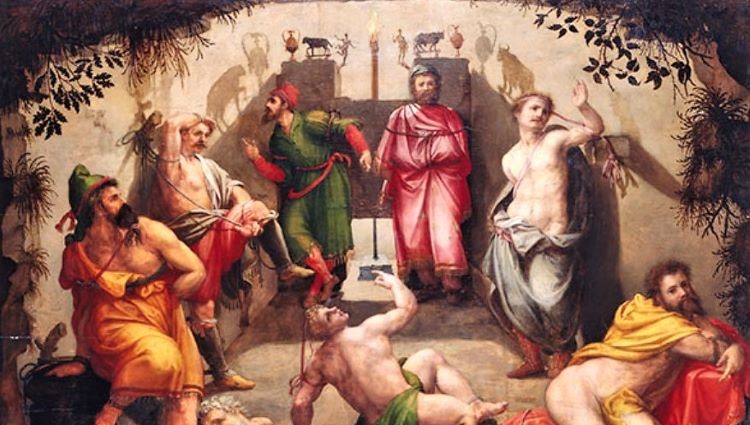
If you have an open mind and inquiring heart, you will recognize something incomparably wonderful in Plato’s writings, if only their profound resonance with Christian teachings. The Cave is a masterful metaphor for the soul trapped in sin. “All education is conversion” —Pierre Hadot I. Why Read Plato? We know as Catholics, from the Divine [...]

What the West Has Given the World

By |2021-05-03T15:06:32-05:00September 5th, 2017|Categories: Bradley J. Birzer, Conservatism, Featured, Great Books, Philosophy, Plato, Western Civilization, Western Tradition|

While the West has made more than its share of mistakes, it has also done some things better than any other civilization, or, at the very least, introduced things to the world that the world then claimed for all of humanity. For those of us who still love Western civilization and consider ourselves loyal patriots [...]

Go to Top