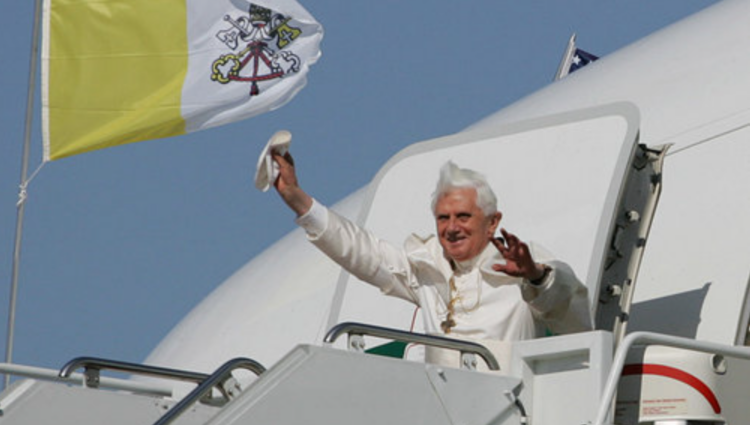
The Political Philosophy of Joseph Ratzinger

By |2023-01-09T13:13:35-06:00January 9th, 2023|Categories: Catholicism, Modernity, Philosophy, Politics, Pope Benedict XVI, Theology|

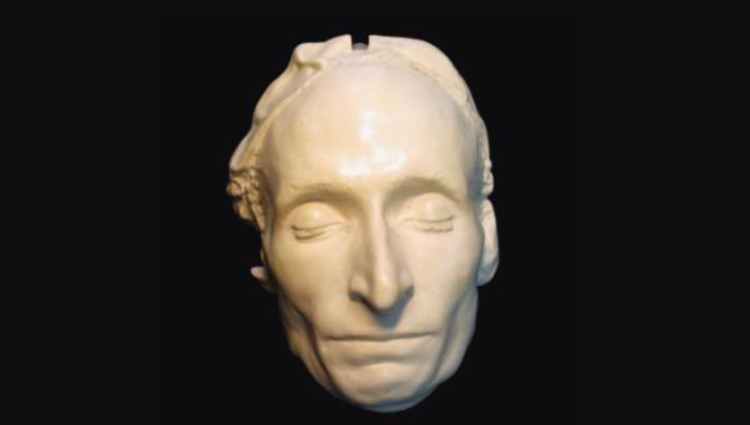
Joseph Ratzinger was aware of the central event of modernity, namely the transferal of basic Christian categories from the transcendent order to the political order of this world. Like many classically trained German scholars, Joseph Ratzinger was learned in many spheres of knowledge. He displayed a considerable familiarity with those areas in which he did [...]
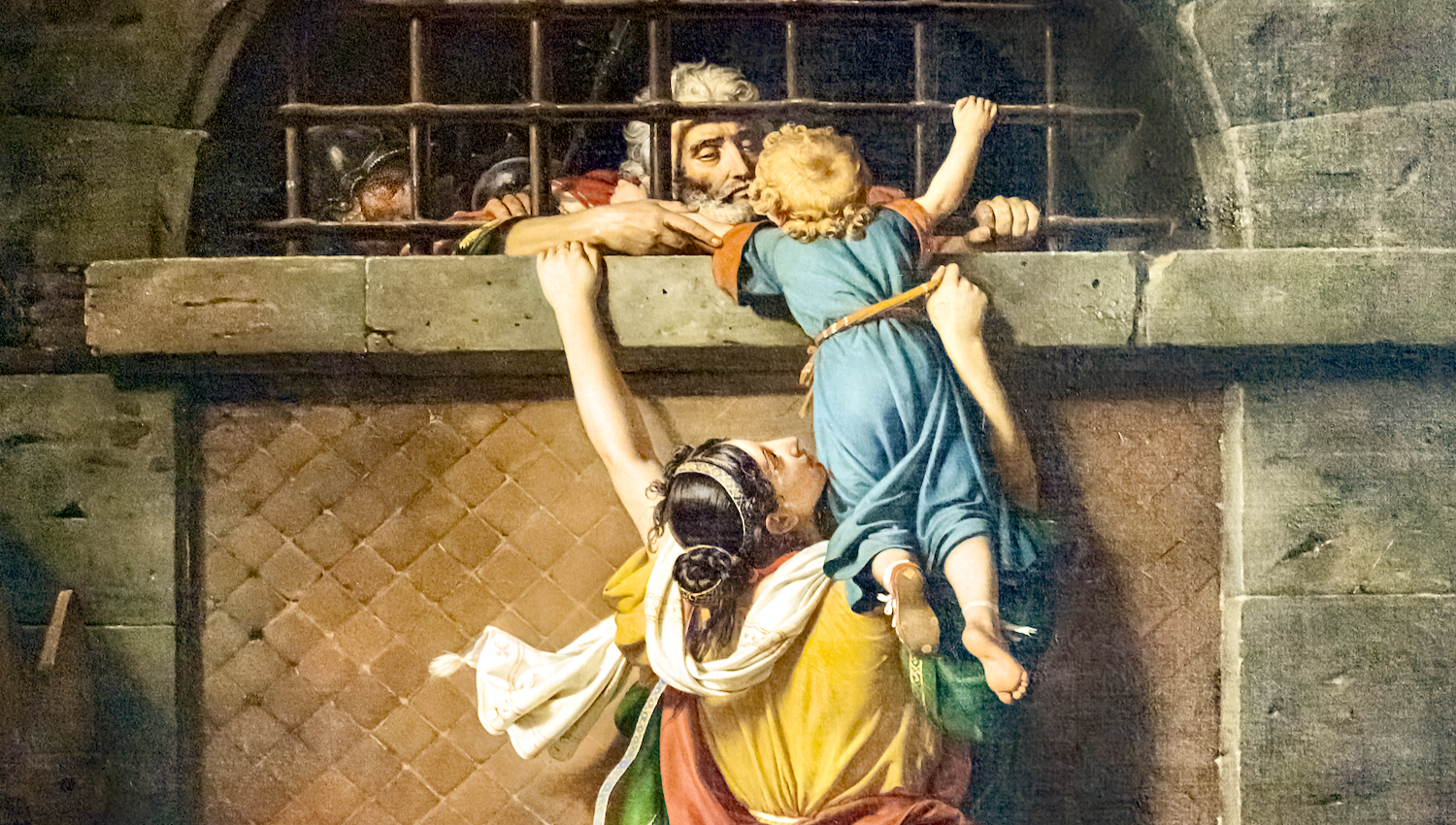
Is There Unity Between Religion and Philosophy?

By |2023-01-05T11:22:04-06:00January 6th, 2023|Categories: Catholicism, Christianity, Philosophy, Religion, Senior Contributors|

How do we acquire knowledge about these deepest of questions? People who accept the Judeo-Christian worldview will accept the validity of both faith and reason as sources of knowledge and paths to truth. These two factors interweave and penetrate each other constantly, and the degree of importance or validity that one assigns to one or [...]

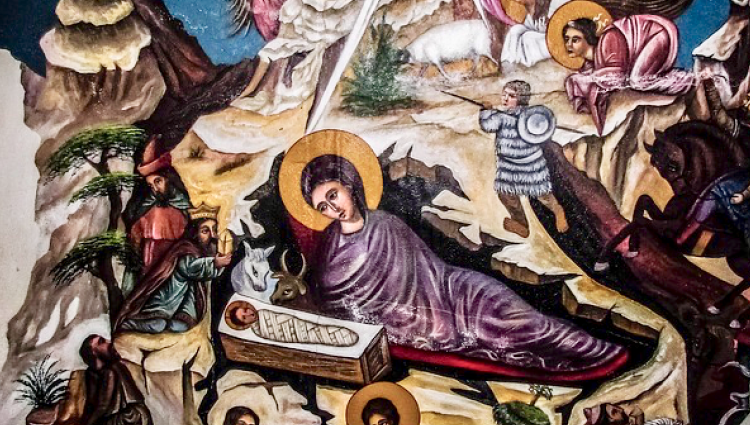
The God in the Cave

By |2023-12-24T08:26:36-06:00December 24th, 2022|Categories: Christendom, Christianity, Christmas, Existence of God, G.K. Chesterton, Myth, Philosophy, Religion, Timeless Essays, Truth|

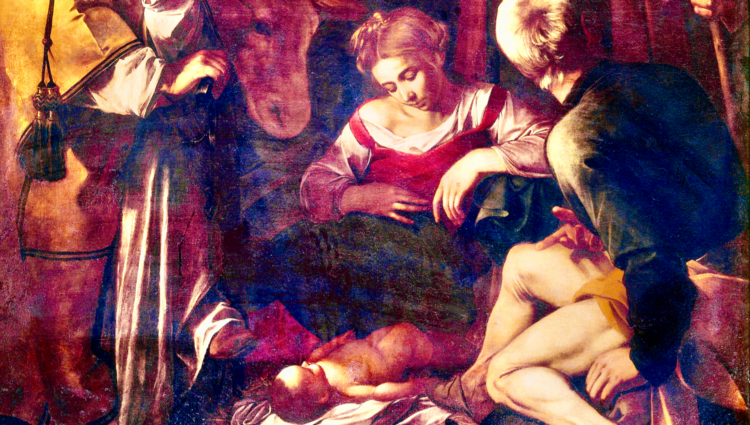
Christ was not only born on the level of the world, but even lower than the world. The first act of the divine drama was enacted, not only on no stage set up above the sightseer, but on a dark and curtained stage sunken out of sight. This sketch of the human story began in [...]

The Scandal of Christmas

By |2022-12-24T10:37:05-06:00December 24th, 2022|Categories: Christianity, Christmas, Culture, Dwight Longenecker, Religion, Senior Contributors, Theology, Timeless Essays|

The Nativity is an outrage. God who is outside of time should not step into time. God the omnipotent should not become a helpless child. God the all-knowing should not empty himself and lock himself into the limitations of mortality. However, it is the incredible outrage of it all that gives one pause. After all, [...]

How We Split the World Apart: The Separation of Faith & Philosophy

By |2023-05-21T11:28:46-05:00November 29th, 2022|Categories: E.B., Eva Brann, Faith, Philosophy, Religion, Senior Contributors, St. John's College, Theology, Timeless Essays|

This is an edited version of a conversation between Eva Brann, the longest-serving tutor at St. John’s College, and Hamza Yusuf, President of Zaytuna College, recorded in March 2019. You can listen to the full podcast here. Hamza Yusuf: We’re really fortunate today to have with us, I think, one of the treasures of our [...]

“Antigone” and the Necessity of Political Prudence

By |2022-11-06T15:36:43-06:00November 6th, 2022|Categories: Antigone, Government, Great Books, Politics, Religion, Sophocles, Timeless Essays|

A key lesson of Sophocles’ “Antigone” is that fanaticism results when public actors fail to practice the one virtue capable of moderating the excesses of human nature: political prudence. In an insightful essay (“Idolatry in Lockdown,” Law and Liberty, January 28, 2021), Spencer Klavan reflects on the contemporary significance of the conflict at the heart [...]

Physics, Beauty, & the Divine Mind

By |2022-10-16T14:49:46-05:00October 16th, 2022|Categories: Beauty, Culture, Featured, George Stanciu, Religion, Science, St. John's College, Timeless Essays|

Last week, my wife, a painter-friend of ours, who wishes to be anonymous, and I did the Friday night walk down Canyon Road, the site of numerous galleries in Santa Fe, New Mexico, a small town that is the third-largest art market in the United States. Halfway down Canyon Road, we stopped in at a [...]

The Tragedy of Blaise Pascal

By |2022-08-18T16:07:40-05:00August 18th, 2022|Categories: Atheism, Christianity, History, Love, Mark Malvasi, Timeless Essays|

During his final illness, Blaise Pascal often refused the care of his physician, saying: “Sickness is the natural state of Christians.” He believed that human beings had been created to suffer. Misery was the condition of life in this world. My uncle made book for a living. That is, he took money from those who [...]

Revisiting Christopher Dawson on Culture

By |2022-08-04T18:39:19-05:00August 4th, 2022|Categories: Christianity, Christopher Dawson, Christopher Morrissey, Culture, Islam, Rome, Timeless Essays|

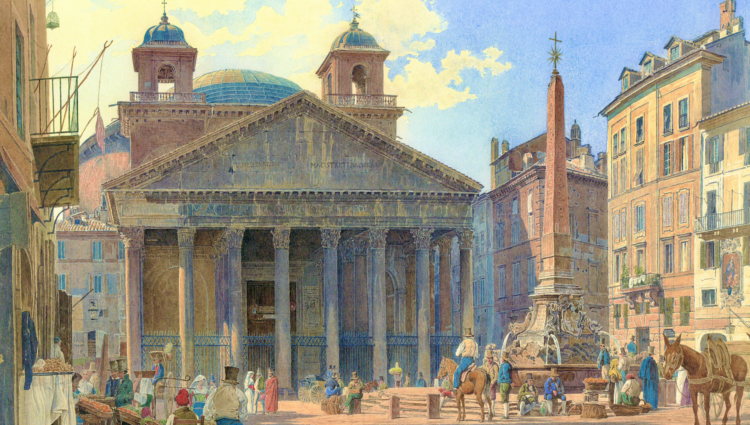
The essence of Rome, by being conscious of one’s cultural debts, is the refusal to make a definitive synthesis or mediation. Only in Rome are there Athens and Jerusalem. Only because of Rome are there “two cities because one remains silently present.” Remi Brague’s observation about the historical essence of Rome shows that “Romanity” is [...]

On the Dictatorship of Optimism

By |2022-07-27T08:45:14-05:00July 26th, 2022|Categories: Christianity, Dwight Longenecker, Religion, Senior Contributors|

The new religion of optimism has its orthodoxy and its watchdogs. What is perceived as pessimism, negativity, or intolerance is not only eschewed, it is prohibited; and should anyone dare to voice an opinion that seems in any way not to be tender-hearted, tolerant, and brightly optimistic, he will be hounded, howled down, and cancelled. [...]

C.S. Lewis’ “Weight of Glory”: Longing in the Poets, Composers, & Theologians

By |2022-07-02T13:31:50-05:00July 2nd, 2022|Categories: C.S. Lewis, Christianity, Music, Poetry, Religion, Theology|

People are often ashamed or confused about the idea of wrestling with eternal longing because it means first acknowledging a very specific kind of emptiness, one that can’t be filled by cake or any other earthly pleasure. C.S. Lewis gives his listeners heart by echoing St. Augustine, who said “God gives where he finds empty [...]

Athena as Founder & Statesman

By |2022-06-10T13:52:50-05:00June 10th, 2022|Categories: Essential, Justice, Literature, Myth, Politics, Religion, Statesman, Timeless Essays|

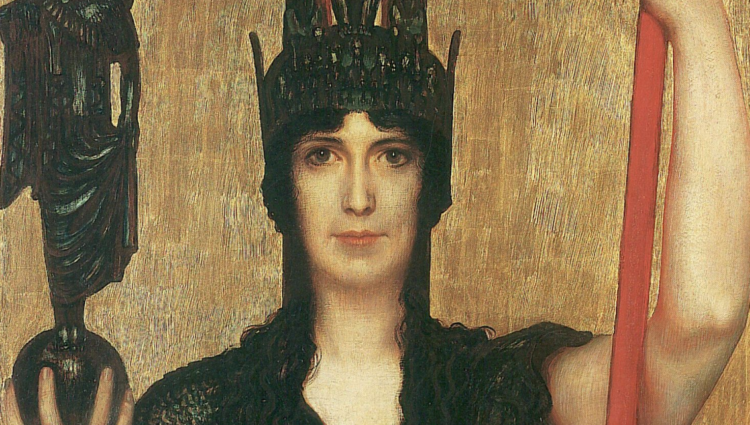
In the "Oresteia," Aeschylus examines whether a city exists for proper worship of gods or whether it exists for proper cultivation of “that which is most divine in us.” Today’s offering in our Timeless Essay series affords our readers the opportunity to join John Alvis, as he considers Aeschylus' views of the polity as embodied by [...]

Go to Top