Social Media *Is* Hate Speech: A Platonic Reflection on Contemporary Misology

By |2023-08-19T09:00:56-05:00July 21st, 2022|Categories: Civilization, Communio, Humanum, Plato, Social Media, Western Tradition|

The evident chaos of the contemporary “cancel culture”—which is coming to resemble something like a cyber version of The Terror in late 18th-century France during which the revolutionaries began cutting off even their own heads—is due to an abuse of language. There is a profound sort of cultural suicide occurring in this phenomenon. We are [...]
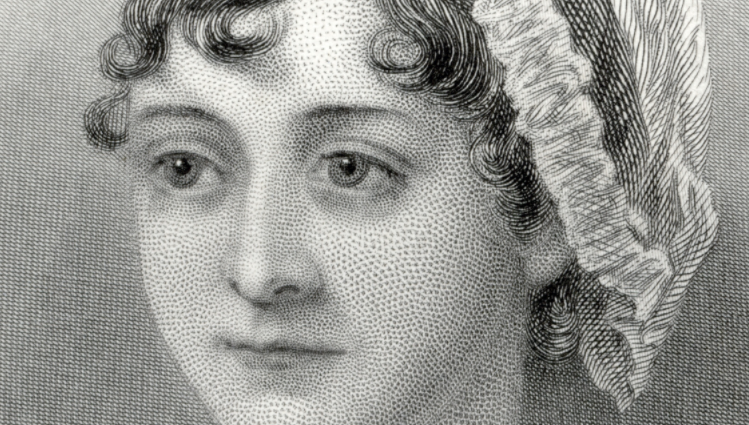
The Perfection of Jane Austen

By |2023-05-21T11:28:52-05:00July 17th, 2022|Categories: Culture, E.B., Eva Brann, Jane Austen, Literature, Plato, Senior Contributors, St. John's College, Timeless Essays|

Jane Austen’s world is as merry as it is good. All the novels are perfect comedies—mirthful throughout and happy in outcome. Despite their brightness and lightness, these novels are in no way trivial—they are simply not concerned with those terrific follies presented to the scourge of public laughter in classical comic drama. Since this lecture [...]

Fit for the World

By |2022-05-14T11:07:02-05:00May 14th, 2022|Categories: Antigone, Apology, Graduation, Great Books, Humanities, Liberal Arts, Liberal Learning, Plato, Socrates, St. John's College, Timeless Essays|

Your world needs you; it needs your desire to understand it, your openness to what it has to teach you, your acceptance of its imperfections, and your sincere wish and best efforts to be useful to it because you care for it as it has cared for you, however unconscious that care may have been. [...]

‘A Breeze Bringing Health’

By |2022-04-22T11:43:43-05:00April 22nd, 2022|Categories: Glenn Arbery, Great Books, Plato, Senior Contributors, Socrates, Wyoming Catholic College|

For Socrates, the best city will “track down the nature of what is fine and graceful, so that the young, dwelling as it were in a healthy place, will be benefited by everything. And from that place something of the fine works will strike their vision or their hearing, like a breeze bringing health from [...]

Living Well on Earth & Entering Heaven: The Nineteen Types of Judgment

By |2021-08-12T15:12:48-05:00August 10th, 2021|Categories: Christendom, Classics, Liberal Learning, Plato, Reason, Socrates, Timeless Essays|

Making judgments is a privilege of persons only. A privilege that is necessary, both to live well on earth and to enter Heaven. There are at least nineteen different kinds of judgment that we should distinguish. I’m sorry I could not find a twentieth, to match the number of digits on our fingers and toes. But [...]

The Knowing Soul

By |2022-05-12T11:23:13-05:00August 9th, 2021|Categories: Aristotle, Featured, Jacob Klein, Liberal Learning, Plato, St. John's College|

Learning and teaching are mysterious processes. To understand them fully would mean to discover the secret of our lives. For we are, perhaps above anything else, learning and teaching animals. What I have to speak about, briefly and in a most elementary way, is what both learning and teaching mean and do not mean. Learning [...]

Likely Stories: A Bedrock of Classical Education

By |2021-08-14T13:40:52-05:00July 21st, 2021|Categories: Books, C.S. Lewis, Classical Education, Classical Learning, Philosophy, Plato, St. John's College|

In our contemporary world of ubiquitous mirage, the skills of discernment are not only important, they are of vital benefit. "Likely stories" are a bedrock of classical education, and classical educators should endeavor to have students read them not because they believe students must be virtuous in order to go to battle against societal disintegration [...]

Courage Nailed Down: Plato’s “Laches”

By |2023-05-21T11:28:59-05:00July 4th, 2021|Categories: E.B., Eva Brann, Philosophy, Plato, Senior Contributors, St. John's College|

This is what Courage means to Socrates: It is descriptively distinct from and essentially identical with all the virtues. For us this “paradoxical” outcome sets a task—we are to figure out how it might become intelligible. Euripides, it is reported, was “Socrato-nailed-down” (σωκρατογόμφους) – that is, patched up, bolted together, by Socrates.1 I understand this term [...]

The Three Great Teachers

By |2021-08-28T09:05:06-05:00June 26th, 2021|Categories: Christianity, Eastern Thought, George Stanciu, Homer, Plato, Religion, Socrates, St. John's College, Timeless Essays, Virtue|

Each great teacher locates the fundamental problem of human living differently: The Buddha cites suffering; Socrates points to ignorance; and Jesus identifies faulty love. In addition, all three Masters teach that the task set for each human soul is to travel from illusion to reality. Unlike the Age of Faith, in Postmodernity, or more accurately [...]

Winged Words: Reading & Discussing Great Books

By |2021-06-01T09:36:29-05:00June 1st, 2021|Categories: Aristotle, Dante, Essential, Featured, Great Books, Homer, Humanities, Imagination, Liberal Arts, Liberal Learning, Peter Kalkavage, Plato, St. John's College, Timeless Essays|

Great books introduce us to ideas and to ways of looking at the world that are new to us. They provide a refreshing distance from the trends, fashions, tastes, opinions, and political correctness of our current culture. Great books invite us to put aside for a while our way of looking at the world and [...]

The Imitation of Heroes

By |2021-05-29T05:45:43-05:00May 28th, 2021|Categories: Christopher B. Nelson, Classical Education, Classics, Featured, Liberal Learning, Phaedo, Plato, Socrates, St. John's College, Timeless Essays|

The demise of imitation has been devastating for personal growth. It used to be a commonplace that successful people need to have extraordinary “heroes” whom they admire and try to emulate. But the historical disciplines in the twentieth century waged something of a war against the very idea of the hero. Imitation, like so many [...]

The Case for the Liberal Arts: Stronger Than Ever?

By |2021-05-05T16:49:37-05:00May 5th, 2021|Categories: Classics, Education, Featured, Liberal Arts, Liberal Learning, Plato, St. John's College, Timeless Essays, Wilfred McClay|

The chief public benefit of liberal education is the formation of a particular kind of person, a particular kind of citizen, who robustly embodies the virtues of both inquiry and membership, and therefore is equipped for the truth-seeking deliberation and responsible action that a republican form of government requires. If we are to make any [...]

Conserving Today or in 499 B.C.

By |2022-06-22T10:00:16-05:00July 21st, 2020|Categories: Aristotle, Bradley J. Birzer, Cicero, Conservatism, Culture, Edmund Burke, Politics, Russell Kirk, Senior Contributors, Socrates, St. Thomas More|

In times of chaos, it’s profoundly necessary to remember those who have come before us and the innumerable sacrifices they made. Each of these great men, whatever his individual faults, sought to live according to the Good, the True, and the Beautiful. They preserved, and they conserved. As a way of perceiving and a habit [...]

Go to Top