The Deavel’s Dictionary

By |2026-02-04T13:37:51-06:00February 4th, 2026|Categories: David Deavel, Language, Modernity, Politics, Senior Contributors, Timeless Essays, Truth|

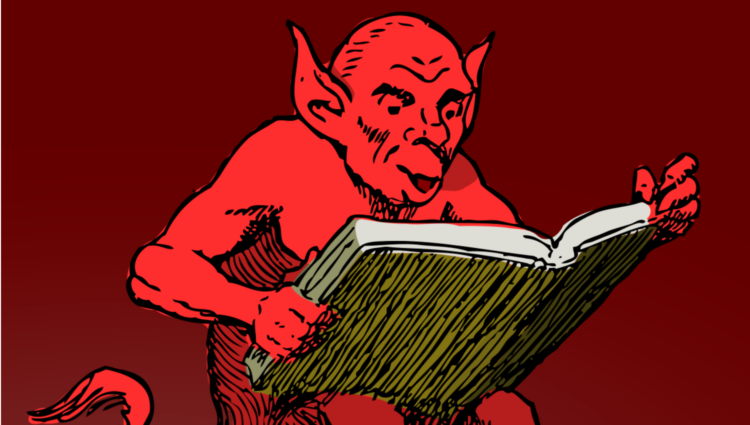
For all those out there wondering, including my first-grade art teacher who never learned how to pronounce it, my surname is actually pronounced with a long rather than short “e.” It’s “DEE-vuhl” and not “Devil.” But the moniker of a demon has been applied to me so often that I have decided to make demon-ade. [...]
Magnanimity: The Balm for Our Brutalized Public Discourse

By |2026-02-03T16:19:22-06:00February 3rd, 2026|Categories: Civil Society, Love, Stephen M. Klugewicz, Timeless Essays|

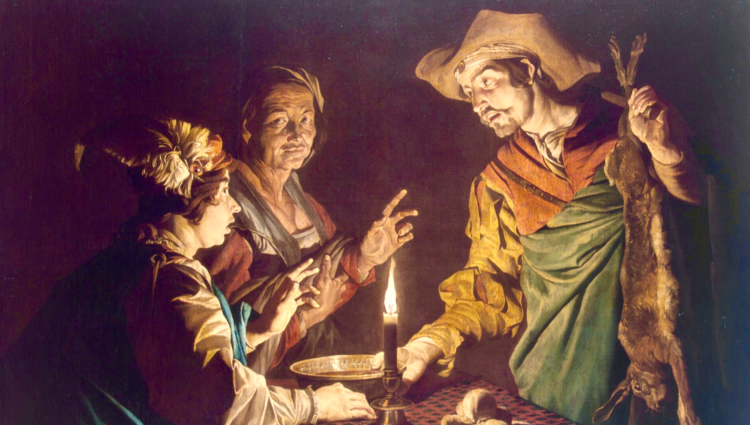
Every man is his own pope and philosopher-king on the Internet, where our semi-formed and semi-informed opinions are cast as absolutes. Convinced of our perfect knowledge and infallible righteousness, we denounce and demean in harsh, uncharitable terms the arguments of others, and even their very persons. “Minds are conquered not by arms, but by love [...]

The 1928 Book of Common Prayer: An Appreciation

By |2026-02-01T14:01:16-06:00February 1st, 2026|Categories: Anglicanism, Bible, Books, Christian Living, Christianity, Prayer, Religion, Timeless Essays|

The 1928 Book of Common Prayer is an important cultural artifact, whose influence on English language and literature rivals that of the Authorized Version of the Bible and the works of William Shakespeare. You will recall Parson Thwackum in Henry Fielding’s classic novel History of Tom Jones, a Foundling (1749). Mr. (never, in proper ecclesiastical usage, Reverend) Thwackum [...]

Newman & Dawson Against Liberalism

By |2026-01-31T16:36:05-06:00January 29th, 2026|Categories: Bradley J. Birzer, Christianity, Christopher Dawson, Edmund Burke, Liberalism, St. John Henry Newman, Timeless Essays|

Christopher Dawson greatly admired John Henry Newman, for he understood more clearly than any of his contemporaries the coming war of the Church against the ideologues bred by the French Revolution, utilitarianism, and secularization. As Christopher Dawson attempted to discover the sources of the ideological disruptions of the twentieth-century as well as solutions to the [...]

The Enchanted Cosmos With Thomas Aquinas

By |2026-01-27T19:30:03-06:00January 27th, 2026|Categories: Education, Paul Krause, Philosophy, Senior Contributors, St. Thomas Aquinas, Timeless Essays|

Thomas Aquinas’ cosmology and doctrine of the soul are vitalistic. Everything has a particular soul to it, and these souls have particular life-forces destined for particular ends. As a whole, the cosmos is meant to reflect and embody the graces of God: his beauty, love, and goodness. Such is to what all things are ultimately [...]

Liberal Education, the Wasting of Time, & Human Happiness

By |2026-01-25T16:15:38-06:00January 25th, 2026|Categories: Happiness, Leisure, Liberal Arts, Time, Timeless Essays, Wyoming Catholic College|

Human beings are not simply producers; they are also lovers of beauty and contemplators of truth. They are wasters of time. The liberally educated person has a rich inner life that allows him to waste time well. As an undergraduate, I went for walks in rural Michigan. Sometimes alone, sometimes with others. Romantic walks, friendly [...]

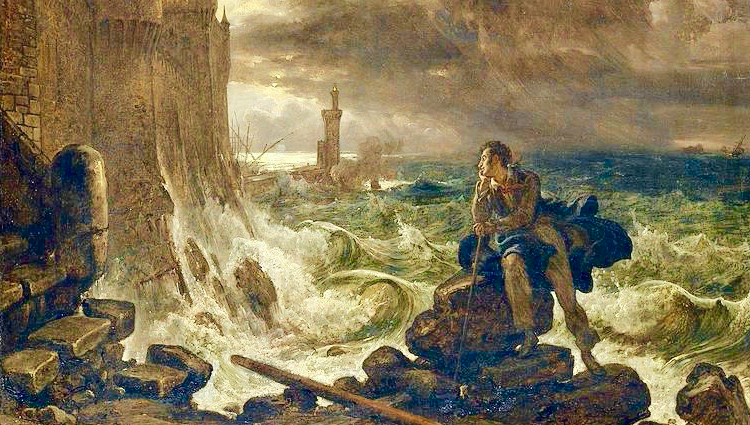
Snowbound

By |2026-01-22T20:22:20-06:00January 22nd, 2026|Categories: Catholicism, Glenn Arbery, Literature, Poetry, Senior Contributors, Timeless Essays, Wyoming Catholic College|

Being memorably snowbound in a concentrated, deeply human circle of friends and family is a “Truce of God” in the middle of endless activity. What is it about stories told in this kind of context? What is it about memories that bring both a sense of poignant loss but also the joy of renewed presence [...]

On Poe’s “Fall of the House of Usher”

By |2026-01-18T16:07:18-06:00January 18th, 2026|Categories: Books, Catholicism, Christianity, Cluny, Edgar Allan Poe, Literature, Timeless Essays|

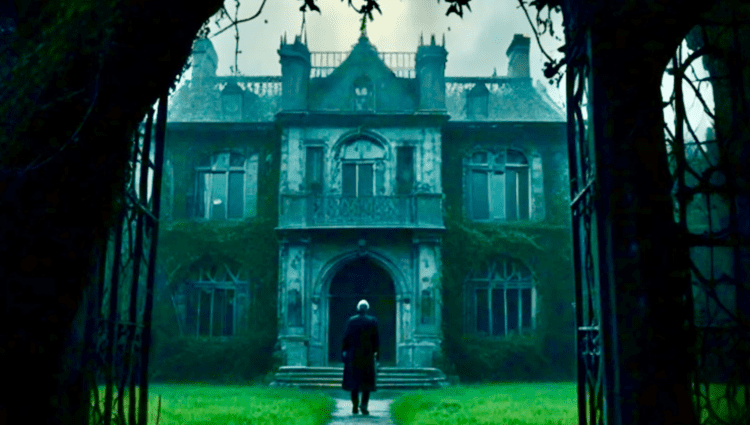
In "The Fall of the House of Usher," Edgar Allan Poe takes the Gothic setting, with all its machinery and décor, and the preposterous Gothic hero, and transforms them into the material of serious literary art. “Commentary on Poe’s Fall of the House of Usher,” from The House of Fiction, edited by Caroline Gordon and [...]

Don Quixote and Imaginative Places

By |2026-01-15T17:30:18-06:00January 15th, 2026|Categories: E.B., Featured, Great Books, Imagination, Quotation, Senior Contributors, St. John's College, Timeless Essays|

The one incident in Cervantes’s huge novel that has become American folklore is Don Quixote’s adventure with the windmills. As it happens, it contains, almost incidentally, the Don’s own statement of the crux of his life, the credo that makes his world one of high adventure. He is moved by his knight errant’s sense of [...]

Burke on Monstrous Revolution and Regicide Peace

By |2026-01-11T20:36:13-06:00January 11th, 2026|Categories: Bradley J. Birzer, Edmund Burke, Europe, Government, History, Justice, Politics, Revolution, Senior Contributors, Timeless Essays|

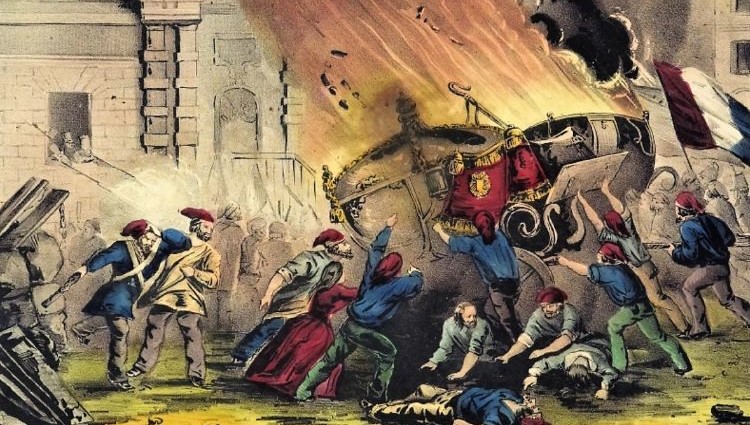
Edmund Burke contended that, far from creating peace, the French Revolution had generated the greatest despotism the world had yet seen, politicizing all things and enslaving the vast majority of the population. Of Edmund Burke’s (1729-1797) four Letters on a Regicide Peace—his final work, written while he rested on his deathbed—the fourth is, by far, [...]

“The Speech”: Maintaining Sanity in an Insane World

By |2026-01-06T19:59:27-06:00January 6th, 2026|Categories: Civilization, Culture, Forrest McDonald, Hope, Imagination, Timeless Essays, Wisdom|

I propose to address the question, how does one survive—and I mean survive as something—in a world that may not? How does one remain sane in a world that is insane; how does one live without fear in a world in which the only certainty is that nothing is certain? "The Speech" was addressed in [...]

Why “Celebrate” Christmas and the Epiphany?

By |2026-01-05T17:15:09-06:00January 5th, 2026|Categories: Bruce Frohnen, Christianity, Christmas, Epiphany, Timeless Essays|

Why celebrate Christmas? Why throw a party, instead of going to church, in the first place? Is not this religious holiday, by nature calling us to quiet contemplation? Did you know that Christmas celebrations were banned in Scotland until 1958?  I certainly did not, not until my son started working on his sixth-grade “Christmas around [...]

The Monroe Doctrine: Lynchpin of American Foreign Policy

By |2026-01-04T20:08:52-06:00January 3rd, 2026|Categories: American Founding, American Republic, Bradley J. Birzer, Europe, Foreign Affairs, History, John Quincy Adams, Senior Contributors, Timeless Essays|

In his ideas regarding American foreign policy, James Monroe echoed both Washington and Jefferson, yet he had to worry about things neither of them did—in particular, European involvement in the affairs of the republics of the Western Hemisphere. His policy needed to follow the diplomatic thought of the previous administrations while also adapting to quickly [...]

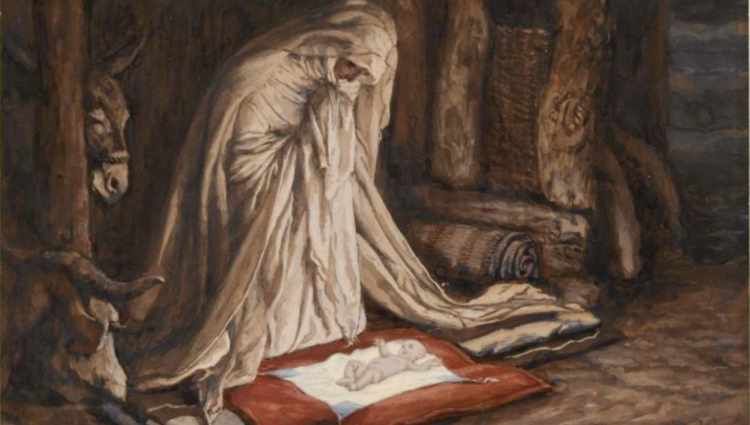
Into the Dark With God: A Christmas Meditation on the Incarnation

By |2025-12-26T12:45:43-06:00December 25th, 2025|Categories: Christianity, Christmas, Communio, Hans Urs von Balthasar, Timeless Essays|

The very finding of a Child wrapped in swaddling clothes, lying in a manger—is this not a miracle in itself? Then there is the miracle when a particular mission, hidden in a person’s heart, really reaches its goal, bringing God’s peace and joy where there were nothing but despair and resignation; when someone succeeds in [...]

Go to Top