On Studying Imagination

By |2023-05-21T11:30:30-05:00January 30th, 2018|Categories: Aristotle, E.B., Eva Brann, Featured, Great Books, Imagination, John Milton, Plato, Senior Contributors, St. John's College|

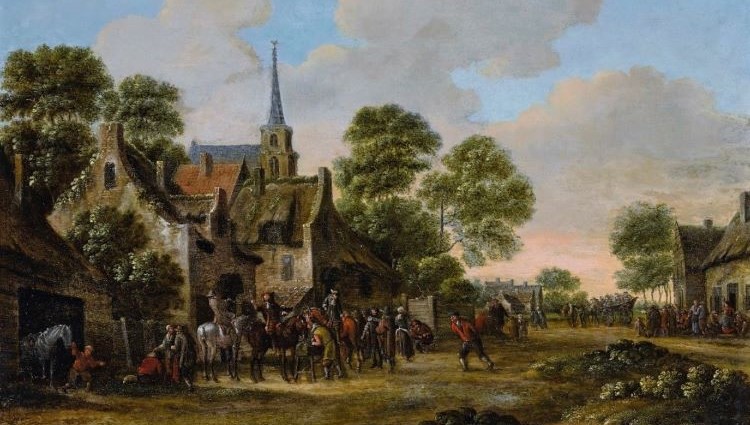
Is memory deceptively transformative? Is the original imagination an organ for lying fictions, for deception, or a conduit for revelatory illumination? And so, more generally, how do we explain those images that are apparently not imitations, don’t have an origin in verifiable originals, be they stored in human memory or laid up with the Muses [...]

Lebanon the Magnificent: An Inquiry Into Exile and Terror

By |2022-07-20T07:35:17-05:00January 30th, 2018|Categories: Culture, Foreign Affairs, Freedom, History, Islam, Marcia Christoff Reina, Politics, Religion, Terrorism|

Sphinx-like Lebanon—best known for its businessmen, bankers, and civil wars—is the ultimate example in explaining the inexplicable in the Mideast. If the dog now wants something, he wags his tail; impatient of Master’s stupidity in not understanding the perfectly distinct and expressive speech, he adds vocal expression—he barks—and finally an expression of attitude—he mimes or [...]

Did the Constitution Kill the Common Good?

By |2023-01-10T01:02:52-06:00January 29th, 2018|Categories: American Republic, Catholicism, Constitution, Featured, Political Philosophy, Politics, Timeless Essays|

Why did the centralization of power occur so quickly in America? Why have those genuinely common-good communities that were supposed to have worked hand-in-glove with the federal government suffered so much under the American Regime?… Today’s offering in our Timeless Essay series affords our readers the opportunity to join Thaddeus Kozinski as he explores the [...]

Russell Kirk on the Moral Imagination

By |2023-10-19T08:46:23-05:00January 28th, 2018|Categories: Audio/Video, Civil Society, Civilization, Conservatism, Culture, Edmund Burke, Film, Moral Imagination, RAK, Russell Kirk|

The principal difficulty of mankind today is the decay of the moral imagination in our civilization… In the spring of 1989, videographer Ken Martinek and I made the trip to Piety Hill to interview Russell about the moral imagination (as first conceived by Edmund Burke and expanded by Dr. Kirk). This concept had held an [...]

The Quest for Modern Conservatism

By |2021-05-27T12:43:22-05:00January 28th, 2018|Categories: Alexis de Tocqueville, Bradley J. Birzer, Community, Conservatism, Edmund Burke, History, Robert Nisbet, Russell Kirk|

The job of every conservative is twofold: First, he must fight tirelessly against the centralized, unitary state; second, he must do everything possible to promote that which makes the free society not just an ordered one, but a good one. Prior to the publication of Russell Kirk’s masterful The Conservative Mind in 1953, no real [...]

Perpetrating a Freud on Sophocles and Shakespeare

By |2019-12-05T10:41:39-06:00January 27th, 2018|Categories: Christianity, Culture, Featured, Joseph Pearce, Sophocles, Virtue, William Shakespeare|

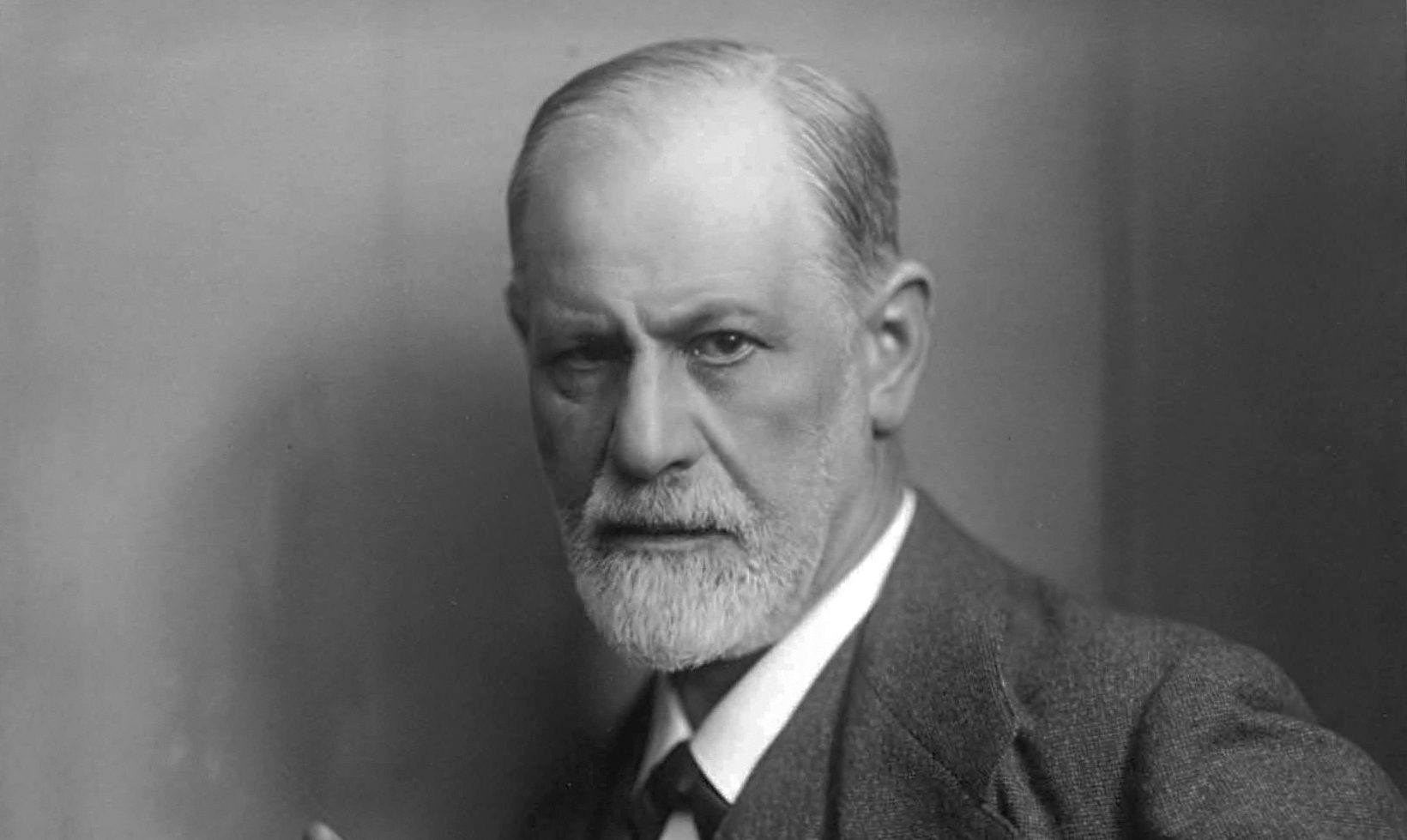
After tainting Oedipus, Sigmund Freud goes even further in his defaming of virtuous characters in literature, dragging the noble Hamlet through the same ignoble mire of his smutty, sex-obsessed imagination… The ignorant pronounce it Frood, to cavil or applaud. The well-informed pronounce it Froyd, But I pronounce it Fraud. —G.K. Chesterton (“On Professor Freud”) Poor old Oedipus. [...]

What Does the Koran Really Say?

By |2019-03-11T15:32:08-05:00January 27th, 2018|Categories: Fr. James Schall, Islam, Religion, Theology|

No good Muslim, unless he is trying to deceive us, has any doubt that Allah is exactly as he is described in the Koran... Most people know that the Quran (Qur’an, Koran) is the holy book of the Muslim religion, hence of about a fifth of the world’s population. But knowing this much, we still must [...]

Why You Should Read and Write Poetry

By |2020-05-19T17:21:10-05:00January 25th, 2018|Categories: Beauty, Dwight Longenecker, Imagination, Poetry|

In this dull utilitarian age, there seems little less useful than poetry. What good is it? There are few who get rich writing or publishing poetry, and when it comes to practicality, it is practically good for nothing. On second consideration, however, reading and writing poetry is extremely practical, and because our techno-utilitarian age is [...]

How You Can Begin Playing the Violin Today

By |2023-07-21T07:55:53-05:00January 25th, 2018|Categories: Education, Featured, Music|

You are not too old to start. It is not too hard. If you harbor any interest in learning how to play the violin, or if you’re merely curious to see a violin up close, examine how it works, what’s stopping you? Here are five easy steps to take. I know, it sounds like a [...]

How Do We Save Our Souls From the Modern World?

By |2018-06-21T20:22:17-05:00January 24th, 2018|Categories: Art, Christianity, Culture, Education, Featured, Humanities, Virtue|

In the modern world, terms like “soul,” “spirit,” and the “life of the mind” sound antiquated, and there is no longer any sense that there is anything to life beyond the pursuit of hedonic happiness and the accumulation of money, property, and other markers of worldly success… “To reform a world, to reform a nation, [...]

Einstein on the Humanities

By |2020-10-16T18:45:56-05:00January 24th, 2018|Categories: Education, Featured, History, Humanities, Joseph Pearce, Mathematics|

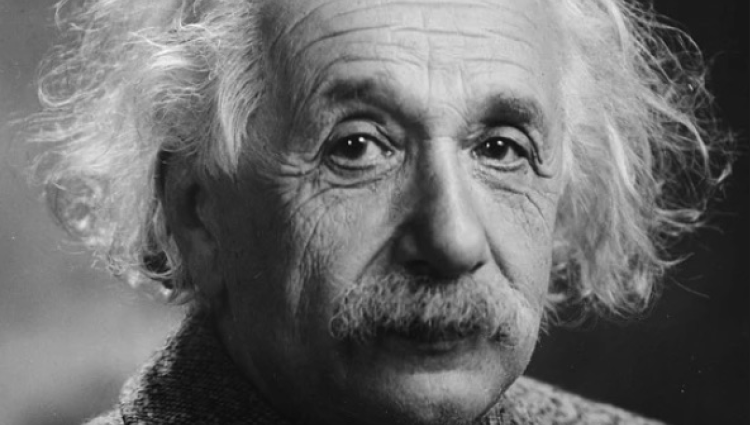
It is clear today, as it was clear to Albert Einstein then, that an education obsessed with science, technology, engineering and math, to the exclusion or neglect of the humanities, stems the growth and development of the human person, on the one hand, and unleashes technology without ethical constraints, on the other. Those architects of [...]

Did It Have To Be Dido?

By |2020-03-09T17:23:17-05:00January 23rd, 2018|Categories: Aeneid, Christine Norvell, Freedom, Great Books, History, Virgil|

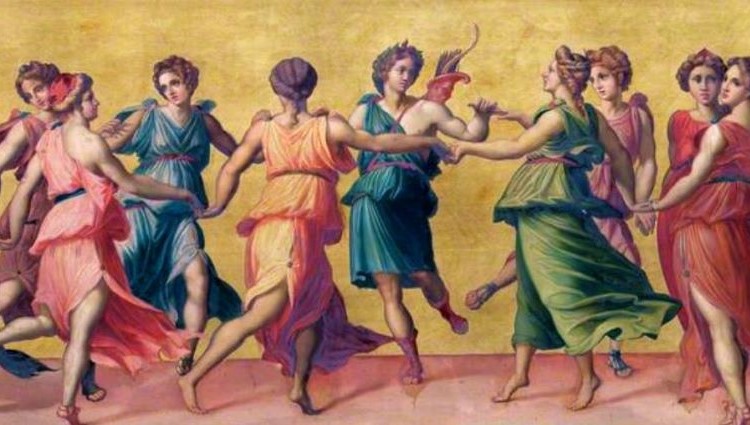
In Virgil’s Aeneid, the strongest and most admirable characters like Aeneas and Turnus are seen as ideals of patriotism and courage. At times though, their stories are momentarily superseded by interactions with a minor character. These subplots often serve to deepen our understanding of the main characters, but in turn bring a new character into the spotlight. [...]

“After So Many Fires”: Sacrament of a Broken World

By |2019-08-30T11:20:51-05:00January 23rd, 2018|Categories: Books, Catholicism, Christianity, Flannery O'Connor, Literature, Poetry|

In the poetry of Jeremiah Webster’s After So Many Fires, we have found Flannery O’Connor’s Protestant counterpart. Though an Anglican, Dr. Webster weaves his words on the same theological loom as O’Connor, seeing in the world’s maddening duality a divine coherence… After So Many Fires by Jeremiah Webster (65 pages, Anchor and Plume, 2017) I first encountered Jeremiah [...]

Go to Top