Mercy and the Liberal Arts

By |2019-09-03T15:08:32-05:00December 11th, 2016|Categories: Catholicism, Charity, Classics, Liberal Arts|

Inasmuch as mercy is a human virtue, and the liberal arts are human education, the virtue of mercy is precisely the sort of thing one will explore in a good liberal arts curriculum… I would like to begin by drawing attention to the title of our symposium, “Mercy and the Liberal Arts.” It’s an intuitive [...]

Reading the “Iliad” in the Light of Eternity

By |2021-04-16T16:12:10-05:00November 20th, 2016|Categories: Classics, Essential, Featured, Great Books, Homer, Iliad, Liberal Learning, Timeless Essays|

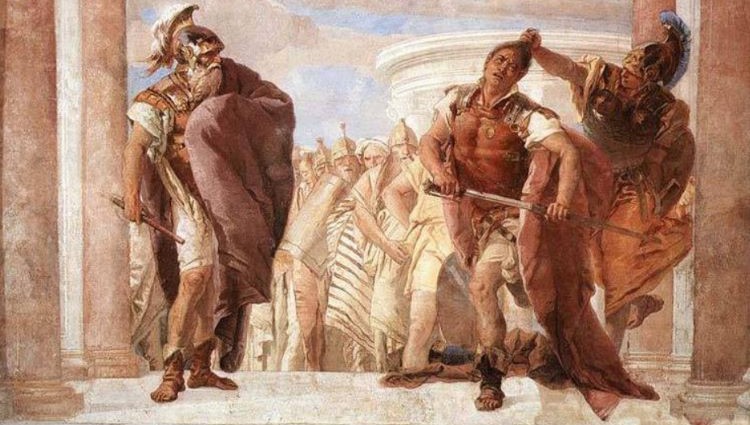
It is impossible to love both the victors and the vanquished, as the Iliad does, except from the place, outside the world, where God’s Wisdom dwells. Published originally during the Second World War, Simone Weil’s The Iliad, or the Poem of Force and Rachel Bespaloff’s On the Iliad are two of the last century’s finest discussions [...]

Why Read Old (Pagan) Books?

By |2019-09-24T10:19:31-05:00November 2nd, 2016|Categories: Christianity, Classics, Featured, Great Books, Humanities, Liberal Learning, Wyoming Catholic College|

At the end of each semester, I inevitably have one or two well-meaning students who are still unsure why they were asked to devote so much time and care to reading, annotating, and discussing archaic Greek literature. They enjoyed reading Homer. They liked our conversations in class, but, at the end of the course, lacking [...]

An American Augustan Age of Literature

By |2023-01-25T19:36:20-06:00October 19th, 2016|Categories: American Founding, Bradley J. Birzer, Cicero, Classics, Featured, Great Books, History, Virgil|

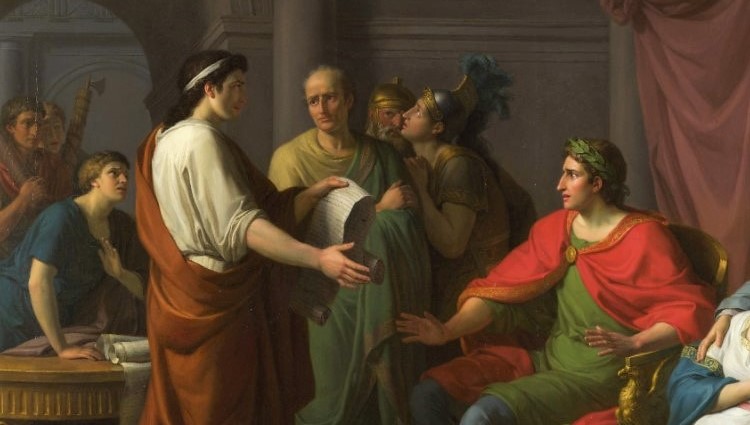
The Augustan Age refers to a time period broadly revolving around the restoration of order (if not necessarily liberty) at the end of the Roman republic and the beginning of the empire—roughly 50BC to 120AD. Many scholars label it the “Silver Age of Roman Literature.” Every one of the authors listed below held numerous qualms [...]

On Classical Studies

By |2019-08-27T16:41:26-05:00October 16th, 2016|Categories: Classical Education, Classics, Eric Voegelin, Featured, Liberal Learning, The Imaginative Conservative, Timeless Essays|

Today’s offering in our Timeless Essay series affords readers the opportunity to join Eric Voegelin as he explores the importance of studying the classics. —W. Winston Elliott III, Publisher A reflection on classical studies, their purpose and prospects, will properly start from Wolf’s definition of classic philology as the study of man’s nature as it has become [...]

Socrates on Opinion, the Philosopher, & the Good

By |2023-05-21T11:30:58-05:00April 18th, 2016|Categories: Classics, E.B., Eva Brann, Featured, Plato, Senior Contributors, Socrates, St. John's College, The Music of the Republic series by Eva Brann, Truth|

A. 1. Glaucon’s introduction to philosophy will itself have a prelude. He will discover for himself the meaning of “opinion,” doxa.  Opinion in its various meanings determines the musical key of the different parts of the dialogue by its absence or presence. The outer ring of logoi is explicitly spoken in a signature appropriate to the [...]

Virtue, Courage, & Moderation in Plato’s “Statesman”

By |2022-08-26T13:53:00-05:00April 15th, 2016|Categories: Classics, Featured, Justice, Peter Kalkavage, Plato, St. John's College, Virtue|

I want to begin by saying how my theme is related to justice. Plato and Aristotle often connect justice with wholeness. And it is wholeness—the whole of virtue and the whole of a political community—that is very much at issue, and at risk, in Plato’s Statesman. Perhaps at risk as well is the wholeness of [...]

Pre-Socratics or First Philosophers?

By |2023-05-21T11:31:10-05:00January 26th, 2016|Categories: Classics, E.B., Eva Brann, Featured, History, Liberal Learning, Philosophy, Senior Contributors, Socrates, St. John's College|

Think how peculiar this appellation is: “Pre-Socratics.” A whole slew of thinkers, poetical, aphoristic, prosaic—condemned to be known as the precursors of a man who wrote nothing! Forerunners are, it seems, ipso facto inferior to the rightly anointed. Take John the Baptist, the canonical precursor, who says of himself: “…he that cometh after me is [...]

What Has Athens To Do With You?

By |2023-05-21T11:31:25-05:00September 29th, 2015|Categories: Classics, E.B., Europe, Eva Brann, Featured, History, Senior Contributors, St. John's College|

As far as I know, a sense of guilt was not a recognized affect in the pagan world where about forty-nine percent of my moral allegiance lies; otherwise, I would apologize to you—apologize for being about to suggest to you a way of life, a way that may not jibe with your purposes and plans [...]

What is the Vocation of the Language Teacher?

By |2019-03-10T09:54:21-05:00August 23rd, 2015|Categories: Christian Kopff, Classics, Education, Featured, Language|Tags: , |

At first glance, there would seem to be much work awaiting the teacher and scholar of language in the twenty-first century. The powers that be are obsessed with the industrial pollution of water, land, and air. The case seems to be clearer, or foggier, for pollution of language. Useful old words are no longer part [...]

Plato’s “Timaeus”: A Unique Universe of Discourse

By |2023-05-21T11:31:38-05:00June 23rd, 2015|Categories: Classics, E.B., Eva Brann, Featured, Peter Kalkavage, Philosophy, Plato, Senior Contributors, St. John's College|

Before reviewing Peter Kalkavage’s Focus Press translation of the Timaeus, I must, in all fairness, confess my partiality. He, Eric Salem, and myself were the co-translators of Plato’s Phaedo and his Sophist for the same publisher. Together, over several years, we worked out some principles of translation which are discernible in this Timaeus version. In [...]

The Wonders of the “Odyssey”

By |2023-05-21T11:31:40-05:00May 28th, 2015|Categories: Classics, E.B., Eva Brann, Featured, Homer, Odyssey, Senior Contributors, St. John's College|

The Odyssey by Homer, translated by Joe Sachs (Paul Dry Books: Philadelphia 2014) Joe Sachs’ brief introduction to his translation begins, memorably, like this: “I’ve never met a translation of the Odyssey I didn’t like.” He is paying fair tribute to this most imaginatively intricate and compositionally sophisticated of epic poems—whoever has had the hardihood to [...]

On the Depths of Villainy

By |2017-07-31T23:48:17-05:00May 10th, 2015|Categories: Christianity, Cicero, Classics, Fr. James Schall, Plato|Tags: |

Rev. James Schall Probably the most famous letter writer of the ancient world was Cicero. In 59 B.C., Cicero wrote to Gaius Scribonius: “There are many sorts of letters. But there is one unmistakable sort, which actually caused letter-writing to be invented in the first place, namely the sort intended to give people [...]

What is the Mind & How Did We Lose It?

By |2015-05-19T23:13:33-05:00April 26th, 2015|Categories: Aristotle, Christianity, Classics, Culture, Plato, St. Augustine|

Any keen and realistic observer of our deplorable epoch will know that modern society seems to have lost its mind. In these disintegrating times it appears that anything goes because nobody knows the value of the permanent things upon which all civilized societies are built. Since this is so it might be helpful to remind [...]

Go to Top