Josef Pieper: The Virtues and Vices of Courage

By |2024-05-03T14:35:51-05:00May 3rd, 2024|Categories: Josef Pieper, Timeless Essays, Virtue|Tags: , |

“Fortitude without justice is a source of evil.”—St. Thomas Aquinas The great moralists tell us that a person’s strength is often the source of his greatest weakness, whether it is business acumen, artistic creativity, or physical excellence. Any of these things can be exercised too much or in the wrong way. The same is true [...]
Beauty & the Enlivening of the Russian Literary Imagination

By |2024-05-02T14:12:33-05:00May 2nd, 2024|Categories: Aleksandr Solzhenitsyn, Beauty, Christendom, Featured, Glenn Davis, Russia, Timeless Essays, Truth, Virtue|

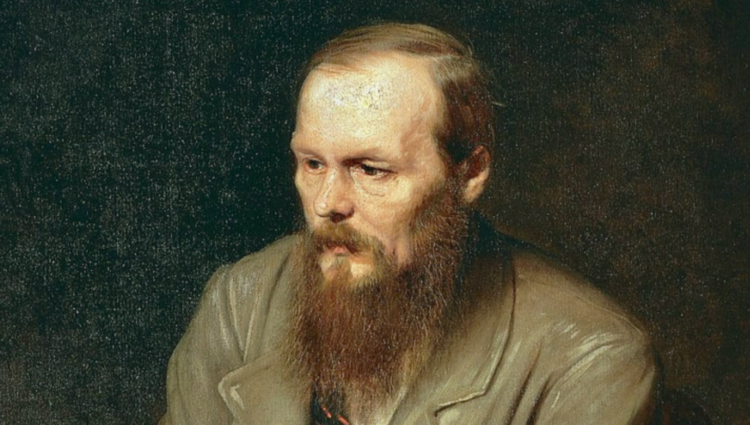
Like Dostoevsky and Solzhenitsyn, conservatives must come up from politics and recognize that the roots of a truer just order are watered with the permanent ideals of truth, goodness, and beauty. The insights of the arts of life are vital to make life worth living. Readers of The Imaginative Conservative know well the phrase “beauty [...]

Men and Women as They Are: Mozart’s “Marriage of Figaro”

By |2024-04-30T18:24:12-05:00April 30th, 2024|Categories: Audio/Video, Music, Opera, Stephen M. Klugewicz, Timeless Essays, Wolfgang Amadeus Mozart|

The characters in Mozart’s “Figaro” are the furthest thing from mere archetypes. Instead, they are as real and as identifiable as the people around us today, for Mozart was interested in human nature itself, and not the ephemeral and artificial distinctions of class. “In my opinion, each number in Figaro is a miracle,” composer Johannes [...]

Divine Providence: The Witness of Two American Heroes

By |2024-04-29T16:41:41-05:00April 29th, 2024|Categories: American Republic, American Revolution, Catholicism, Communism, George Washington, History, Timeless Essays|

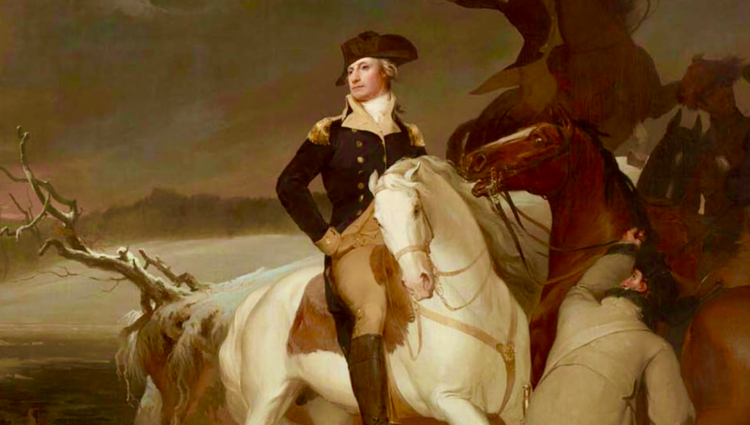
In very different historical circumstances, two strong-willed, athletic men with intelligence and leadership ability survived multiple dangers, but neither attributed his survival to his abilities or to sheer willpower. Instead, both men consistently and publicly credited Divine Providence. Their stories are well-known, but worth reviewing, since they serve as witnesses to us in our own [...]

Men of Valor: Tacitus & Thomas Aquinas on Virtue

By |2024-04-29T16:30:26-05:00April 29th, 2024|Categories: Aristotle, Christopher Morrissey, Featured, Film, St. Thomas Aquinas, Timeless Essays, Virtue|

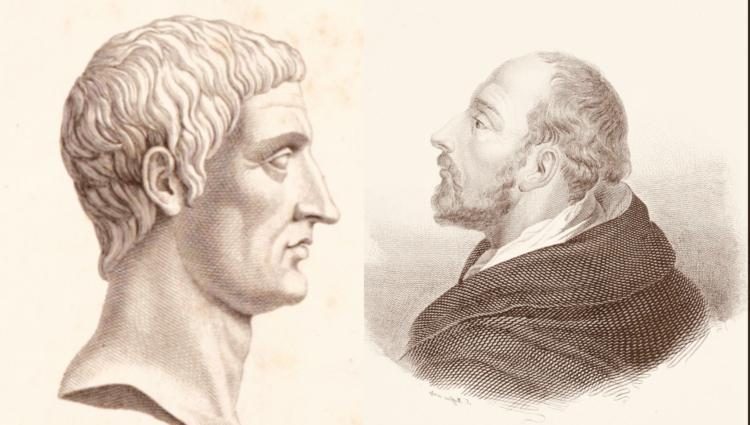
In valor, there is hope—namely, the hope that our virtue may be fully complete. It is as men of valor that we will be all we can be. In valor, there is hope. —Tacitus   When it played in the movie theaters, the terrific movie Act of Valor (2012) earned notoriety for two reasons. First [...]

The Divisions & Trade Wars Leading to the Monroe Doctrine

By |2024-04-28T09:05:58-05:00April 27th, 2024|Categories: American Republic, Bradley J. Birzer, Economics, England, Free Trade, History, Senior Contributors, Timeless Essays|

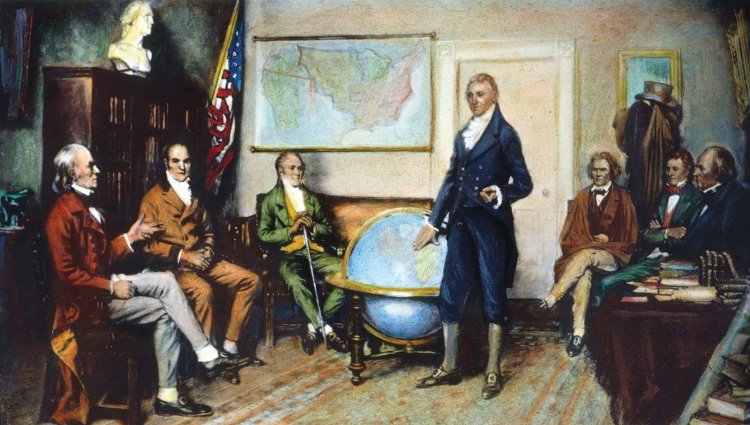
Even though President James Monroe could not fix the economy or dismiss the Missouri question, he could certainly distract the nation from its problems. In his second inaugural address, he gleefully announced a new target for American anger: The British were not allowing free trade between the United States and the English-occupied West Indies. Whatever [...]

Genuine Education: Guiding the Rational Soul to Happiness

By |2024-04-25T19:42:09-05:00April 25th, 2024|Categories: Education, Liberal Learning, Timeless Essays|

Liberal education is about absorbing the great traditions of the past in order to form one’s own faculty of judgment, aiming at the end of living well. There is something which unites magic and applied science while separating both from the ‘wisdom’ of earlier ages. For the wise men of old the cardinal problem had [...]

Friedrich-Georg Jünger on Technology & Prometheanism

By |2024-04-25T12:16:19-05:00April 24th, 2024|Categories: Civilization, Culture, Economics, Modernity, Philosophy, Science, Technology, Timeless Essays|

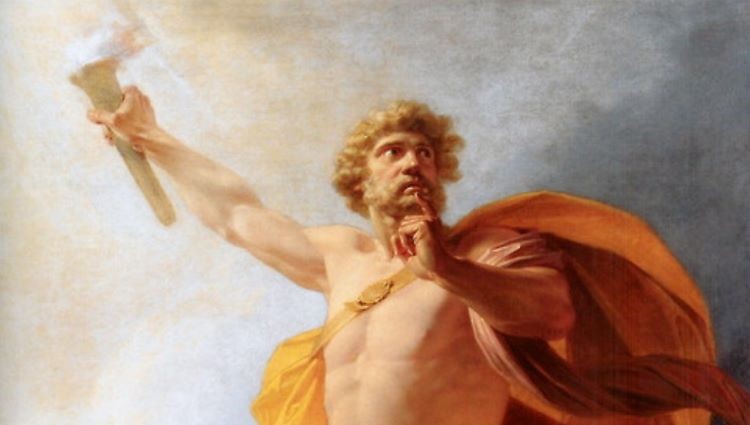
According to Friedrich-Georg Jünger, modern man’s veneration of technology reveals his distant kinship to the Titans of myth. This ‘titanic’ impulse to dominate and consume expresses itself through our technology-driven industrial economy, which now determines every aspect of life from the air we breathe to the food we eat. Ongoing debates concerning the growing power [...]

A Pair of Moles: Robert Penn Warren & William Styron

By |2024-04-23T22:20:44-05:00April 23rd, 2024|Categories: Christianity, Literature, Modernity, Poetry, Robert Cheeks, South, Timeless Essays|Tags: , , |

The literature of Robert Penn Warren and William Styron describes the decline of society, an annihilation of culture. It also projects a knowledge of the eternal struggle, forever bound by memory, and the inherent yearning for a civilization that “is the refuge of sentiments and values, of spiritual congeniality, of belief in the word, of [...]

Kant’s Imperative

By |2024-04-21T19:20:06-05:00April 21st, 2024|Categories: E.B., Eva Brann, Great Books, Immanuel Kant, Morality, Reason, Senior Contributors, St. John's College, Timeless Essays, Virtue|

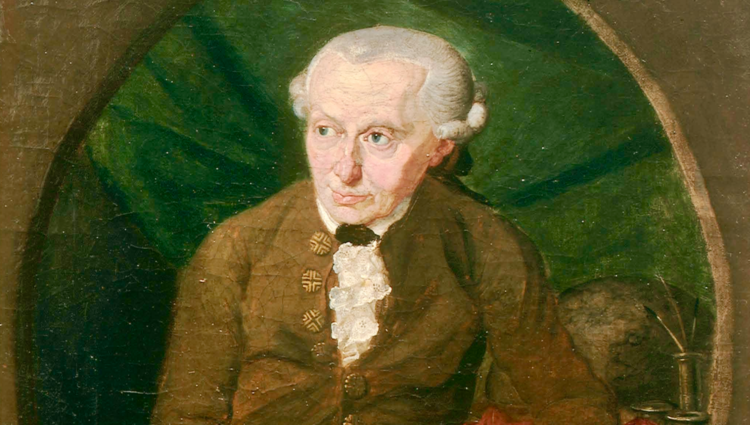
What makes freedom possible is beyond all knowing, but what makes the moral law possible is freedom itself. The fact that we have a faculty of freedom is the critical ground of the possibility of morality. I have called this lecture “Kant’s Imperative” so that I might begin by pointing up an ever-intriguing circumstance. Kant [...]

Virgil on History

By |2024-04-20T18:14:21-05:00April 20th, 2024|Categories: History, Imagination, Letters From Dante Series, Louis Markos, Senior Contributors, Timeless Essays, Virgil, Wisdom|

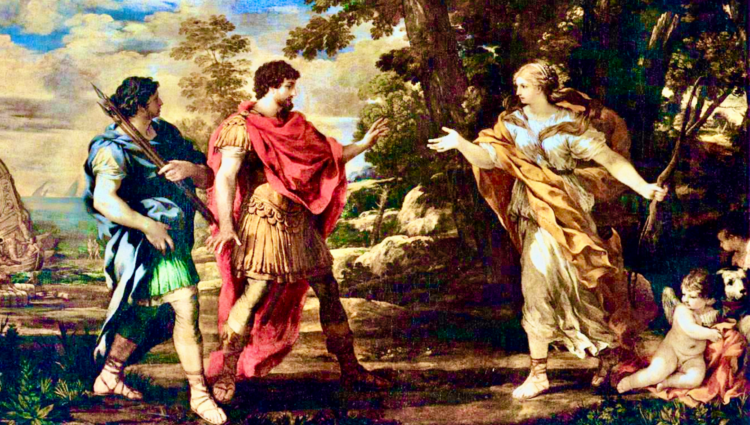
You seem to think that history signifies nothing more than one meaningless event after another. But you only do so because you lack eyes to see. Behind that course of events that you dismiss as chaotic and haphazard is a hidden line of purpose that is moving us and our world toward a good end [...]

“The Murders in the Rue Morgue”

By |2024-04-19T18:08:29-05:00April 19th, 2024|Categories: Edgar Allan Poe, Literature, Timeless Essays|

Between ingenuity and the analytic ability there exists a difference far greater, indeed, than that between the fancy and the imagination, but of a character very strictly analogous. It will found, in fact, that the ingenious are always fanciful, and the truly imaginative never otherwise than analytic. What song the Syrens sang, or what name [...]

Go to Top